

Learn how and why veterinary bills are increasing, and how a Healthy Paws plan can help.


Three rescues across North Carolina and Georgia received donations that made a big impact.

Make their food irresistible with the freshest nutritionally-balanced ingredients.

Table of Contents
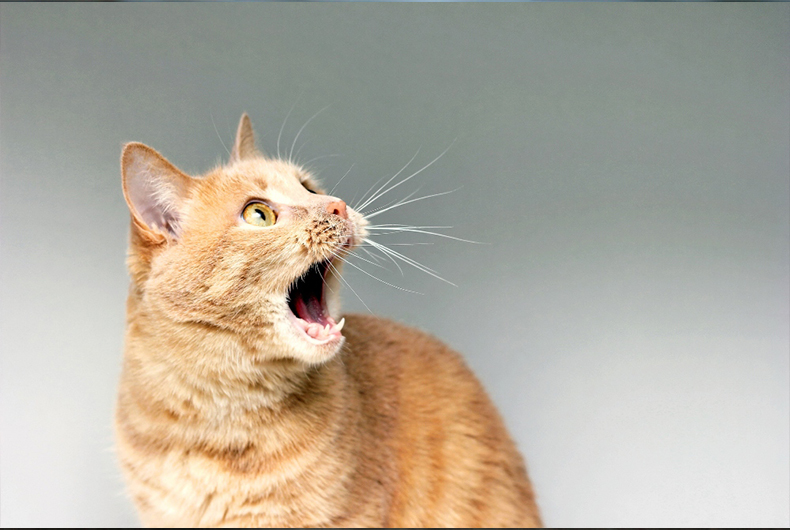
Living with a cat means you’ve probably experienced at least one night of peaceful slumber disturbed by the meowing of your cat. By nature, cats spend some of the late-night hours awake; feral cats tend to prowl at night, and because their eyes work well in low light, big wild cats also hunt during the night. There could be a number of reasons for your cat’s late-night restlessness, and his meowing is often his way of asking (err—telling) you to do something about it. Determining the cause and trying the suggested solutions below can help end this annoying behavior so you can get back to full nights of sleep.
Why does my cat meow at night?
Your cat’s nighttime meowing can be due to a number of reasons, which might include:
- Hunger/thirst
- Health concerns
- Boredom: your cat has excess energy and just isn’t tired.
- Anxiety: if your cat has recently experienced a change, such as a move or if he was recently adopted, he could be scared or lonely.
- Outdoor distractions: seeing something out the window could be enough for your cat to feel the need to tell you about it.
- Cognitive dysfunction syndrome: older cats can suffer from cognitive decline which can cause anxiety and meows out of confusion.
Tell us about your pet - get a quick quote
How to stop nighttime meowing
- Visit the vet. First things first, if this is unusual behavior from your cat, it could mean there is something going on. Your vet can help find or rule out any underlying medical issues.
- Stick to a routine. Your kitty will feel most confident with a regular schedule that remains the same from day to day. Along with regular mealtimes, devote time to playing with your cat and giving him affection so he can feel safe and secure.
- Relocate his bed. A newly adopted kitty may get some relief from loneliness if his bed is near yours.
- Play before bed. With a young or energetic cat, set aside some time as part of your nighttime routine to play with your cat. Satisfy his hunting instincts with toys that will entice him to bat and chase. This will help to tire your kitty out right before bedtime so he can sleep through the night.
- Close the blinds. Eliminate distractions that might be happening out the window, so your cat can’t find unnecessary reasons to meow at you in the night.
- Feed dinner later. Sometimes having a full belly makes it easier to sleep. Try moving your cat’s last mealtime closer to bedtime so he doesn’t wake you with hungry meows.
- Play music. Perhaps the silence is exacerbating your cat’s loneliness. Try playing soft classical music at night for some background noise.
- Try catnip. Some cats get sleepy immediately after playing with catnip. If your cat has never tried it before, then first experiment with catnip during the day because some cats experience the opposite effect.
- Ignore it. If you know your cat doesn’t have any pressing needs, he may be meowing because it has worked to get a response from you on previous nights. Ignoring the meowing will eventually teach your cat that it doesn’t get him anything. However, if your cat is used to getting a response from you when he meows, he may try harder to get your attention—in other words, the behavior may get worse before it gets better, but hold strong!

Meet Our Writer
Stacy Painter
Stacy has always been an animal lover and has worked in the pet industry and pet insurance specifically for over a decade. As a writer since early childhood, content writing for Healthy Paws pet insurance was a natural career path to combine her two passions. She currently lives in Florida with her boyfriend and Taiwanese rescue dog, Kaya.