
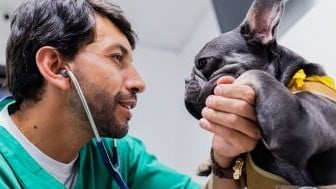
Learn how and why veterinary bills are increasing, and how a Healthy Paws plan can help.

Healthy Paws protects pets like family and makes peace of mind and more happy, healthy moments possible. Pet parents and industry reviews tell the story.

Rescue organizations across the U.S. received support for adoption efforts and ongoing care for vulnerable pets.

Make their food irresistible with the freshest nutritionally-balanced ingredients.
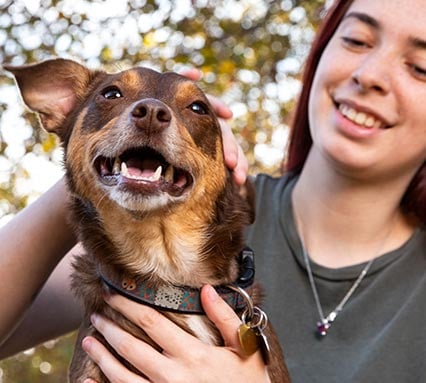
The Healthy Paws Community is a vibrant, social-first space for all pet lovers—whether you’re a Healthy Paws policyholder or simply passionate about pets. As a Pack Member, you can share your favorite pet photos and videos, connect with fellow pet parents, and stay informed with the latest Healthy Paws news and tips. It’s a welcoming place focused on connection, positivity, and celebrating the joy pets bring to our lives!
Frequently asked pet insurance questions
What does Healthy Paws cover?
Policies are underwritten and issued by ACE American Insurance Company, Westchester Fire Insurance Company, Indemnity Insurance Company of North America, ACE Property & Casualty Insurance Company, Atlantic Employers Insurance Company, members of the Chubb Group.
The Healthy Paws Signature Plan covers the unexpected things that come up with pet health care, whether that is an accident or illness. If your pet gets sick or injured, the Healthy Paws plan can help, subject to the policy's terms and conditions. You choose your annual reimbursement limit at enrollment — $5,000, $7,000, or unlimited, along with your annual deductible and reimbursement percentage. If your pet shows signs or symptoms of a new accident or illness after enrollment and after any applicable waiting period, it will be eligible for coverage.
The pet insurance plan covers medically necessary veterinary treatments, including but not limited to:
- Diagnostic testing such as x-rays and blood tests
- Hospitalization, including any treatments while in the hospital
- Surgeries
- Prescription medications
You may use any licensed veterinarian.
For CA, DE, FL, HI, LA, MD, ME, MS, MT, NE, NH, OH, PA, RI, VT, WA:
A veterinarian is defined as a properly licensed and registered veterinarian in active practice in the area where the pet is treated or examined. Veterinarian shall not include you or a member of your immediate family.
Healthy Paws includes unlimited virtual vet visits through Airvet with every accident & illness policy. Healthy Paws also offers a Direct Pay option that lets you arrange to pay your reimburseable benefit to your vet – before services are performed – allowing you to say yes to life-saving treatment when it’s needed most and funds are tight.
For all states except those listed in the section below:
- There is a waiting period of 15 days after your policy effective date.
- Your policy is effective at 12:01 a.m. the day after you enroll your pet(s).
- You can submit claims for accidents and illnesses that occur after the 15-day waiting period.
- Hip Dysplasia: For pets enrolled at age five or below, there is a 12-month waiting period for hip dysplasia.
For CA, DE, FL, HI, LA, MD, ME, MS, MT, NE, NH, OH, PA, RI, VT, WA:
- There is a 15-day waiting period from the pet policy effective date for illness, injury and orthopedic conditions (other than hip dysplasia) not resulting from an accident. (However, this waiting period will be waived by us upon completion of a complete clinical examination.)
- There is no waiting period for illness, injury or orthopedic conditions resulting from an accident.
- Hip Dysplasia: There is a 30-day waiting period from the pet policy effective date for hip dysplasia not resulting from an accident. (However, this waiting period will be waived by us upon completion of a complete clinical examination.)
There is NO waiting period to access virtual veterinary services through Airvet. You will be able to enroll your pet and speak to a vet immediately through the Airvet app.
Healthy Paws now offers both unlimited annual reimbursement and annual policy limit choices. You can choose the option that best fits your budget.
- If you choose a policy with an annual limit, that limit would be the maximum amount we'll reimburse for eligible claims each year (each policy term). (Note that the annual limit you choose at enrollment can never be increased across the life of your pet's policy.)
- If you select unlimited coverage, there are no caps or maximum limits on the amount reimbursed for eligible claims.
Hereditary and congenital conditions are eligible for coverage so long as the signs and symptoms first manifest after enrolling, and after any applicable waiting periods.
Hereditary condition: An abnormality that is genetically transmitted from parent to offspring and may cause illness or disease. Some examples: Bladder Stones, Epilepsy, Heart Disease, Degenerative Myelopathy, Brachycephalic Syndrome, Hip Dysplasia
Congenital condition: A condition that is present from birth, whether inherited or caused by the environment, which may cause or contribute to illness or disease. Some examples: Cleft Palate, Umbilical Hernia, Inguinal Hernia, Limb Deformities
Hip dysplasia is included in the coverage at no additional cost to you as long as the following requirements are met:
- Your pet is under the age of six (6) at the time of enrollment
- No clinical signs or symptoms manifest within the first twelve (12) months from the Pet Policy Effective Date.
For CA, DE, FL, HI, LA, MD, ME, MS, MT, NE, NH, OH, PA, RI, VT, WA:
Hip dysplasia is included in the coverage at no additional cost to you as long as the following requirements are met:
- Your pet is under the age of six (6) at the time of enrollment
- No clinical signs or symptoms manifest within the first 30 days from the pet policy effective date unless waived by us upon completion of a complete clinical examination.
Get a quote in seconds for care that shows up when it counts
What Is Not Covered?
By making the office visit (exam fee) part of a pet parent’s financial responsibility, we can offer accident and illness plans at a more affordable monthly premium.
Wellness and preventative care are not covered by the Healthy Paws policy. The plan is here for unexpected veterinary care.
Some examples of preventative care include:
- Vaccinations or titer testing
- Spaying/neutering
- Flea/heart worm control medication
- Nail trims and grooming
- Parasite control/de-worming
- Routine dental care, including dental cleanings
- Annual fecal and heart worm testing
The pet insurance plan offers coverage for dental care related to traumatic injury, such as chipping a tooth. If injury to teeth is caused by an accident, we do cover the cost of extraction and/or reconstruction of damaged teeth. Treatment for dental illnesses may also be eligible for coverage (as long as there were no signs or symptoms of the condition prior to enrollment or during any applicable waiting period.) Policy exclusions may apply.
Learn more about dental coverage
As fellow pet parents, we understand this can be one of the hardest parts of pet ownership. The Healthy Paws plan can cover the costs of euthanasia when it is medically necessary for a covered condition. Expenses for aftercare, such as cremation or burial, are not eligible for coverage.
Pre-Existing Conditions
A pre-existing condition means: An Illness or condition which developed or redeveloped prior to the pet policy effective date or an injury, or recurrence of an injury, as a result of an accident that occurred prior to the pet policy effective date; or any condition or complication resulting from an illness that developed, or any injury as a result of an accident that occurred prior to the pet policy effective date.
The Healthy Paws plan helps protect your pet against accidents and illnesses that may occur after any applicable waiting period(s).
For CA, DE, FL, HI, LA, MD, ME, MS, MT, NE, NH, OH, PA, RI, VT, WA:
Be sure to see the State Amendatory Statement for your state’s specific definition of “pre-existing condition.”
Curable conditions: Certain conditions may be eligible for coverage if they are curable. If a pet has fully recovered from a curable illness or injury, meaning they have been free of clinical signs and symptoms and have not received treatment for the condition for a continuous 365 days, the condition may no longer be considered pre-existing.
Clinical symptoms as defined in the Healthy Paws policy are “any manifested anomaly in, or deviation from the regular healthy state or function of a pet, including behavioral traits. Clinical Symptoms include any anomaly that is readily detectible by a thorough and complete clinical examination.”
Examples where a pet would be cured include parasitic infections (e.g. giardia, roundworm), conjunctivitis, respiratory infections, and kennel cough. Examples where a pet would not be considered cured are cruciate ligament tears, orthopedic conditions (e.g. medial patellar luxation and hip dysplasia), and conditions that require chronic medication and the pet’s health will regress if off the medication (e.g. heart disease, thyroid disease, seizures).
If you are aware that your pet has a congenital condition before you enroll in pet insurance, this condition would be considered pre-existing.
There are many types of congenital conditions that do not become apparent until sometime after birth. Healthy Paws will cover these types of congenital conditions as long as there were no clinical signs or symptoms present before enrollment or during any applicable waiting periods.
If your pet's complete medical records review shows no history of a cruciate ligament problem, and no history of limping, the injury is eligible for coverage.
However, if your pet has shown lameness, or a full/partial tear before enrollment or during any applicable waiting period as defined above, on either side prior to enrollment, the other side is also excluded from coverage. The cruciate ligament is the only bilateral exclusion in the policy. (Bilateral: having or relating to two sides; affecting both sides.)
Eligibility & Requirements
All pets should have undergone a veterinary examination to speed up processing your claims. Your pet’s age at enrollment determines when your pet should have/had the exam.
- For pets 5 years old and under: an exam must have taken place within 12 months prior to enrollment (or within 15 days after the pet policy effective date.)
- For pets 6 years old and over: an exam must have taken place within 30 days prior to enrollment (or 15 days after the pet policy effective date.)
- No additional diagnostic testing such as x-rays or blood work is required.
When you file your first claim, we will need a copy of your pet's full medical history. You may upload a copy of your pet's most recent exam records in the Customer Center. Medical records for your pet include doctor's notes (sometimes referred to as “SOAP Notes,” which is a standardized format used by veterinarians to document patient medical records), laboratory results, and other documentation regarding all of your pet's visits to the veterinarian.
Your veterinarian may also submit these records by emailing them to records@healthypawspetinsurance.com or faxing to 844-333-0739.
For CA, DE, FL, HI, LA, MD, ME, MS, MT, NE, NH, OH, PA, RI, VT, WA:
A veterinary examination is not required, but your pet should have one to ensure the ease and speed of claims processing. You may upload a copy of your pet's most recent exam records in the Customer Center.
You may use the rescue group's or shelter's adoption physical exam if you have documentation, including the doctor's notes (sometimes referred to as “SOAP Notes,” which is a standardized format used by veterinarians to document patient medical records). You can upload a copy of the exam records in the Customer Center. If you are uncertain that the adoption records satisfy the exam requirements, it is recommended your pet receives an exam from a veterinarian.
For CA, DE, FL, HI, LA, MD, ME, MS, MT, NE, NH, OH, PA, RI, VT, WA:
A veterinary examination is not required, but your pet should have one to ensure the ease and speed of claims processing. You may upload a copy of your pet's most recent exam records in the Customer Center.
Sit, stay, get covered. Get a quick quote for premium, affordable pet insurance.
Filing Claims
You can expect:
- You have the option to choose any licensed veterinarian. This includes specialists and emergency animal hospitals.
- After paying for the treatment in full, submit a copy of your paid invoice to Healthy Paws for review.
While you're helping your pet get better, we'll work on getting your claim processed.
No forms are necessary! You can simply submit your claim by taking a photo of your invoice and uploading it through our online Customer Center or Healthy Paws Mobile App.
The claim must be submitted within 90 days of the invoice date.
- You can also submit your invoice(s) and supporting medical documents to claims@healthypawspetinsurance.com
- Fax (888)-228-4129
- Or mail to:
Healthy Paws Pet Insurance
P.O. Box 1156
Portland, ME 04104
Yes! To meet your annual deductible (after which reimbursements will start), we recommend that you submit all claims pertaining to new accidents, illnesses and injuries.
Getting Reimbursed
Reimbursements are based on your actual veterinary bills and the policy options you selected, including your reimbursement rate, annual deductible, and annual coverage limit.
For example:
Say you have a policy with a $250 annual deductible, an 80% reimbursement rate, and a $5,000 annual limit:
- You get a vet bill for $1,200 in covered treatments
- 80% of 1,200 = $960
- $960 minus your $250 annual deductible = $710
- You are reimbursed $710 for that bill, and have $4,290 left on your annual coverage limit
For your next bill, you would be reimbursed a full 80% for covered treatments, up to the $4,290 that remains on your annual limit. (Your pet's deductible is annual, meaning it must be satisfied only once per policy term and resets on the anniversary of your pet's enrollment.)
If a claim is approved, any reimbursement due will be issued on average within 2 business days – by mailed check or direct deposit (enroll in the Customer Center). You can also contact Healthy Paws to arrange to have your reimbursement paid directly to your vet before services are performed.
In situations where you cannot pay your vet at the time of treatment, you may contact us to request payment directly to your vet in the event of a covered claim. You must make your request for direct payment in advance of the treatment to allow our claims team time to coordinate direct payment. Approval for direct payment does not mean a claim will be covered, and you will remain responsible for all amounts due.
In the event of approval on a covered claim, if your veterinary hospital is willing to accept direct payment, we can work with them to expedite access to your pet's medical records and the processing of your claim. This direct payment option is available for any licensed vet across the United States; it is not limited to any specific network of vets.
Direct payment on covered claims is available during business hours. Please call (855) 898-8991 and select the option to speak with a Claims Representative.
Managing your Policy
Congratulations on a new addition to the family!
You can use the Add a Pet feature in the Customer Center to add your new pet to your policy.
Your annual deductible is the amount you’ll pay out-of-pocket each year before your plan begins to cover medical costs for your pet(s). The annual deductible is by "coverage term." For example, if your policy became effective on May 25, 2022, your coverage term would last through May 24, 2023.
To meet your annual deductible (and begin getting reimbursed), make sure to submit all claims pertaining to accidents, illnesses and injuries.
Yes, you can change your policy options in the Customer Center. You can lower your deductible or raise your reimbursement level as long as you have not submitted any claims. This would result in lower out-of-pocket expenses and a higher reimbursement, and correspondingly, a higher monthly premium.
If you have submitted any claims, you will only be able to lower your reimbursement and raise your deductible.
Note: lowering your reimbursement level and/or raising your deductible are both ways to reduce the cost of your monthly premiums.
Another way to lower the cost of your premiums is to switch from unlimited reimbursement to an annual limit (maximum annual payout) or decrease the annual limit. You can do this once per policy term (12 months), but only prior to filing any claims for that term. Once decreased, your annual limit cannot be raised again. (Note: The annual limit you select upon enrollment is the highest annual limit that specific policy can have - it can never be increased for that policy.) You can select different annual limits for each pet’s policy.
If you want to cancel your policy, you can let us know via regular mail, fax, email or verbally over the phone. Once the account is canceled, you will no longer have access to the online Customer Center. Learn more about canceling a Healthy Paws plan.
Annual Limit (Maximum Annual Payout): This is the maximum amount of reimbursement you can receive for eligible claims for a policy year (policy term). After that reimbursement limit is reached, you would be responsible for veterinary costs. Your annual limit resets each year on the anniversary of your pet’s enrollment, but can never be increased across the life of the policy. If you selected an unlimited policy, there is no cap to the amount of reimbursement you can receive for eligible claims across the policy year.
Reimbursement: What you'll get back from your claim after your annual deductible is met. Unlike some pet insurance companies, Healthy Paws will reimburse you based on your actual vet bill, as opposed to others that only reimburse based on what they think the treatment for a specific condition should cost.
Annual Deductible: The amount you'll pay out-of-pocket each year before your plan begins to cover medical costs for your pet.
Billing
To update your profile or billing information, please sign in to the Healthy Paws Customer Center.
Your monthly premium will be charged automatically to your credit or debit card or bank account each month on the same date that you enrolled. For example, if you enrolled on the 15th of the month, all payments moving forward will be deducted from the card on file on the 15th of each month.
For Pet Parents that enroll on or during the 28th to 31st of the month, the billing date defaults to the 28th because of February.
We currently accept any debit or credit cards issued by VISA, MasterCard, American Express, and Discover or you can pay via bank account (ACH). Choosing to pay via bank account lets you avoid credit card processing fees. You can change your payment method at any time by logging into the Customer Center.
Premiums are determined based on the rates and rating rules filed with and approved by (as applicable), each state's insurance regulator, which reflect the cost of treatment advances in veterinary medicine, individual pet's breed, gender, age, and other factors, in addition to the overall claims experience for the program within the region where the pet resides.
Premium increases are not based on your individual claim submissions.
We'd sure be sorry to see you go, but if you still want to cancel your policy, you can let us know via regular mail, fax, email or verbally. Learn more about canceling your Healthy Paws plan.