

Learn how and why veterinary bills are increasing, and how a Healthy Paws plan can help.


Three rescues across North Carolina and Georgia received donations that made a big impact.

Make their food irresistible with the freshest nutritionally-balanced ingredients.
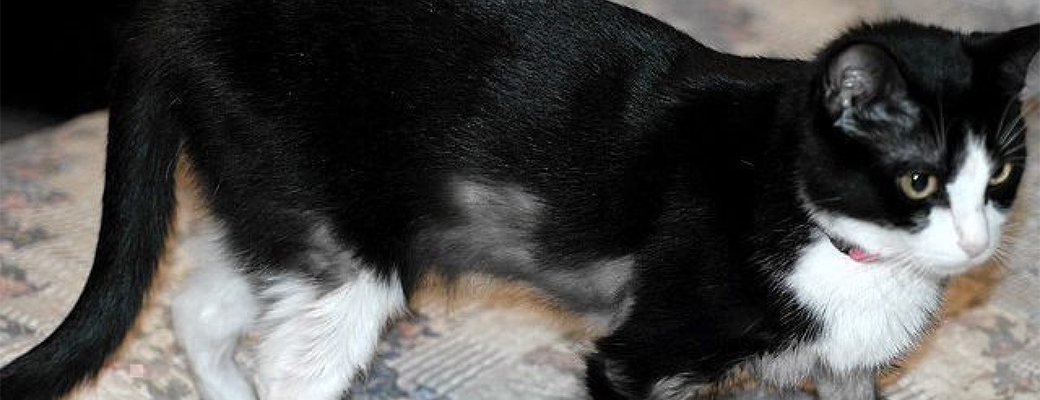
Table of Contents
Key Takeaways
- Loss of fur in cats can be due to anxiety, stress, infection, hyperthyroidism, allergies, ringworm, mange, and more.
- Hyperthyroidism, seborrhea and diabetes mellitus can cause a cat to have oily fur.
- Cat dandruff may be caused by skin mites, ringworm, diabetes mellitus, seborrhea and dry air.
- Over-bathing or over-brushing your cat can make coat conditions worse.
- Fur conditions are often due to underlying conditions, so see your vet if the conditions persist.
A cat’s coat is its fur and pride – felines spend hours every day grooming themselves. Some common illnesses in cats can cause painful or unpleasant symptoms that result in fur loss, changes in fur texture, or dandruff. Here’s a quick guide to abnormal coat symptoms in cats and their potential causes.
Cat Hair Loss
Unless your cat is a hairless breed, chances are you’ll be able to notice if your pet is experiencing any fur loss over and above normal shedding, which is officially known as alopecia in cats. The baldness can be partial or complete, random or in a pattern, and occur fast or slow. The following conditions all list fur loss as a symptom:
- Anxiety disorders and stress can cause a cat to over-groom.
- Hyperthyroidism has the potential side effect of alopecia.
- Food allergies and environmental allergies may also cause excessive itching, which can lead to fur loss.
- An allergy to flea bites can also lead to significant hair loss.
- Ringworm, a parasitic fungal infection, has fur loss which may occur in a circular pattern as a primary symptom.
- Mange is a condition caused by mites; cats suffering from it frequently experience alopecia.
Treatment for cat hair loss
Make an appointment with your vet; almost all of the above medical conditions require medications prescribed by a veterinarian to treat.
Tell us about your pet – get a quick quote
Oily or Greasy Fur in Cats
As a cat ages, grooming can become difficult due to joint conditions like osteoarthritis. Senior cats sometimes lose interest in grooming themselves as well, particularly if they are sick. Obese cats may also find it hard to self-groom. Fur can change in texture and become greasy or oily, often appearing spiky or clumped together. This is due to an increase or lack of distribution of the natural oils in the cat’s fur. Conditions like the following can cause this change:
- Hyperthyroidism is a hormone imbalance; this can change your pet’s fur texture.
- Seborrhea is a skin condition caused by some parasites, dietary deficiencies, or allergies and may also be genetic.
- Diabetes mellitus can also be a culprit.
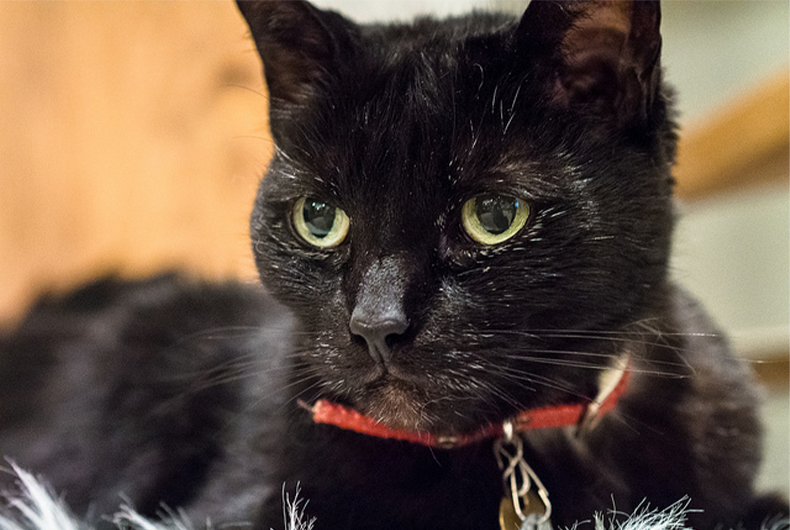
Senior cats can develop oily fur from lack of grooming if they have a painful joint condition like arthritis. (Flickr.com/kmaraj)
Treatment for oily fur
If your cat’s condition is caused by difficulties with self-grooming, try brushing your cat with a flat slicker brush. Bathing your pet with a gentle shampoo monthly may also help. However, it’s still a good idea to see your veterinarian since there is probably a medical condition at play that is reducing your cat’s ability to take care of his coat on his own.
Cat Dandruff
This unsightly symptom is caused by an excess of dead skin being shed. It is often visible as small white flakes on the animal’s fur. While not a problem on its own, dandruff in cats can be unpleasant to touch and typically indicates an underlying medical condition, like one of the following, that requires veterinary treatment:
- Cheyletillosis, a skin mite condition, may cause dandruff as the mite moves along the animal’s skin.
- Ringworm can cause visibly flaky skin.
- Diabetes mellitus can affect skin dryness and coat texture.
- Seborrhea may explain dandruff as well as oily coats.
- Dry air, which is often worse in winter, can dehydrate an animal’s skin, leading to mild dandruff.
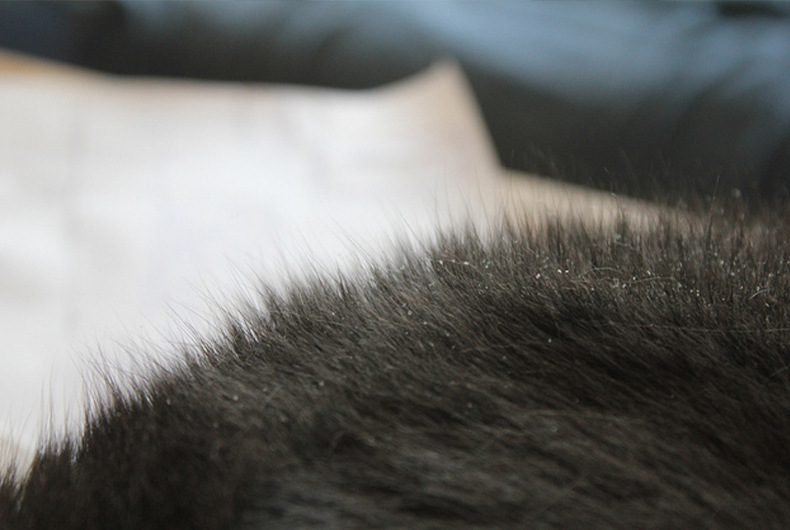
Cat dandruff is more easily visible on darker felines and is more of a cosmetic issue. (Flickr.com/quinnanya)
Treatment for cat dandruff
At-home treatment for mild dandruff can include installing a humidifier in the winter months. Adding omega-3 fatty acid supplements to your cat’s diet may also help. (Always consult a veterinarian before giving your pet any medications or supplements!) If your cat is suffering from severe dandruff or multiple skin-related symptoms, it’s time to visit the vet. Medicated cat dandruff shampoo may be prescribed to treat seborrhea or other chronic skin problems. Once your cat’s underlying health problem is under control, his dandruff should improve as well.
Conditions affecting your cat’s fur are often symptoms of an underlying problem. If the symptoms persist, see your vet. Don’t over-bathe or -brush your pet; this can affect oil gland levels and only make your cat’s coat worse! With treatment, coat issues will resolve, and your pet can groom himself with pride.
The content is not intended to be a substitute for professional veterinarian advice, diagnosis, or treatment. Always seek the advice of your veterinarian or other qualified health provider with any questions you may have regarding a medical diagnosis, condition, or treatment options.
Authors
Colleen Williams
Over the past decade, Colleen has written about health, wellness, beauty, and even pets for The New York Times, The Cut, Refinery29, xoVain, Healthy Paws Pet Insurance, and Seattle Met Magazine, as well as many beauty brands. She has a BFA in Art History from the University of New Mexico and an AAS in Fashion Design from Parsons School of Design in New York.
Jennifer Coates, DVM
Dr. Jennifer Coates received her Bachelor of Science degree in biology from McGill University in Montreal, Quebec, Canada. After graduation, she worked for several years in the fields of conservation and animal welfare before pursuing her childhood dream—becoming a veterinarian. She graduated with honors from the Virginia-Maryland Regional College of Veterinary Medicine and has worked as an Associate Veterinarian and Chief of Staff in Virginia, Wyoming, and Colorado. Jennifer is also a prolific writer about all things related to veterinary medicine and the well-being of our animal friends. She has published several short stories and books, including the Dictionary of Veterinary Terms, Vet-Speak Deciphered for the Non-Veterinarian. She currently contributes to the Healthy Paws pet insurance blog as a freelance writer. In her free time, Jennifer enjoys life in Colorado with her family and friends… many of whom walk on four legs.