

Learn how and why veterinary bills are increasing, and how a Healthy Paws plan can help.

Healthy Paws protects pets like family and makes peace of mind and more happy, healthy moments possible. Pet parents and industry reviews tell the story.

Rescue organizations across the U.S. received support for adoption efforts and ongoing care for vulnerable pets.

Make their food irresistible with the freshest nutritionally-balanced ingredients.

The Healthy Paws Community is a vibrant, social-first space for all pet lovers—whether you’re a Healthy Paws policyholder or simply passionate about pets. As a Pack Member, you can share your favorite pet photos and videos, connect with fellow pet parents, and stay informed with the latest Healthy Paws news and tips. It’s a welcoming place focused on connection, positivity, and celebrating the joy pets bring to our lives!
Everyday expenses for a pet now exceed $4,000 a year on average, according to new research. As prices continue to climb, pet owners face tough choices. Pet insurance can be a financial backstop against the unexpected.
Key Takeaways
- More than just a messy hassle to clean up, your cat’s feces contain many clues about your cat’s health.
- There are four poop qualities to pay attention to: color, content, consistency, and coating.
- If your cat has “unusual” stools for more than 48 hours, schedule an appointment with your veterinarian to find out what’s going on.
Table of Contents
- The four C’s of cat poop
- How much and with what frequency should my cat be pooping?
- What size should my cat’s poop be?
- What should healthy cat poop smell like?
- What do the different colors in cat poop mean?
- What does black blood in the stool mean?
- What consistency should a cat’s poop be?
- When should I be concerned about my cat’s poop and take him to a veterinarian?
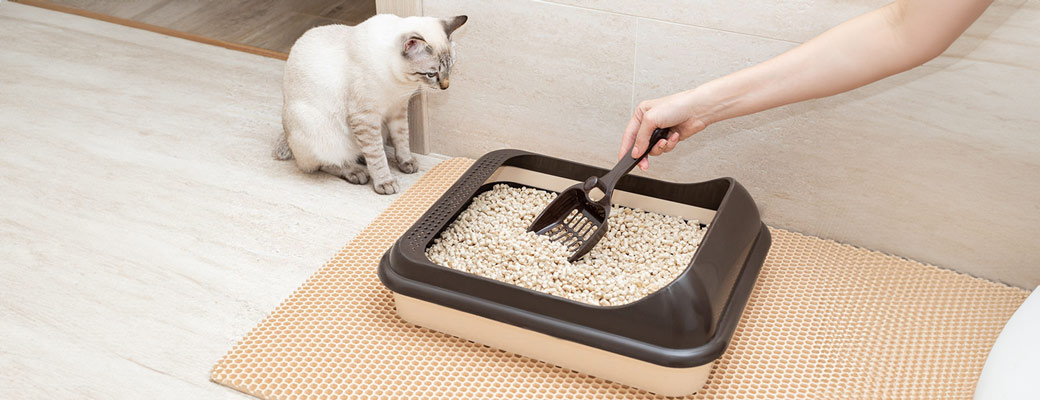
When cleaning out your cat’s litter box, you probably just want to dispose of your cat’s stool as quickly as possible. However, it’s wise to take a moment to ensure the poop looks normal. More than just a stinky mess you must clean up, your cat’s poop is an excellent measure of your cat’s health, so it pays to be aware when your kitty’s poop does not look right.
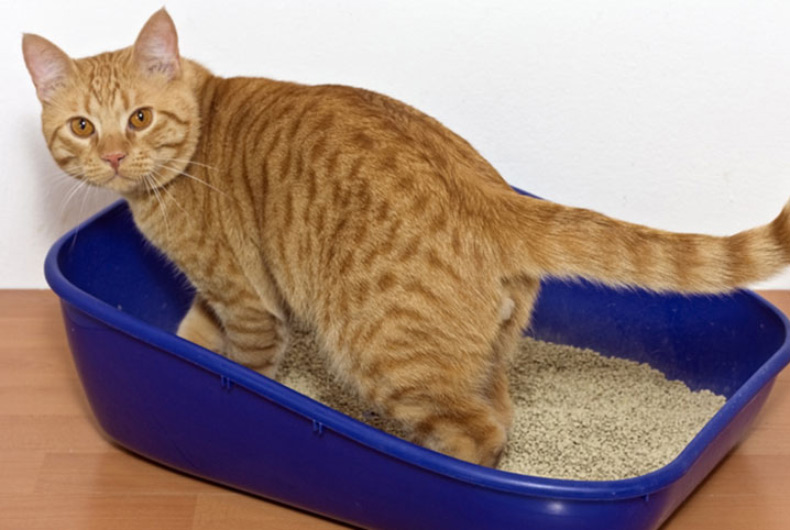
Finding a stool sample may be challenging if you have an outdoor cat. But if they are indoor cats and use a litter box, you can use the daily scooping chore to observe the quality and consistency of the feces.
The four C’s of cat poop
There are four things to look at when it comes to cat feces, and they all start with “C”: color, content, consistency, and coating.
- Color is related to what your pet eats, ranging from light to dark brown when normal. However, color can also indicate an underlying health problem. For example, yellow poop can indicate an issue with the liver, while green poop could signal a bacterial infection. Poop with streaks of red can indicate bleeding somewhere in the gastrointestinal tract.
- Content is what is in the cat’s poop. Some debris may be visible – such as fur balls, intestinal worms, and pebbles, but other problem substances will not be detected and require a veterinarian to look at them under a microscope.
- Consistency is how solid the stool is – hard, soft, or runny.
- A coating like mucus or a colored layer could indicate a problem, such as an inflamed colon. Healthy cat poop should not have any coating on it.
Tell us about your pet - get a quick quote
How much and with what frequency should my cat be pooping?
How often should a cat poop?
The number of times your cat goes “No. 2” daily depends on several factors. The amount of food and treats consumed, hormones, amount of exercise, metabolism, and stress can all influence bowel movement frequency.
Most healthy cats will poop once or twice a day. Older cats may have less frequent bowel movements. If your cat is pooping more than that regularly, you might want to call your vet to ensure there’s nothing awry.
If your cat goes more than two days without producing stool, you should consult your vet in case your cat has an obstruction or other serious condition.
How do I know if my cat is pooping too little or too much?
If your cat is not pooping at least once a day, they are constipated or have a blockage, which warrants a vet visit. If your cat is pooping more than three times a day, consider whether it looks healthy. Contact your vet immediately if it’s a strange color or is too hard or runny.
How long after a cat eats do they poop?
In general, expect your kitty to poop 10-24 hours after digesting their last meal. For many cats, that works out to be mornings and evenings. However, every cat poops a little differently. Whatever time of day they regularly go is what’s normal for them.
Like humans, your cat may occasionally have to go at random or unexpected times. This may be stress-related or come down to how much food they consumed at their last meal, or if they ate foods that are not part of their regular diet.
What size should my cat’s poop be?
The size and volume of your cat’s poop will depend on their size and weight and how much food they consume.
Most medium-sized (10-15 lbs.) cats’ poop will be about four to six inches long. The number, diameter, and length of your cat’s normal feces will correspond to the size of the colon, which matches the cat’s size.
What does ‘healthy’ poop look like?
Healthy cat poop should be brown or dark brown and shaped like a log. It should be somewhat firm in consistency, like clay, but not hard. It should not have any blood, mucus, or debris in it.
What should healthy cat poop smell like?
Healthy cat poop should smell stinky like any feces but not have an extremely strong or putrid odor. If it’s unusually strong smelling or your cat is gassy, it could indicate a bacterial infection, liver disease, or more serious health problems.
The typical stool smell is going to depend on your cat’s diet. If you notice your pet’s poop smell changes suddenly, watch your cat for any other changes, such as reduced appetite, diarrhea, or lethargy, and check with your vet if it persists.
What do the different colors in cat poop mean?
Any color besides shades of brown can indicate a health issue, and you should discuss it with your veterinarian.
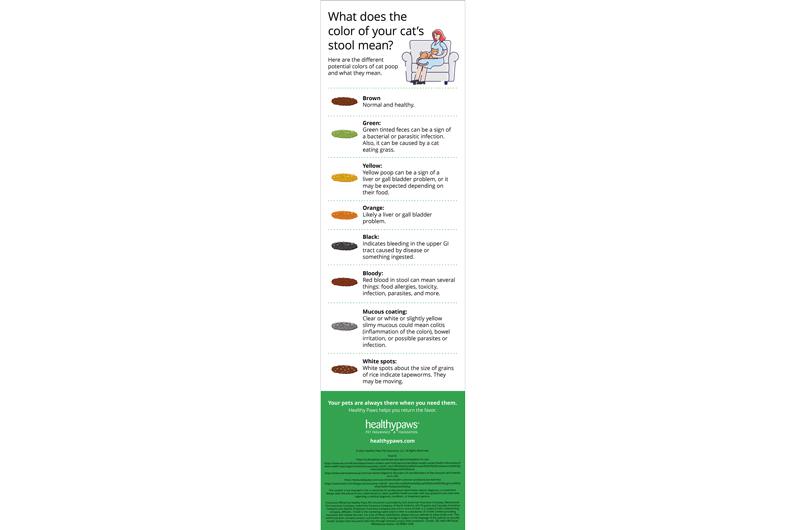
- Brown: It can vary from light to dark brown and is a normal and healthy stool.
- Green: can signify that food is moving through the gastrointestinal tract (GI) too quickly, possibly because of a bacterial infection. Also, it can be caused by a cat eating grass.
- Yellow: Like green poop, yellow poop is a sign of abnormally fast transit of food through the GI tract. It can also indicate problems with the liver or gall bladder. If it has a foul smell (more than normal), it could indicate coccidia, an intestinal parasite.
- Orange: Likely a liver or gall bladder problem.
- Black: Black cat poop indicates bleeding in the upper gastrointestinal tract caused by disease or something ingested. (see below)
- White or yellow mucus: Clear or white or slightly yellow slimy mucous could mean colitis (inflammation of the colon), bowel irritation, or possible parasites or infection.
- White spots: White spots about the size of grains of rice indicate tapeworms. They may be moving.
What does blood in the stool mean?
Sometimes, blood in your cat’s stool is caused by a minor issue that is easily treatable, or it may pass on its own. However, many causes of bloody stool are concerning and should be checked out.
Here are some possible reasons for blood in the stool:
A sudden change in diet or food allergies
Suddenly changing your cat’s food could cause an upset stomach, resulting in blood in their stool. When transitioning from current food to a new diet, be sure to do so gradually.
Poisoning or foreign object ingestion
Cats who eat something toxic or a hard object that is difficult to pass can develop bloody stool. Call your vet right away if you suspect this. This may also cause black or tarry stool (see below).
Serious illnesses
If your cat’s stool is bright red and watery, it could indicate an infection, parasites or a more severe condition such as cancer. Bright red, bloody diarrhea is a symptom of several common illnesses, some of which are fatal, so your cat should be seen by a vet immediately.
Colitis
Cats with colitis (inflammation of the colon) will strain to defecate and frequently pass mucus-laden feces, sometimes containing bright red blood.
What does black blood in the stool mean?
Black or tarry stool likely means your cat has ingested blood, from bleeding in the stomach or small intestines. This is often a sign of a severe problem and should trigger a vet visit immediately.
Here are some possible reasons for black stool:
Stomach Ulcers
Black or bloody stool is one symptom of a stomach ulcer. Cats with stomach ulceration may develop sudden, life-threatening bleeding within the digestive tract.
Parasites
Mild cases of hookworm infection may cause diarrhea and weight loss, and severe infections from parasites can cause anemia due to blood loss. Digested blood gives the stool a black, tarry appearance. Hookworms are easily detected and treated.
What consistency should a cat’s poop be?
- Healthy stool is smooth or slightly lumpy. Ideally, it will be cigar-shaped.
- Formed but mushy: Soft feces may indicate minor irritation; usually not concerning if it resolves within a few days and there are no other signs of illness.
- Hard pellets or hard stool might indicate your cat suffers from constipation, dehydration, or both. Constipation is an infrequent or difficult passage of feces and is typically a temporary condition. Many constipated cats will experience straining or pain when attempting to defecate. There are many potential causes of constipation in cats. The most common cause is ingestion of irritating or indigestible substances; others include colon diseases, intestinal obstruction, or side effects of some drugs. Severe constipation can lead to megacolon, in which the colon becomes stretched and enlarged because of infrequent bowel movements, possibly leading to permanent muscle damage in the colon.
- Runny stool or diarrhea: Something your cat ate or a change in their diet can cause liquid stool that often clears up on its own. Runny stool or diarrhea can also be caused by stress, medication, parasites, or other medical conditions. Chronic diarrhea, which is resistant to treatment or keeps coming back, can lead to other health problems, such as weight loss or a rough and dull hair coat.
When should I be concerned about my cat’s poop and take him to a veterinarian?
Be sure to contact your veterinarian if your kitten or cat has blood in their stool or if it’s any color besides brown for more than a day. Also, get help if your furry friend has diarrhea beyond 24-48 hours or has not had a bowel movement within 48 hours. In addition to stool abnormalities, look for other signs of illness. Along with abnormal stools, if your cat seems lethargic, or is not eating or drinking, seek veterinary advice as soon as possible.
Authors
Christy True
Christy wrote about pets for Healthy Paws for 35 dog years. A background in journalism may be why she enjoys writing about offbeat animal studies and the latest viral pet trends. She has been owned by several dogs, including current pup Nelson, a rescued mini-Aussie, and she volunteers with a local dog rescue. In her free time, she can usually be found sliding down a mountain near her home in Bend, Ore. with Nelson in hot pursuit.
JoAnna Pendergrass, DVM
JoAnna Pendergrass, DVM, is a veterinarian and freelance medical writer in Atlanta, GA. After graduating from the Virginia-Maryland College of Veterinary Medicine with her veterinary degree, JoAnna completed a 2-year research fellowship in neuroscience at Emory University. During this fellowship, she learned that she could make a career out of combining her loves of science and writing. As a medical writer, JoAnna is passionate about providing pet parents at Healthy Paws with clear, concise, and engaging information about pet care. Through her writing, she strives not only to educate pet parents, but also empower them to make good health decisions for their pets. JoAnna is a member of the American Medical Writers Association.