

Learn how and why veterinary bills are increasing, and how a Healthy Paws plan can help.

Read stories of how Healthy Paws has protected pets like family and made peace of mind and more happy, healthy moments possible.

Rescue organizations across the U.S. received support for adoption efforts and ongoing care for vulnerable pets.

Make their food irresistible with the freshest nutritionally-balanced ingredients.
The Healthy Paws Community is a vibrant, social-first space for all pet lovers—whether you’re a Healthy Paws policyholder or simply passionate about pets. As a Pack Member, you can share your favorite pet photos and videos, connect with fellow pet parents, and stay informed with the latest Healthy Paws news and tips. It’s a welcoming place focused on connection, positivity, and celebrating the joy pets bring to our lives!
Everyday expenses for a pet now exceed $4,000 a year on average, according to new research. As prices continue to climb, pet owners face tough choices. Pet insurance can be a financial backstop against the unexpected.
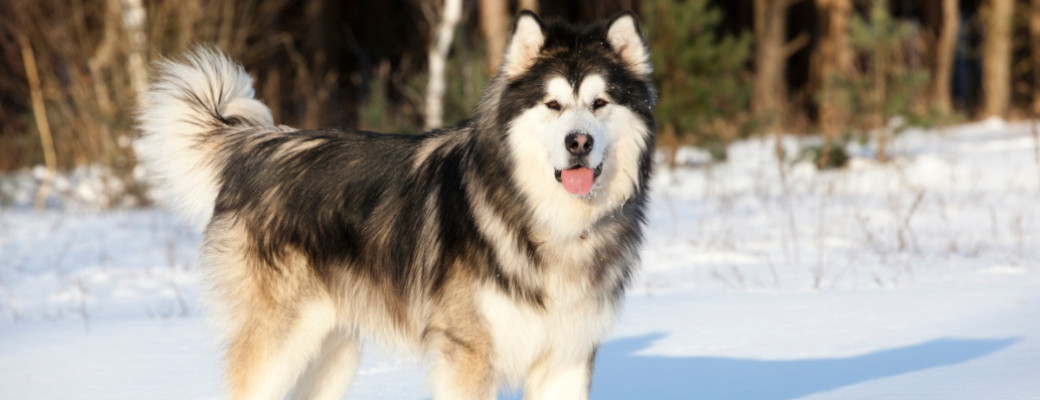
Introduction to Alaskan Malamutes
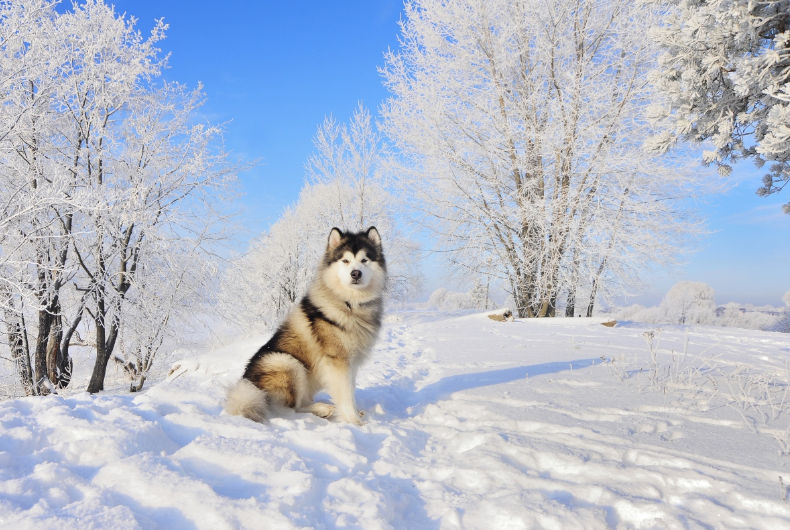
Alaskan Malamutes are playful, affectionate, and loyal Working Group dogs native to the U.S. state of Alaska. These are strong and powerful dogs that are resilient and known for pulling lots of weight. They have weatherproof coats that make them well-equipped for harsh northern winters and are gentle and friendly when welcomed into families with kids.
If you are looking for an intelligent dog and are committed to offering plenty of companionship and exercise, an Alaskan Malamute might be just what you need in your life. Read on to learn about how to care for an Alaskan Malamute, what health conditions to be aware of, and why pet insurance is an excellent idea for this dog breed.
Get a pet insurance quote for your Alaskan Malamutes today
Size of Alaskan Malamutes
A fully grown Alaskan Malamute male will weigh about 85 pounds and stand 25 inches tall at the shoulders. Female Alaskan Malamutes will be more like 75 pounds in weight and 23 inches in height. Most dogs will stop growing between 18 months and two years of age; however, most of the growing is done by age one.
Here’s how big you can expect your Alaskan Malamute to get as the dog grows from puppyhood to adulthood. Female weights are at the low end of these ranges, and male weights are at the high end of them.
| Weight Chart | 3 months | 6 months | 9 months | 12 months | 18 months |
| Female and Male Alaskan Malamutes | 21 – 29 lbs. | 50 – 69 lbs. | 64 – 81 lbs. | 68 – 84 lbs. | 75 – 85 lbs. |
Characteristics of Alaskan Malamutes
Alaskan Malamutes are unique dogs because they are high-energy, sensitive, high-shedding, and very trainable (even if they are sometimes rather independent). These are not the most adaptable dogs because although they love cold weather, they hate hot weather, don’t like being alone, and aren’t the best breed for first-time pet parents. It takes a great deal of time and effort to keep Alaskan Malamutes exercised and mentally stimulated daily. Plus, they shed a lot! They are friendly towards nearly everyone they meet and therefore make great social dogs but not the best watchdogs. They don’t bark a lot, but they can howl, especially when they become bored or lonely.
As you get to know an Alaskan Malamute’s personality, here’s what you can expect based on his or her breed characteristics:
| Breed Characteristic | Level (High, Medium, Low) |
| Affectionate with People | High |
| Good with Kids | Medium |
| Good with Pets | Medium |
| Need for Exercise | High |
| Energy Level | High |
| Intelligence Level | Medium |
| Able to Be Trained | High |
| Amount of Barking | Medium |
| Amount of Shedding | High |
History of Alaskan Malamutes
Alaskan Malamutes are among the oldest sled dog breeds in the world and come from the Arctic region now known as Alaska. Canine experts believe this dog to be descended from domesticated wolf dogs that came with Paleolithic hunters as they moved across the Bering Straight to North America at least 4,000 years ago.
The breed gets its name from a name of Inuit people, Mahlemuit, who lived in the Kotzebue Sound in the northwest part of Alaska. The dogs were bred to be sled dogs and carry heavy loads slowly and alongside other dogs. They carried packs of gear in the summer, distracted bears on hunting expeditions, and found seal breathing holes in the ice. While other types of dog breeds that came from this region were bred to be fast runners and race, Alaskan Malamutes were bred to move slowly while pulling or carrying heavy weight. The dogs have been used for Antarctic expeditions.
Alaskan Malamute Standard Information
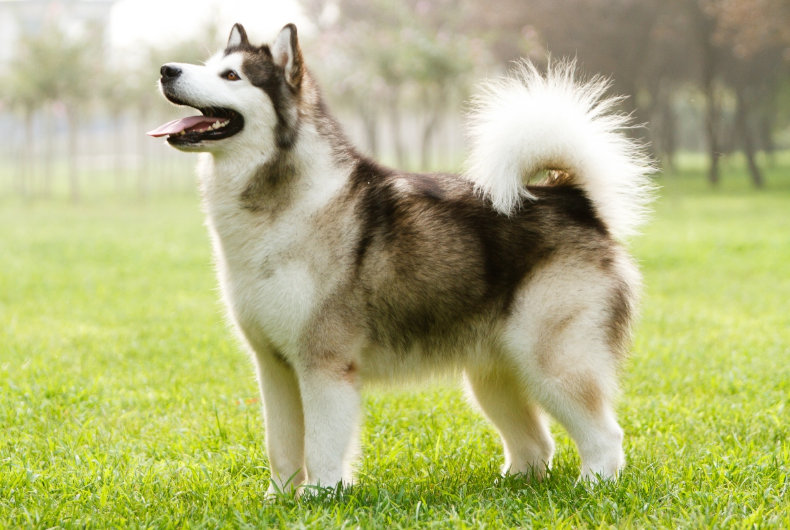
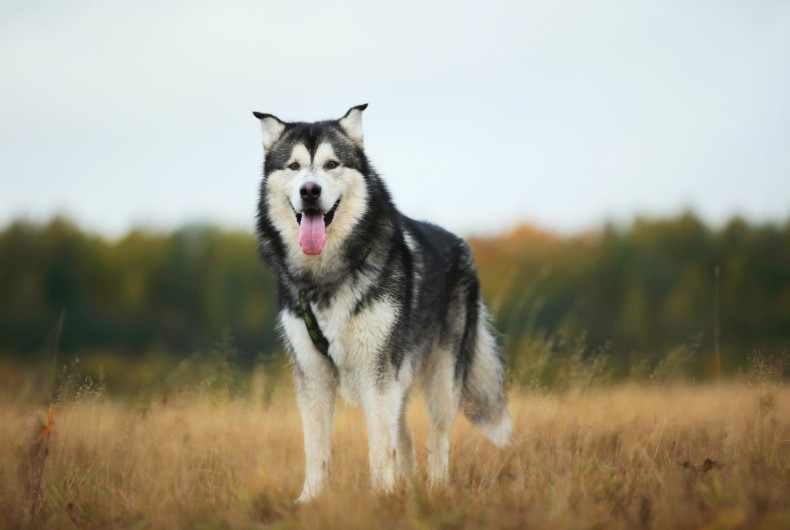
The general appearance of the Alaskan Malamute is powerful with a deep chest and well-muscled body. These dogs have alert eyes and broad heads and come in various colors. They are heavily boned and built for endurance because of their genetics.
Here is an overview of the breed standard information for Alaskan Malamutes:
Head:
- Broad and deep
- Eyes obliquely placed in the skull
- Medium-sized ears, small in proportion to the head
- Large and bulky muzzle in proportion to the skull
- Dark eyes are preferred, and blue eyes are considered a fault
Neck, Topline, Body:
- Strong and moderately arched neck
- Loins hard and well-muscled
- The body is compact but not short-coupled
Forequarters:
- Shoulders slope moderately
- Pasterns are short and strong
- Snowshoe-type feet that are large and have tight-fitting toes
- Thick and tough pads with short and strong toenails
Hindquarters:
- Broad and heavily muscled rear legs
- Dewclaws on rear legs should be removed
Coat:
- Thick, coarse guard coat that is neither long nor soft
- Dense undercoat that is one to two inches deep, oily, and wooly
- Shorter and less dense during the summer
- No trimming except to clean up the appearance of the feet
Color:
- Light gray to intermediate shadings to black, sable, and shadings of sable to red
- White is the predominant color on the underbody, parts of legs, feet, and parts of face
Gait:
- Steady, balanced, and powerful
- Tireless and efficient gait
Caring for Alaskan Malamutes
Taking care of an Alaskan Malamute is a lot of work but also a ton of fun. These dogs are great with children and love being outside. They can be resistant to formal obedience training but do well with training sessions as long as a firm, kind, and confident person is conducting them.
Alaskan Malamutes have a strong prey drive but can still do fine with kittens and other small mammals with proper socialization.
Here are some general tips for taking the best care of Alaskan Malamutes:
Best Living Environments:
- No small apartments
- Best for people who have large yards and acreage
- Cool climates without hot weather
- Property with a good fence
Type of Exercise:
- Long daily walks
- Hiking on trails
- No long runs, especially during hot weather
Mental Enrichment:
- Keep the dog busy to prevent boredom and destructive behavior
- Sandbox for digging in the yard
Training Strategies:
- Relatively easy to house-train
- Enroll in an obedience class as a puppy due to independent nature and strength
Grooming Tips:
- Be prepared for heavy shedding two times per year
- Brush one to three times per week, more frequently during times of heavy shedding
- Baths are rarely necessary, possibly only a couple of times per year
- Trim nails as needed if not worn down naturally outdoors
- Brush teeth daily
Common Health Problems of Alaskan Malamutes
The average Alaskan Malamute will live for 10 to 14 years. For the duration of your dog’s life, you can take the best care of his or her health by keeping up with regular vet checkups and being aware of common health issues that affect this breed.
These are some of the most common health issues that arise with Alaskan Malamutes:
- Hemeralopia (day blindless that occurs in bright light) and other eye problems
- Polyneuropathy (an inherited issue that leads to poor coordination and labored gait)
- Hip dysplasia
- Hypothyroidism
- Cataracts
- Chondrodysplasia (a genetic disorder involving limb deformities)
- Bloat
Diet and Nutrition for Alaskan Malamutes
Most adult dogs will thrive when eating a high-quality, nutritionally complete and balanced dog food. Alaskan Malamute puppies should generally eat a large breed puppy food until they are around 12-18 months old. If you feed your Alaskan Malamute homemade dog food, make sure you are working from a recipe that is designed by a veterinary nutritionist and is appropriate for your dog’s age and health status.
Feed the amount of dog food needed to keep your pet slim. You should be able to see your dog’s waist and feel (but not see) their ribs without having to press too hard. In general, puppies need more calories per day than adults, but a dog’s needs will vary with his or her activity level and other factors. Don’t leave food out all day for an Alaskan Malamute to graze on. Divide the total amount of food for the day into at least two meals for adults and three meals for puppies. Place the food out in a bowl at approximately the same time each day.
When choosing a type of dog food for your Alaskan Malamute, talk with your veterinarian about recommended brands for large breeds and high-energy dogs. These dogs can burn up to 2,000 calories per day because of their size and love of exercise. Some brands to consider include Ollie Fresh Turkey With Blueberries, True Acre Foods Grain-Free Dry Dog Food and Taste Of The Wild High Prairie Grain-Free Dry Dog Food.
Where to Adopt or Purchase Alaskan Malamutes
One resource to know if you are interested in the Alaskan Malamute breed is the Alaskan Malamute Club of America. This is the AKC parent breed club for the dog and offers information about breeders, weight pull rules, dog shows, and common health problems. If you want to adopt a dog in need of a loving home from a rescue group, you can contact CHAAMP Malamute Rescue, Moonsong Malamute Rescue, the Illinois Alaskan Malamute Rescue Associate, Taysia Blue Rescue, or another regional group near where you live.
Related Breeds
If you love Arctic dog breeds, you’re in luck because there are other similar and related breeds that share commonalities with the Alaskan Malamute. Here are a few examples:
- Siberian husky
- Samoyed
- American Eskimo dog
- Lapponian herder
- Chinook
Pet Insurance for Alaskan Malamutes
Alaskan Malamutes are amazing dogs that deserve our care, attention, and devotion during each phase of life. One of the best things you can do to safeguard your dog’s health is to get pet health insurance so that you are never faced with the difficult issue of affording veterinary care. Healthy Paws offers pet insurance plans for Alaskan Malamutes with no maximum annual or lifetime payouts, and we process most claims within two days.
In the event that your Alaskan Malamute gets into an accident and requires emergency care or starts showing symptoms of a disease, Healthy Paws is here to help. We offer online quotes for pet insurance and can also be reached by phone at 855-898-8991 if you have any questions about enrolling your Alaskan Malamute.
Authors
Stacy Painter
Stacy has always been an animal lover and has worked in the pet industry and pet insurance specifically for over a decade. As a writer since early childhood, content writing for Healthy Paws pet insurance was a natural career path to combine her two passions. She currently lives in Florida with her boyfriend and Taiwanese rescue dog, Kaya.
Jennifer Coates, DVM
Dr. Jennifer Coates received her Bachelor of Science degree in biology from McGill University in Montreal, Quebec, Canada. After graduation, she worked for several years in the fields of conservation and animal welfare before pursuing her childhood dream—becoming a veterinarian. She graduated with honors from the Virginia-Maryland Regional College of Veterinary Medicine and has worked as an Associate Veterinarian and Chief of Staff in Virginia, Wyoming, and Colorado. Jennifer is also a prolific writer about all things related to veterinary medicine and the well-being of our animal friends. She has published several short stories and books, including the Dictionary of Veterinary Terms, Vet-Speak Deciphered for the Non-Veterinarian. She currently contributes to the Healthy Paws pet insurance blog as a freelance writer. In her free time, Jennifer enjoys life in Colorado with her family and friends… many of whom walk on four legs.