

Learn how and why veterinary bills are increasing, and how a Healthy Paws plan can help.


Three rescues across North Carolina and Georgia received donations that made a big impact.

Make their food irresistible with the freshest nutritionally-balanced ingredients.
Introduction to Biewer Terriers
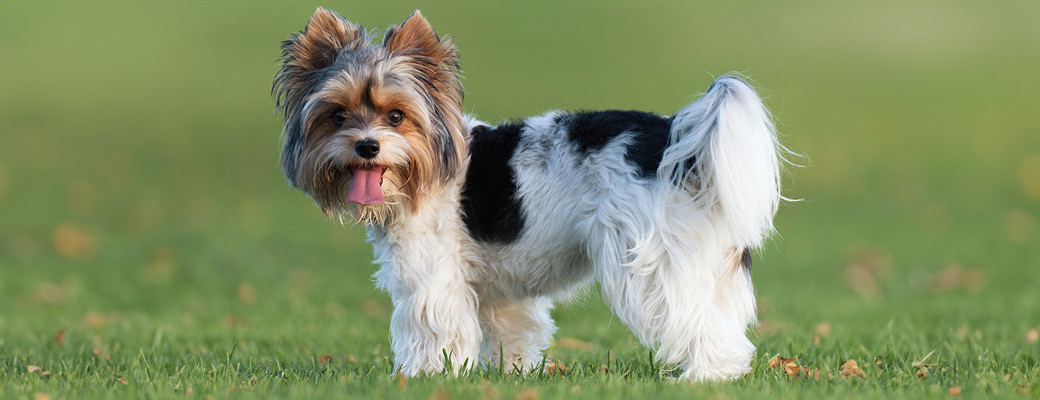
The Biewer terrier (pronounced as “beaver terrier”) is a tiny and rare purebred dog breed resulting from a recessive gene in two Yorkshire terriers bred together. This playful, friendly, and energetic dog has only been recognized by the American Kennel Club since 2021 and is known for its tri-colored long hair and happy-go-lucky demeanor. Even though they are tiny Toy Group dogs, they are athletic and hearty, with a long lifespan and versatile lifestyle. They get along well with kids and other pets, and a dog of this breed could very well become your new best friend.
From the dog experts at Healthy Paws, here is our Biewer terrier breed guide to help you understand how to care for this dog and whether one might be the right fit for your household.
Get a pet insurance quote for your Biewer Terrier today
Size of Biewer Terriers
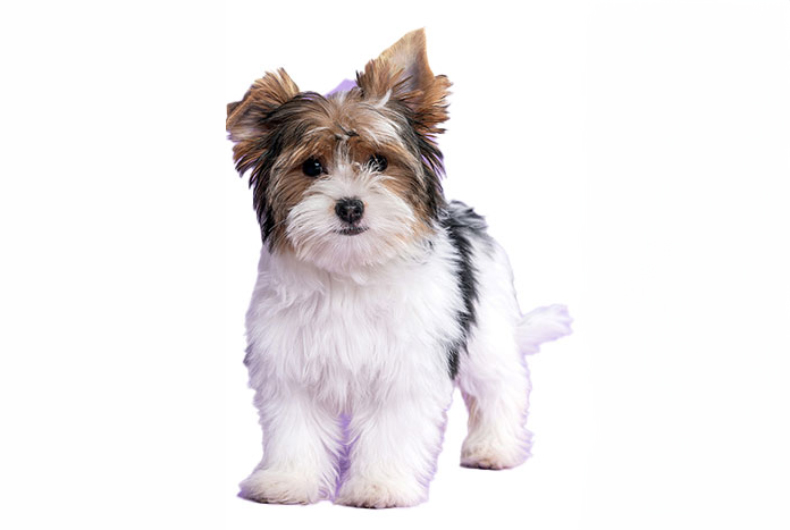
One of the most remarkable physical characteristics of a Biewer terrier is its size, as the dog only weighs four to eight pounds and stands seven to 11 inches tall. This breed grows faster than larger breeds of dogs and is done growing by around nine to 12 months of age. There is only a small difference in size between male and female Biewers, with males being just slightly larger.
Here’s how big you can expect your Biewer terriers to get as the dog grows from puppyhood to adulthood:
| Weight Chart | 3 months | 5 months | 7 months | 12 months |
| Female and male Biewer terriers | 1.5 – 3 lbs. | 2 – 6 lbs. | 2.5 – 6 lbs. | 4 – 8 lbs. |
Characteristics of Biewer Terriers
The Biewer terrier’s breed characteristics include being loyal, affectionate, intelligent, and reasonably easy to train. These dogs must be mentally stimulated and exercised daily to maintain optimal health. These are social dogs that get along well with people and other animals. However, they can also be a bit stubborn and have strong prey instincts because of their terrier background.
As you get to know a Biewer terrier’s personality, here’s what you can expect based on his or her breed characteristics:
| Breed Characteristic | Level (High, Medium, Low) |
| Affectionate with People | High |
| Good with Kids | Medium |
| Good with Pets | High |
| Need for Exercise | Medium |
| Energy Level | Medium |
| Intelligence Level | Medium |
| Able to Be Trained | Medium |
| Amount of Barking | Medium |
| Amount of Shedding | Low |
History of Biewer Terriers
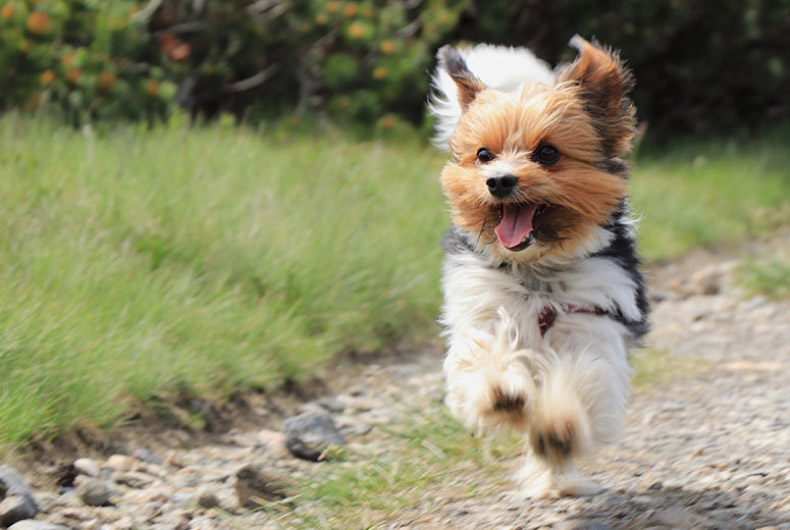
Germany is the country of origin for the Biewer terrier breed. In 1984, two tricolor puppies were born to Yorkshire terrier breeders named Werner and Gertrude Biewer, which is where the breed got its name. The Biewer couple worked to develop a consistent population of the new breed through selective breeding. The dogs first came to America in 2002 and quickly became popular.
The Biewer Terrier Club of America was formed to protect and promote the new breed in the U.S. DNA testing in 2007 confirmed that the Biewer terrier was, in fact, a separate and distinct breed from the Yorkshire terrier based on blood samples and genetic material. Other names for this breed are the Biewer Yorkshire à la Pom Pon, Biewer Yorkie, and simply Biewer.
Biewer Terrier Standard Information
The general appearance of the Biewer terrier is elegant, longhaired, and sporting a signature ponytail. The dog’s coat is parted down the middle and hangs straight and evenly on both sides of the body. Its tail is set high, and the dog has a lighthearted, whimsical attitude that toes the line between mischievous and obedient.
Here is an overview of the breed standard information for Biewer terriers:
Head:
- Human-like expression that is bright and intelligent
- Medium-size eyes that are round or almond-shaped
- Small, upright, and V-shaped ears
- Slightly rounded skull
- Muzzle that is one-third the length of the head
- Lips, nose, and eye rims are entirely black
- Level or scissors bite
- Teeth are straight and even
Neck, Topline, Body:
- Moderate-length neck that is free from throatiness
- Level topline
- Body length slightly longer than overall height
- Moderately sprung ribs
- Well-developed and sprung loin
- Tail set high in movement
- Plume lies to either side of the body
Forequarters:
- Forelegs are straight, with elbows neither in nor out
- Shoulders are nicely laid back
- Elbows are set close to the body
- Dewclaws can be removed but not required
- Feet are round
- Toes are well-arched and covered with hair
- Pads are black or flesh-colored
- Nails are black or white
Hindquarters:
- Hind legs are straight when viewed from behind
- Stifle is slightly bent when viewed from the side
- Hocks are straight and pointing neither in nor out
- Dewclaws can be removed but not required
- Pads and nails are the same as in front
Coat:
- Long, flowing, and silky coat
- Straight hair without an undercoat
- Coat may be trimmed to floor length
- Puppy ponytails and bows can be used
Color:
- Head is blue/black, gold/tan, and white in symmetry
- A combination of two colors is acceptable
- Hair on the back is blue/black and white
- Chest, stomach, legs, and tail tip are white
Gait:
- Confident and prideful gait
- Graceful, smooth, and straightforward movement
- Tail is up while in movement
Caring for Biewer Terriers
The Biewer terrier, while small, is an active dog breed that needs daily exercise to burn off energy. Without this exercise, the breed could resort to destructive digging and chewing behaviors.
Here are some more general tips for taking the best care of a Biewer terrier:
Best Living Environments:
- Excellent dogs for apartment living
- Moderate climate that is not too hot or cold
- Households with active family members
Type of Exercise:
- Playtime in a house or small yard
- Brisk walks around the neighborhood
Mental Enrichment:
- Dog sports
- Agility and search and rescue training
- Interactive dog toys
Training Strategies:
- Generally take to training well
- Supervise young children around Biewers
- Train with patience due to characteristic stubbornness
Grooming Tips:
- Long coats require daily brushing to prevent tangles and matting
- Can shorten the coat to reduce brushing maintenance
- Trim nails regularly to prevent cracking and splitting
- Check ears for wax and debris
- Brush teeth regularly
Common Health Problems of Biewer Terriers
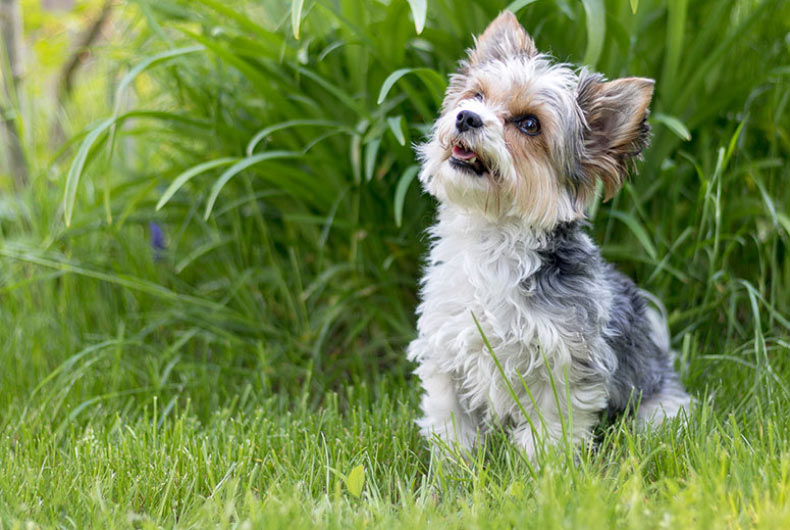
One of the most wonderful things about these dogs is their long lifespan, approximately 16 years. You can enjoy many fun years with your Biewer if you keep up with yearly vet checkups and have a pet insurance plan that helps you pay for whatever medical treatment your dog needs.
These are some of the most common health issues that arise with Biewer terriers:
- Sensitive stomach with vomiting and diarrhea
- Dental problems, including tooth decay and gum disease
- Portosystemic shunt, a congenital blood flow issue related to the liver
- Legg-Calvé-Perthes Disease, a degeneration of the hip joint
- Luxating patella, a kneecap dislocation
- Eye conditions, including cataracts and progressive retinal atrophy
- Tracheal collapse
- Hypoglycemia (low blood sugar)
- Urinary tract stones
Diet and Nutrition for Biewer Terriers
Biewer terriers are prone to gastrointestinal tract sensitivity, but this can be controlled with a good diet and limiting treats. Feed your fully grown Biewer terrier ¼ to ½ cup of dry dog food daily, split into two meals. The primary ingredient in commercial dog food should be an animal-based protein, such as turkey, salmon, chicken, or beef.

Where to Adopt or Purchase Biewer Terriers
The Biewer Terrier Club of America is a resource for purchasing a purebred dog or adopting a rescue dog needing a loving home. The organization provides a breeder directory and has rescue volunteers who work to rehabilitate and rehome Biewer terriers who have been lost, abandoned, or surrendered. There are also rescue groups that you can contact with adoption inquiries, such as Rocky Mountain Biewer Terriers and the Biewer Terrier Rescue And Rehoming Center.
Related Breeds
If you love the idea of bringing a tiny, hairy, and friendly companion into your home, you might be interested to learn more about these breeds that are related or similar to the Biewer terrier:
Pet Insurance for Biewer Terriers
Once you purchase or adopt a Biewer terrier and get the new dog set up in your home, the next thing to look into is pet insurance. Healthy Paws offers Biewer terrier dog insurance to cover illnesses, accidents, hereditary and congenital conditions, cancer, chronic conditions, emergency and specialty hospitals, and alternative care. We have been the top customer-rated pet insurance plan for the past seven years and are here for you whenever your pup is feeling unwell.
Tell us just a few details about your Biewer terrier to get your pet insurance quote today.
Authors
Stacy Painter
Stacy has always been an animal lover and has worked in the pet industry and pet insurance specifically for over a decade. As a writer since early childhood, content writing for Healthy Paws pet insurance was a natural career path to combine her two passions. She currently lives in Florida with her boyfriend and Taiwanese rescue dog, Kaya.
Brittany Kleszynski, DVM
Dr. Brittany Kleszynski is a freelance veterinary and medical writer for Healthy Paws who specializes in creating meaningful content that engages readers and speaks directly to the intended audiences. She writes and edits educational articles for pet parents and creates continuing education and online learning modules for healthcare professionals. She has worked in research and small animal practice since graduating veterinary school and is a member of the American Veterinary Medical Association.