

Learn how and why veterinary bills are increasing, and how a Healthy Paws plan can help.


Three rescues across North Carolina and Georgia received donations that made a big impact.

Make their food irresistible with the freshest nutritionally-balanced ingredients.
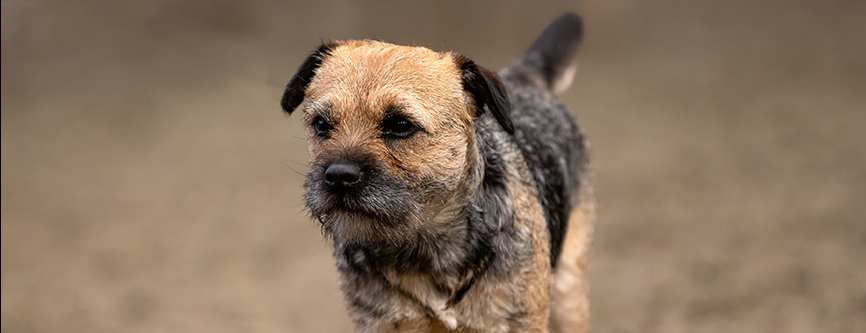
Introduction to Border Terriers
Border terriers are happy and affectionate dogs with a small size and versatile temperament. They are tough pups that make excellent working dogs and love exploring the outdoors. But they are also wonderful household dogs that adapt well to a city lifestyle and enjoy playing with children.
This breed originated from the United Kingdom and is prone to chasing small prey, digging in the dirt, and occasionally being vocal. Learning more about the border terrier breed before deciding to bring one of these dogs into your household is a smart idea. Our pet experts at Healthy Paws are pleased to share this dog breed guide with you to help you make the best decision on a new pet!
Get a pet insurance quote for your Border Terrier today
Size of Border Terriers
Male border terriers weigh 13 to 15.5 pounds when fully grown, and females weigh 11.5 to 14 pounds. Adult dogs stand between 12 and 15 inches tall. Most border terriers reach their final adult weight when they are around 10 to 12 months old.
Here’s how big you can expect your border terrier to get as the dog grows from puppyhood to adulthood:
| Weight Chart | 3 months | 6 months | 8 months | 12 months |
| Male border terriers | 6.5-9 lbs. | 10.5-13 lbs. | 11.5-14 lbs. | 13-15.5 lbs. |
| Female border terriers | 6-8 lbs. | 9.5-11.5 lbs. | 10-12.5 lbs. | 11.5-14 lbs. |
Characteristics of Border Terriers
The most outstanding characteristics of the border terrier are friendly, perky, lively, and strong-willed. They are trainable and have fun personalities and an intelligent demeanor.
Border terriers are amazing dogs but not the best breed for everyone. Some people find their digging, climbing, chasing, and easily bored antics to be frustrating. Pet parents should not leave a border terrier alone for long periods of time because the dog may become easily bored, destructive, and noisy.
As you get to know a border terrier’s personality, here’s what you can expect based on the breed characteristics:
| Breed Characteristic | Level (High, Medium, Low) |
| Affectionate with People | High |
| Good with Kids | High |
| Good with Pets | Medium |
| Need for Exercise | Medium |
| Energy Level | Medium |
| Intelligence Level | High |
| Able to Be Trained | High |
| Amount of Barking | Medium |
| Amount of Shedding | Medium |
Border Terrier Standard Information
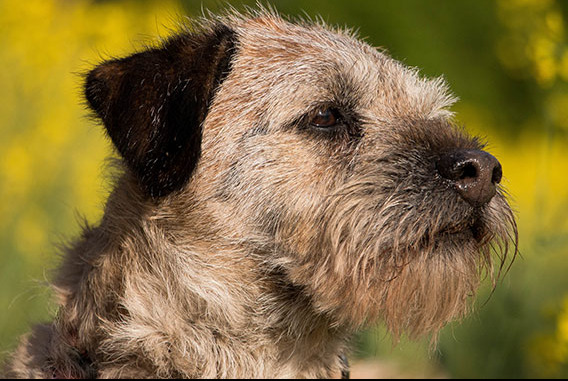
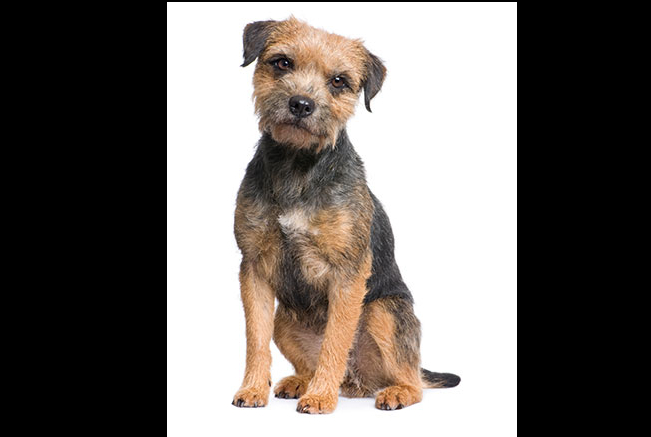
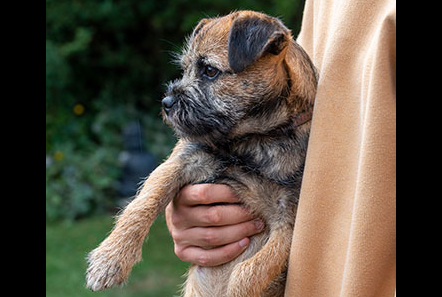
With great endurance and agility, the border terrier is an active dog with narrow shoulders, an otter-like head, and an alert expression. These working dogs are compared to an official standard when competing at dog shows.
Here is an overview of the breed standard information for border terriers:
Head:
- Otter-shaped head
- Dark hazel, intelligent eyes
- Small, V-shaped ears
- Short and well-filled muzzle
- Scissors bite with strong teeth
- Black nose
Neck, Topline, Body:
- Clean, muscular, and balanced neck
- Deep, narrow body
- Moderately short tail that is thicker at the base
Forequarters:
- Shoulders are well laid back and of good length
- Forelegs are straight and not too bone-heavy
- Feet are small and compact
- Toes point forward and are moderately arched with thick pads
Hindquarters:
- Thighs are long and nicely molded
- Stifles are well bent, and hocks well let down
- Feet are the same as in front
Coat:
- Short and dense undercoat with a wiry and somewhat broken topcoat
- Topcoat does not curl or wave
- Minimal trimming only to tidy up the feet, neck, and head
- Hide is thick and loose-fitting
Color:
- Red, tan and grizzle, blue and tan, or wheaten colors
- A small amount of white is permissible on the chest
- No white on the feet
- Muzzle is dark
Gait:
- Straight and rhythmical movement
- Good length of stride
- Free, agile, and quick gait with a handler
Caring for Border Terriers
Border terriers are a lot of fun to be around, but they also take significant work as a pet parent. For example, it’s important to be mindful of how much exercise and playtime these pups need daily.
Here are some general tips for taking the best care of a border terrier:
Best Living Environments:
- Active dogs that do best with active families
- Apartments are fine as long as the dog is exercised well daily
- Backyard fences ideally should extend underground 18 inches due to digging tendencies
- Only allow off-leash in secured fencing areas
Type of Exercise:
- 30-to-60-minute walks and play sessions
- Games with balls and flying discs
- Always walk on a leash due to the high prey drive
- Hikes with family members
Mental Enrichment:
- Canine sports, such as flyball
- Lure coursing
- Tracking
- Agility courses
Training Strategies:
- Eager-to-please dogs that can easily learn commands
- Yet they are independent dogs that may choose when they want to obey
- Use positive training methods and be consistent
- Introduce the dog to different people, other animals, and lots of environments from an early age
Grooming Tips:
- Brush every week or two
- Prepare for seasonal shedding
- During shedding season, spend about half an hour daily removing dead hair with your hands or a stripping tool
- Trim the nails about once per month
- Check ears for debris every week
- Brush teeth daily
- Bathe only as needed
Common Health Problems of Border Terriers
The average life expectancy of a border terrier is 12 to 15 years, but you can help your dog live the longest and happiest life possible by paying close attention to its health. If you purchase your border terrier from a breeder, ensure the breeder has screened breeding dogs for the relevant health conditions, such as heart problems, seizures, cataracts, progressive retinal atrophy, and hip dysplasia. The national breed club for border terriers recommends the following health tests: hip evaluation, patella evaluation, spongiform leukoencephalomyelopathy DNA test, cardiac exam, and ophthalmologist evaluation.
Health issues that can be a concern with border terriers include:
- Heart disease
- Hip dysplasia
- Progressive retinal atrophy
- Juvenile cataracts
- Seizures
- Spongiform leukoencephalomyelopathy (SLEM or shaking puppy)
- Paroxysmal gluten-sensitive dyskinesia (PGSD)
- Gall bladder mucocele
- Cruciate ligament ruptures
- Allergies
Diet and Nutrition for Border Terriers
Most adult border terriers will thrive when eating a high-quality, nutritionally complete and balanced adult dog food. Puppies should eat puppy food until they are around 10 to 12 months old. These small dogs need to eat more frequently than big dogs to prevent their blood sugar levels from dropping, particularly as puppies. Therefore, you may need to feed your border terrier puppy four to five small meals per day to prevent hypoglycemia (low blood sugar levels). Adults generally do well with two to three meals a day. If you feed your border terrier homemade dog food, make sure you are working from a recipe that is designed by a veterinary nutritionist and that is appropriate for your dog’s age and health status.
Border terriers are more prone than many other dogs to become overweight, so discussing portion sizes and food brands with your veterinarian is essential. Feed the amount of dog food needed to keep your pet slim. You should be able to see your dog’s waist and feel (but not see) their ribs without having to press too hard. In general, puppies need more calories per day than do adults, but a dog’s needs will vary with their activity level and other factors.
Talk to your veterinarian if you have any questions about your border terrier’s diet or health.
Where to Adopt or Purchase Border Terriers
If you wish to purchase a pure border terrier from a breeder, one place to start your search is the Border Terrier Club of America. This national breed club offers a breeder directory and general information about the breed. There is also the North American Border Terrier Welfare Rescue, a volunteer-run organization that helps people adopt a rescue dog of this breed and match dogs with new adoptive homes. It has an adoption form to complete to start the rescue process and a Facebook page with adoption updates and opportunities to donate to help border terriers in need of assistance.
Related Breeds
The border terrier is just one of many different types of terriers, so you might want to learn more about the various breeds before deciding on a new pet.
Here are some similar and related breeds to the border terrier:
- Norwich terrier
- Dandie Dinmont terrier
- Cairn terrier
- Bedlington terrier
Pet Insurance for Border Terriers
Whether you adopt or purchase a puppy, senior dog, or any pup in between, Healthy Paws is here to help you take the best care of your border terrier. Healthy Paws offers border terrier health insurance plans that let you visit any licensed veterinarian you trust and one easy-to-understand insurance policy with no costly add-ons. Pet insurance comes in handy when your border terrier is injured due to working or playing too hard or if your pup suddenly becomes ill and receives a diagnosis of cancer, a genetic condition, or a breed-specific condition.
At Healthy Paws, we process most claims within two days, and there are no maximum annual or lifetime payouts for border terriers. Please share a few details with us about your border terrier, and we will be happy to send you an online pet insurance quote so that you can make the right decision for your family.
Authors
Christy True
Christy wrote about pets for Healthy Paws for 35 dog years. A background in journalism may be why she enjoys writing about offbeat animal studies and the latest viral pet trends. She has been owned by several dogs, including current pup Nelson, a rescued mini-Aussie, and she volunteers with a local dog rescue. In her free time, she can usually be found sliding down a mountain near her home in Bend, Ore. with Nelson in hot pursuit.
Jennifer Coates, DVM
Dr. Jennifer Coates received her Bachelor of Science degree in biology from McGill University in Montreal, Quebec, Canada. After graduation, she worked for several years in the fields of conservation and animal welfare before pursuing her childhood dream—becoming a veterinarian. She graduated with honors from the Virginia-Maryland Regional College of Veterinary Medicine and has worked as an Associate Veterinarian and Chief of Staff in Virginia, Wyoming, and Colorado. Jennifer is also a prolific writer about all things related to veterinary medicine and the well-being of our animal friends. She has published several short stories and books, including the Dictionary of Veterinary Terms, Vet-Speak Deciphered for the Non-Veterinarian. She currently contributes to the Healthy Paws pet insurance blog as a freelance writer. In her free time, Jennifer enjoys life in Colorado with her family and friends… many of whom walk on four legs.