

Learn how and why veterinary bills are increasing, and how a Healthy Paws plan can help.

Read stories of how Healthy Paws has protected pets like family and made peace of mind and more happy, healthy moments possible.

Rescue organizations across the U.S. received support for adoption efforts and ongoing care for vulnerable pets.

Make their food irresistible with the freshest nutritionally-balanced ingredients.
The Healthy Paws Community is a vibrant, social-first space for all pet lovers—whether you’re a Healthy Paws policyholder or simply passionate about pets. As a Pack Member, you can share your favorite pet photos and videos, connect with fellow pet parents, and stay informed with the latest Healthy Paws news and tips. It’s a welcoming place focused on connection, positivity, and celebrating the joy pets bring to our lives!
Everyday expenses for a pet now exceed $4,000 a year on average, according to new research. As prices continue to climb, pet owners face tough choices. Pet insurance can be a financial backstop against the unexpected.

Introduction to French Bulldogs
French bulldogs are charming and playful dogs that can adapt well to many living environments and make great pets. Bulldogs actually originated in England but became popular among lace-makers in the French countryside – hence their name. Affectionately referred to as “Frenchies,” these dogs are favorites among city-dwellers. Frenchies will always make you laugh and don’t require much exercise, making them ideal for apartments and smaller homes.
French bulldogs are a pure breed of dog with distinct characteristics and relatively small size. If you’re ready for an amusing and irresistible dog to be your daily companion, then read on to learn more about bringing a French bulldog into your life.
Tell us about your pet - get a quick quote
Size of French Bulldogs

Both male and female French bulldogs stand at about 11 to 13 inches when fully grown and are under 28 pounds for weight. Of course, some French bulldogs are heavier than this, but anything over 28 pounds disqualifies the dog from American Kennel Club competitions.
These are small, yet muscular, dogs with large heads and front legs that are shorter than the rear legs. Frenchies stop growing by about 12 months of age. In general, males are only slightly larger than females
Here’s how big you can expect your French bulldog to get during the first year of life:
Weight Chart
| Weight Chart | 3 months | 6 months | 9 months | 12 months |
|---|---|---|---|---|
Male French Bulldogs |
8.5-12.75 pounds |
15.5-23.5 pounds |
18-28 pounds |
20-30 pounds |
Female French Bulldogs |
7-12 pounds |
13-5-22 pounds |
16.5-26.5 pounds |
17.5-28 pounds |
Characteristics of French Bulldogs
There are certain characteristics that French bulldogs typically have based on how they have been bred over the years. For example, these dogs are very friendly with people they know and pretty friendly with strangers too. They are easy to groom, have only moderate physical needs, and can be trained if you have some extra patience and time to spend on teaching your dog good behaviors.
As you get to know a French bulldog’s personality, here’s what you can expect based on his or her breed characteristics:
Breed Characteristic
| Breed Characteristic | Level (High, Medium, Low) |
|---|---|
Affectionate with People |
High |
Good with Kids |
Medium |
Good with Pets |
Medium |
Need for Exercise |
Medium |
Energy Level |
Medium |
Intelligence Level |
Medium |
Able to Be Trained |
Medium |
Amount of Barking |
Medium |
Amount of Shedding |
Medium |
History of French Bulldogs
Small bulldogs were popular in England in the mid-1800s, especially in lace-making cities like Nottingham. Making lace as a trade was becoming less common during this time of the Industrial Revolution, which sent many lace-makers to northern France. They brought their little dogs with them to the French countryside, where they were crossed with possibly pugs and terriers to create what we now know as the French bulldog.
People in Paris were drawn to this breed because of how well French bulldogs could adapt to city life. The breed’s popularity spread to other parts of Europe and to America too. However, some Englishmen were not pleased to see their rivals, the French, adapting one of one their national symbols, the bulldog, for their own purposes. Something that distinguishes the various bulldogs is that French bulldogs have bat-like ears, while other bulldogs have rose-like ears. Frenchies are also known for their half-flat, half-domed skulls.
The American Kennel Club has recognized the French bulldog as a breed since 1898. They are among the most popular small dog breeds in the world today and have been companions for many well-known celebrities in recent years.
French Bulldog Standard Information
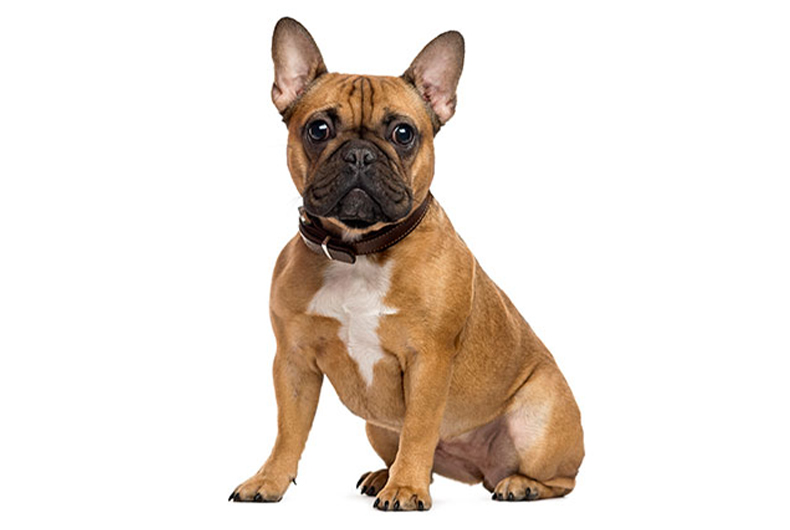
Since French bulldogs are a pure breed of dog, there are established standards for a Frenchie’s appearance, characteristics, and temperament. This includes the breed being intelligent, muscular, active, compactly built, and with a smooth coat.
Here is an overview of the breed standard information for French bulldogs:
Head:
- Large and square head
- Dark brown, almost black eyes set wide apart
- Bat ears, elongated and broad at base
- Skull flat between the ears
- Muzzle broad, deep, and well laid back
- Black nose
Neck, Topline, Body:
- Thick and well-arched neck
- Short and well-rounded body
- Tail straight or screwed
- Chest broad, deep, and full
Forequarters:
- Forelegs short, stout, straight, and muscular
- Dewclaws may be removed
- Feet moderate in size and compact
- Toes compact and well split up
Hindquarters:
- Hind legs longer than forelegs
- Hocks well let down
- Hind feet slightly longer than forefeet
Coat:
- Short, smooth, and brilliant coat
- Soft and loose skin, especially at head and shoulders with wrinkles
Color:
- White, cream, fawn, or any combination of these colors
- Brindle, piebald, black masks, black shadings, and white markings for patterns
- Ticking acceptable but not desired
Gait:
- Four-tracking foot pattern with front track wider than rear
- Unrestrained, free, and vigorous movement
Caring for French Bulldogs

French bulldogs are fairly easy to care for and even work well for first-time pet parents and apartment dwellers. They can be pretty active indoors and do not require a yard to get exercise and be healthy. However, Frenchies do not do well in extreme hot or cold temperatures, so you’ll need to keep them comfortable at all times of the year.
These dogs have an easygoing attitude but do require some extra work for training because they can be stubborn freethinkers. Frenchies are gentle, enjoy following you around the house, and have a goofy demeanor that makes everyone fall in love with them.
Here are some general tips for taking the best care of a French bulldog:
Best Living Environments:
- Great apartment dogs
- Also enjoys running around a yard for hours, however
- Needs air conditioning on hot days
- Good with young children but with supervision
- Do not leave Frenchies alone at home for long periods of time
Type of Exercise:
- Daily walks on a leash
- Two 15-minute walks per day is preferable
- Some Frenchies have a higher energy level than others
- Can have breathing trouble so do not allow exertion during hot weather
Mental Enrichment:
- Playing with toys inside a home
- Cuddling with family members
- Agility and obedience exercises for stimulation
Training Strategies:
- Teach dog to heel beside or behind person holding the leash
- Make training fun with games to play
- Can be difficult to housetrain
Grooming Tips:
- Minimal shedding with a short coat
- Brush weekly with a medium-bristle brush
- Keep facial folds clean and dry
- Trim nails regularly
- Clean ears with a damp cloth and cotton swab around the edge of the canal (but not inside it!)
Common Health Problems of French Bulldogs

Like all dogs, French bulldogs are prone to certain genetic conditions based on their breeding. For example, many Frenchies are affected by hip dysplasia and brachycephalic syndrome, which can cause labored breathing and collapsed airways. Your Frenchie may also suffer from allergies, a malformation of the vertebrae, patellar luxation, and intervertebral disc disease. Cleft palate and Von Willebrand’s disease are other conditions that affect French bulldogs.
To keep your Frenchie safe, you should never allow your dog unattended access to a body of water, such as a pool or lake. This is because Frenchies cannot swim due to their front-heavy structure. Flat-faced breeds of dogs, such as the French bulldog, can be more sensitive to anesthesia than other dogs.
The national breed club for French bulldogs recommends that dogs undergo the following health tests: patella evaluation, cardiac exam, hip evaluation, and ophthalmologist evaluation. When taken good care of, you can expect the average French bulldog to live for 10 to 12 years.
Diet and Nutrition for French Bulldogs
Fully grown Frenchies need between one and 1.5 cups of high-quality dry dog food per day that is divided into two meals. More active Frenchies should be served a little more than sedentary dogs to fuel their energy. Also, older French bulldogs need more protein and fewer calories in their diets compared to younger dogs. Recommended dog foods for this breed are Nulo Freestyle Grain-Free Adult, Purina Pro Plan Shredded Blend, and Merrick Classic Healthy Grains Dry.
Where to Adopt or Purchase French Bulldogs
The French Bull Dog Club of America (FBDCA) is the oldest club in the world dedicated to this breed and was created to promote responsibility and quality in the breeding of these dogs. If you want to adopt a pure French bulldog puppy, the AKC Marketplace offers resources for AKC-registered litters and allows you to look for breeders near where you live. Be careful not to adopt from a “backyard” or inexperienced breeder. The popularity and cost of these dogs mean there are a lot of unscrupulous people breeding dogs with congenital conditions.
The French Bulldog Rescue Network helps Frenchies find their forever homes and offers opportunities to foster a Frenchie in your home. Other rescue organizations that focus on this breed are Rescue French Bulldogs, the New Mexico French Bulldog Rescue, and SNORT Rescue which serves the Northeastern U.S.

Related Breeds
French bulldogs are definitely unique, but there are similar breeds of dogs that you might also be interested in if you love Frenchies. Here are some examples to consider for your next pet:
- English bulldog
- Bull terrier
- Boston terrier
- Cairn terrier
- Havanese
- Miniature poodle
Pet Insurance for French Bulldogs
It’s hard not to love a French bulldog and want to do everything in your power to care for this dog once he or she comes into your life. As a pet parent, one of the best things you can do to plan for your Frenchie’s future is to get pet insurance so that you never have to make a decision between finances and caring for your pet.
Healthy Paws is a top-rated pet insurance company that offers no maximum annual or lifetime payouts and most claims processed within two days. Our French bulldog insurance plan allows you to see any licensed vet you trust and makes it easy to submit claims and get reimbursed for veterinary bills. To take the first step in protecting your beloved French bulldog, request an instant quote on our website, or give us a call at 855-898-8991 with any questions.
Authors
Christy True
Christy wrote about pets for Healthy Paws for 35 dog years. A background in journalism may be why she enjoys writing about offbeat animal studies and the latest viral pet trends. She has been owned by several dogs, including current pup Nelson, a rescued mini-Aussie, and she volunteers with a local dog rescue. In her free time, she can usually be found sliding down a mountain near her home in Bend, Ore. with Nelson in hot pursuit.
Jennifer Coates, DVM
Dr. Jennifer Coates received her Bachelor of Science degree in biology from McGill University in Montreal, Quebec, Canada. After graduation, she worked for several years in the fields of conservation and animal welfare before pursuing her childhood dream—becoming a veterinarian. She graduated with honors from the Virginia-Maryland Regional College of Veterinary Medicine and has worked as an Associate Veterinarian and Chief of Staff in Virginia, Wyoming, and Colorado. Jennifer is also a prolific writer about all things related to veterinary medicine and the well-being of our animal friends. She has published several short stories and books, including the Dictionary of Veterinary Terms, Vet-Speak Deciphered for the Non-Veterinarian. She currently contributes to the Healthy Paws pet insurance blog as a freelance writer. In her free time, Jennifer enjoys life in Colorado with her family and friends… many of whom walk on four legs.