

Learn how and why veterinary bills are increasing, and how a Healthy Paws plan can help.

Read stories of how Healthy Paws has protected pets like family and made peace of mind and more happy, healthy moments possible.

Rescue organizations across the U.S. received support for adoption efforts and ongoing care for vulnerable pets.

Make their food irresistible with the freshest nutritionally-balanced ingredients.
The Healthy Paws Community is a vibrant, social-first space for all pet lovers—whether you’re a Healthy Paws policyholder or simply passionate about pets. As a Pack Member, you can share your favorite pet photos and videos, connect with fellow pet parents, and stay informed with the latest Healthy Paws news and tips. It’s a welcoming place focused on connection, positivity, and celebrating the joy pets bring to our lives!
Everyday expenses for a pet now exceed $4,000 a year on average, according to new research. As prices continue to climb, pet owners face tough choices. Pet insurance can be a financial backstop against the unexpected.
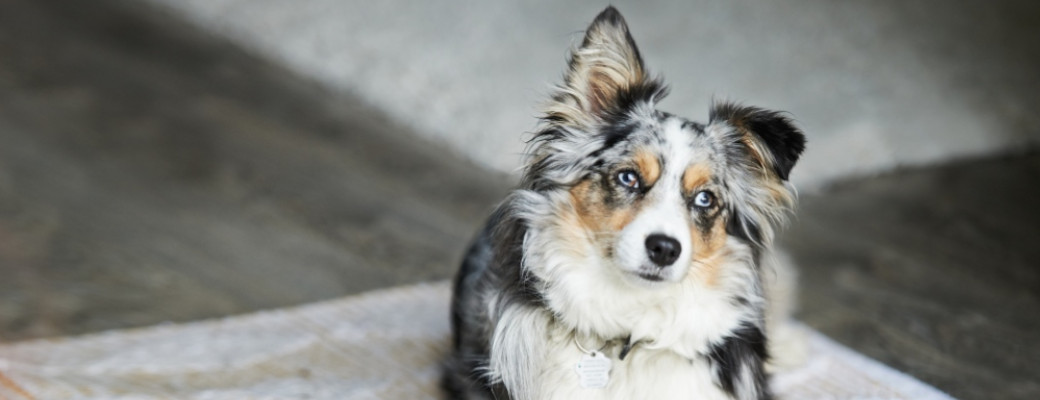
Introduction to Miniature Australian Shepherds
Among the many miniature breeds of dogs that exist today is the miniature Australian shepherd, which is a loyal, smart, and good-natured dog. This is a smaller-size version of the Australian shepherd and has gone by various names. The new breed was originally called the miniature Australian shepherd but is now more commonly called the miniature American shepherd or the North American shepherd. This is because the smaller breed developed in this part of the world rather than in Australia.
But no matter what you call these dogs, they are lovable and great companions. They easily fit into the lifestyles of many types of people and thrive in various environments.
Here’s what you should know about the miniature Australian shepherd if you are thinking of introducing one of these dogs into your household.
Get a pet insurance quote for your Miniature Australian Shepherds today
Size of Miniature Australian Shepherds
When they are fully grown, miniature Australian shepherds are between 20 and 40 pounds, with females weighing in on the low end and males on the high end of that range. Females of this breed stand between 13 and 17 inches in height, while males are more like 14 to 18 inches tall at the shoulder.
In contrast, a full-size Australian shepherd female is 40 to 55 pounds in weight and 18 to 21 inches in height, while full-size males are 50 to 65 pounds in weight and 20 to 23 inches in height.
Here’s how big you can expect your miniature Australian shepherd to get when fully grown.
| Weight Chart | 3 months | 6 months | 9 months | 12 months |
| Male and Female Miniature Australian Shepherds | 9 to 18 pounds | 14 to 28 pounds | 17 to 34 pounds | 20 to 40 pounds |
Although some miniature Australian shepherds reach their final adult weight by about nine months of age, others will keep growing slightly until they are a year or a year and a half old. Your dog’s genetics, diet, and activity level will also affect his or her size.
Characteristics of Miniature Australian Shepherds
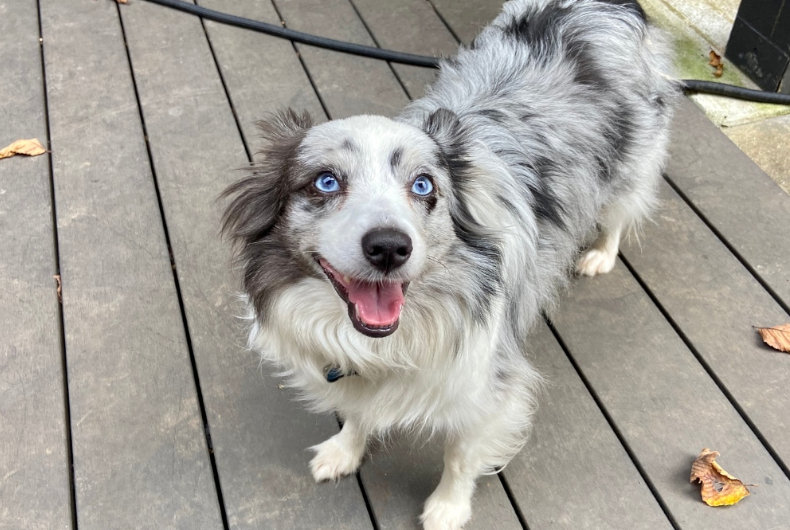
Miniature Australian shepherds are known for their high energy and athletic skills. They are affectionate with adults, kids, and other pets, and they are stunningly beautiful dogs often with striking eye colors.
These dogs love spending time with families but do best with older children who can handle their energy levels. They can be less friendly with strangers, but early socialization will make them pleasant to be around while you are out and about together. Also, they are perceptive dogs that will pick up on your moods and that respond well to praise during training sessions.
As you get to know a miniature Australian shepherd’s personality, here’s what you can expect based on his or her breed characteristics.
| Breed Characteristic | Level (High, Medium, Low) |
| Affectionate with People | High |
| Good with Kids | High |
| Good with Pets | High |
| Need for Exercise | High |
| Energy Level | High |
| Intelligence Level | High |
| Able to Be Trained | High |
| Amount of Barking | Medium |
| Amount of Shedding | Medium |
History of Miniature Australian Shepherds
Although the full-size Australian shepherds have been around for a long time, the miniature version has only been recognized as a breed by the American Kennel Club since 2015. The American Kennel Club refers to this breed as the miniature American shepherd. This is because the breed was developed in the U.S. in the 1960s. Back then, the dogs worked around animals as herders and were popular additions to horse shows because they were well-suited for travel, loyal, intelligent, and ideally sized. The dogs were commonly found in the rodeo circuit in the U.S. during those earliest days for the breed.
These are herding-type dogs that love to perform tasks and learn new skills. They were bred to be hardworking and focused, and these characteristics are still true today among modern miniature Australian shepherds.
Miniature Australian Shepherd Standard Information
The American Kennel Club has developed official breed standard information for the miniature American (Australian) shepherd so that these dogs can be compared to each other in competitions and have an ideal by which to be judged in shows.
Here is an overview of the breed standard information for miniature American (Australian) shepherds:
Head:
- Clean-cut, dry, and proportional
- Almond-shaped eyes
- Alert and attentive expression
- Triangular ears high on head
- Flat to slightly round skull
- Medium width and depth muzzle
- Scissors bite for teeth
Neck, Topline, Body:
- Depth and strength without bulkiness
- Firm and clean neck
- Strong and broad loin
- Docked or natural bobtail preferred
Forequarters:
- Well-conditioned and balanced
- Long, flat, close-set shoulder blades
- Bone is oval and not round
- Oval, compact, and close-knit feet
Hindquarters:
- Clearly defined stifles
- Pads thick and resilient
- Nails can be of any color
- Rear declaws removed
Coat:
- Moderation in all things for the coat
- Medium texture, straight to wavy
- Backs of forelegs and breeches moderately feathered
- Untrimmed whiskers
Color:
- Black, blue merle, red (liver), and red merle
- Undercoats lighter than topcoat
- Asymmetrical markings not faulted
- White or tan markings in moderation
Gait:
- Smooth, free, and easy movement
- Agile and able to turn directions
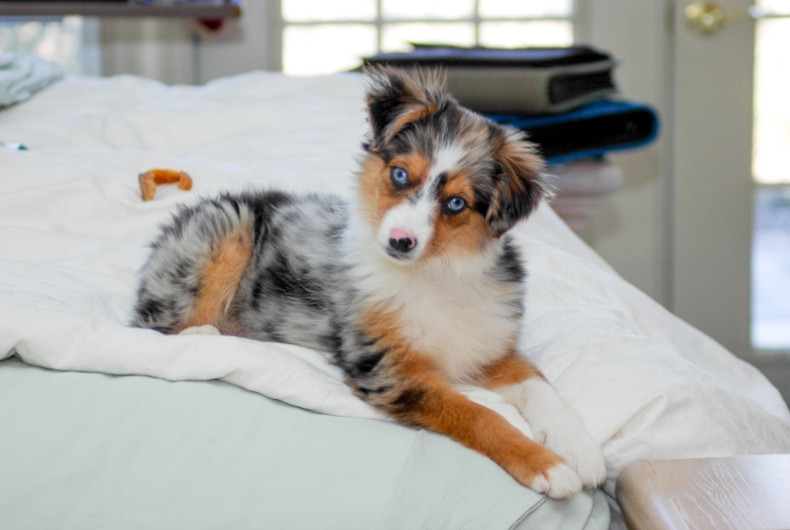
Caring for Miniature Australian Shepherds
This breed of dog is an excellent fit for families who are active and want a dog who can be active right alongside them. However, you will have to be able to devote a substantial amount of time and effort to your miniature Australian shepherd because of the dog’s high need for physical exercise and mental stimulation. If you can’t get your dog out for two lengthy exercise sessions per day, you might need to hire a dog walker to handle the task for you.
Here are some general tips for taking the best care of a miniature Australian shepherd:
Best Living Environments:
- Lots of human interaction
- Lively family environments
- Don’t leave home alone for too long
- Houses with yards rather than small apartments
- Homes with other dogs and cats are fine
- Cold climates okay
Type of Exercise:
- Playtime with other dogs
- Agility courses
- Walks in the neighborhood
- At least an hour of exercise per day
- Running and hiking with humans
- Work to do around a farm
Mental Enrichment:
- Puzzle toys
- Interactive games
- Dog sports
- Games of fetch in the yard
Training Strategies:
- Positive reinforcement techniques only
- Try obedience training or tricks for mental stimulation
- Give small tasks to do throughout the day
Grooming Tips:
- Brush with a wire brush several times per week
- Be prepared for the dog to blow its coat in spring and fall; mini Aussies are not hypoallergenic
- Doesn’t necessarily require professional grooming
- Brush teeth daily
- Trim nails as needed
Common Health Problems of Miniature Australian Shepherds
The average life expectancy of the miniature Australian shepherd is 12 to 13 years, which is typical for dogs of their size. There are generally healthy dogs, but they are still prone to a variety of congenital and hereditary conditions, cancer, accidents, toxic ingestion, and other issues that put their wellbeing at risk.
These are some of the most common health issues that arise with miniature Australian shepherds:
- Multidrug resistance mutation (leading to sensitivity to some medications)
- Progressive retinal atrophy
- Other eye problems, such as iris colobomas, collie eye anomaly, and microphthalmia
- Hip dysplasia
- Elbow dysplasia
- Degenerative myelopathy
- Blindness and deafness in merle and merle crosses
Diet and Nutrition for Miniature Australian Shepherds
The miniature Australian shepherd is an active breed of dog, so even though it is a small-to-midsize dog, it needs enough food to fuel this energy. Most adult dogs will thrive when eating a high-quality, nutritionally complete and balanced dog food. Puppies should eat puppy food until they are 10-12 months old. If you feed your miniature Australian shepherd homemade dog food, make sure you are working from a recipe that is designed by a veterinary nutritionist and is appropriate for your dog’s age and health status.
Feed the amount of dog food needed to keep your pet slim. You should be able to see your dog’s waist and feel (but not see) their ribs without having to press too hard. In general, puppies need more calories per day than adults, but a dog’s needs will vary with his or her activity level and other factors. Don’t leave food out all day for a miniature Australian shepherd to graze on. Divide the total amount of food for the day into at least two meals for adults and three to four meals for puppies. Place the food out in a bowl at approximately the same time in the morning and evening each day.
Talk to your veterinarian if you have any questions about your miniature Australian shepherd’s diet or health.
Where to Adopt or Purchase Miniature Australian Shepherds
People looking to purchase a purebred miniature Australian shepherd can look at the AKC Marketplace, which is a resource to find registered litters and breeders who raise and care for these kinds of puppies. Expect to pay $1,000 or more for a miniature Australian shepherd puppy, and know that some coat colorations, such as merle, will usually come with a higher price tag.
You can also visit the website of the Miniature American Shepherd Club of the USA to find rescue and adoption resources for these dogs. There are various rescue organizations that exist in the different regions of the country. A rescue coordinator can help you find a miniature Australian shepherd in your area if you want to adopt or volunteer with these dogs to learn more about their behaviors and personalities.
Related Breeds
If a miniature Australian shepherd sounds like the right fit for your household, you might also be interested in learning about the following breeds of dogs that have similarities to the miniature Australian shepherd. Other herding group dogs, in particular, might remind you of the characteristics you like about this dog breed.
- Australian shepherd
- Australian cattle dog
- Mudi
- Bearded Collie
- Beauceron
- Belgian Laekenois
- Belgian sheepdog
- Belgian Tervuren
Pet Insurance for Miniature Australian Shepherds
Once you bring a miniature Australian shepherd into your life, you’ll find that this pup is easy to love and hard to live without. That’s why pet insurance is a good idea so that you can always afford your miniature Australian shepherd’s medical care without worrying about whether costly vet bills are worth the treatment.
Healthy Paws pet insurance covers up to 90 percent of vet bills for new accidents and injuries that your pup experiences. Tell us just a few details about your miniature Australian shepherd to get a pet insurance quote today. We look forward to learning more about your dog and how we can help him or her life the healthiest life possible.
Authors
Stacy Painter
Stacy has always been an animal lover and has worked in the pet industry and pet insurance specifically for over a decade. As a writer since early childhood, content writing for Healthy Paws pet insurance was a natural career path to combine her two passions. She currently lives in Florida with her boyfriend and Taiwanese rescue dog, Kaya.
Jennifer Coates, DVM
Dr. Jennifer Coates received her Bachelor of Science degree in biology from McGill University in Montreal, Quebec, Canada. After graduation, she worked for several years in the fields of conservation and animal welfare before pursuing her childhood dream—becoming a veterinarian. She graduated with honors from the Virginia-Maryland Regional College of Veterinary Medicine and has worked as an Associate Veterinarian and Chief of Staff in Virginia, Wyoming, and Colorado. Jennifer is also a prolific writer about all things related to veterinary medicine and the well-being of our animal friends. She has published several short stories and books, including the Dictionary of Veterinary Terms, Vet-Speak Deciphered for the Non-Veterinarian. She currently contributes to the Healthy Paws pet insurance blog as a freelance writer. In her free time, Jennifer enjoys life in Colorado with her family and friends… many of whom walk on four legs.