

Learn how and why veterinary bills are increasing, and how a Healthy Paws plan can help.

Healthy Paws protects pets like family and makes peace of mind and more happy, healthy moments possible. Pet parents and industry reviews tell the story.

Rescue organizations across the U.S. received support for adoption efforts and ongoing care for vulnerable pets.

Make their food irresistible with the freshest nutritionally-balanced ingredients.
The Healthy Paws Community is a vibrant, social-first space for all pet lovers—whether you’re a Healthy Paws policyholder or simply passionate about pets. As a Pack Member, you can share your favorite pet photos and videos, connect with fellow pet parents, and stay informed with the latest Healthy Paws news and tips. It’s a welcoming place focused on connection, positivity, and celebrating the joy pets bring to our lives!
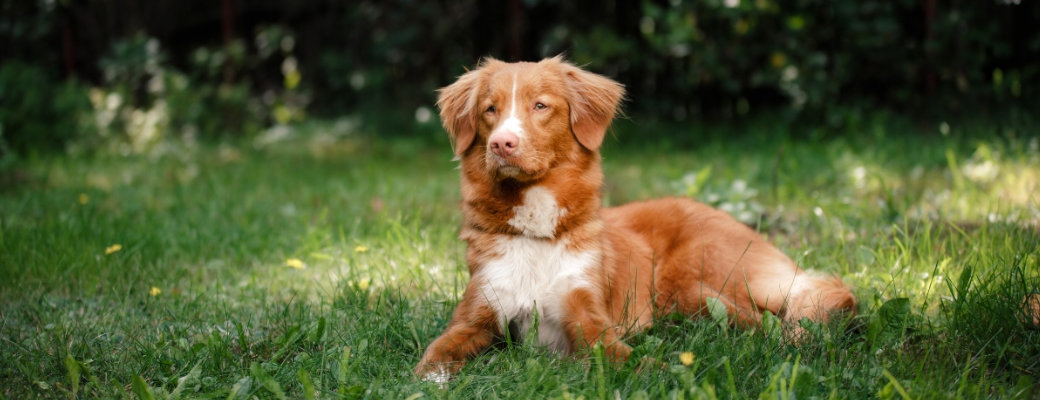
Introduction to Nova Scotia Duck Tolling Retrievers
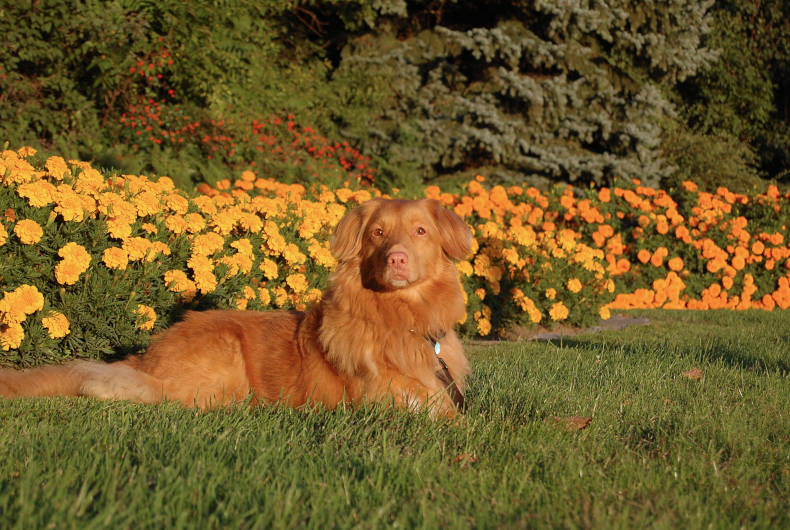
The intelligent and eager-to-please Nova Scotia duck trolling retriever (toller) is a medium-sized dog that’s lots of fun. These dogs are outgoing and affectionate, making them excellent family pets and athletic companions. Although they resemble golden retrievers, this is a distinct dog breed with unique characteristics. Nova Scotia duck trolling retrievers were initially bred to hunt waterfowl, yet they are versatile dogs that typically get along well with other dogs and children.
Check out this Healthy Paws breed guide to learn more about the Nova Scotia duck trolling retriever and whether it is the right dog for your lifestyle.
Size of Nova Scotia Duck Tolling Retrievers
The adult weight of this Sporting Group dog is 35 to 50 pounds, with females on the low end of the weight range and males on the high end. Males stand 18 to 21 inches tall, and females are 17 to 20 inches tall. These dogs are finished growing and reach their adult size by around one year of age.
Here’s how big you can expect your Nova Scotia duck tolling retriever to get as the dog grows from puppyhood to adulthood:
| Weight Chart | 3 months | 6 months | 9 months | 12 months |
| Female and male Nova Scotia duck tolling retrievers | 11 – 21 lbs. | 25 – 38 lbs. | 30 – 46 lbs. | 35 – 50 lbs. |
Characteristics of Nova Scotia Duck Tolling Retrievers
Nova Scotia duck tolling retrievers are commonly described as cheerful, affectionate, easy-going, active, and playful. These dogs are always on the go and may have a high prey drive when around small animals. They are friendly with adults, children, and other dogs. However, they tend to be wary of strangers. Bring these dogs along with you as you exercise outdoors, and make sure you have plenty of time to devote to playtime.
As you get to know a Nova Scotia duck tolling retriever’s personality, here’s what you can expect based on the breed characteristics:
| Breed Characteristic | Level (High, Medium, Low) |
| Affectionate with People | High |
| Good with Kids | High |
| Good with Pets | High |
| Need for Exercise | High |
| Energy Level | High |
| Intelligence Level | High |
| Able to Be Trained | Medium |
| Amount of Barking | Medium |
| Amount of Shedding | Medium |
History of Nova Scotia Duck Tolling Retrievers
As the breed’s name suggests, Nova Scotia duck tolling retrievers originally came from Nova Scotia, Canada – specifically, the Little River District in Yarmouth County of Nova Scotia. Alternate names for the dog include “Yarmouth Toller” and “Little River Duck Dog.” The word “toller” means to lure out or summon, which is what these dogs were initially bred to do.
In the early 19th century, local breeders desired a dog that could imitate the habits of foxes and exhibit quick movements to lure waterfowl closer to shore. Nova Scotia duck tolling retrievers even resemble the appearance of foxes with their reddish coats and feathery tails. On hunting expeditions, Nova Scotia duck tolling retrievers attract game and then return it to their humans after it has been shot. Today, Nova Scotia duck tolling retrievers still love hunting but also chasing balls and putting 100 percent of their energy into whatever task is at hand. The American Kennel Club first recognized the breed in 2003. The club initially admitted the breed into the Miscellaneous Class of dogs but later included it in the Sporting Group.
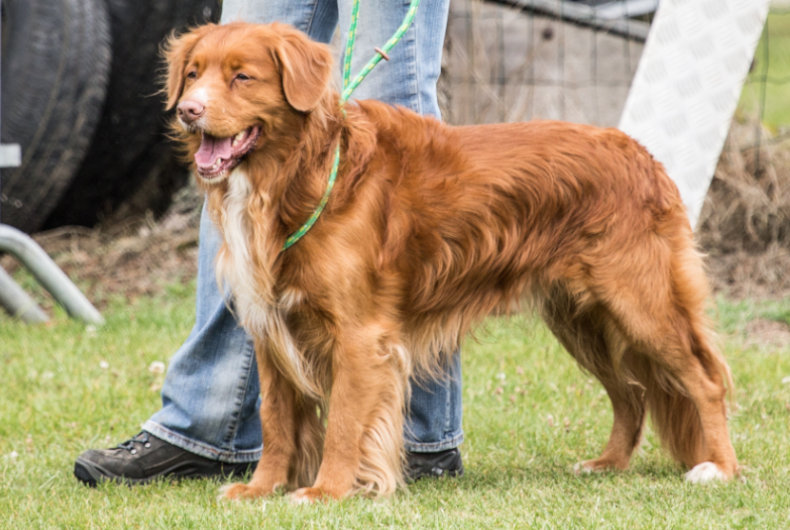
Nova Scotia Duck Tolling Retriever Standard Information
The official standard for the Nova Scotia duck tolling retriever describes the ideal characteristics of this dog and how it is agile, alert, determined, and playful. It also says how many tollers have a sad or worried expression when they don’t have a job to do but that they spring into action as soon as they have a retrieving task.
Here is an overview of the breed standard information for Nova Scotia duck tolling retrievers:
Head:
- Clean-cut and slightly wedge-shaped head
- Alert, intelligent, and friendly expression
- Eyes set well apart and almond in shape
- Ears set high and triangular in shape
- Muzzle tapers in a clean line from stop to nose
Neck, Topline, Body:
- Medium-length neck that is strongly muscled
- Level backline
- Deep in the chest with good spring of rib
- Loins are strong and muscular
- Back is short, strong, and straight
- Tail is luxuriant and feathered
Forequarters:
- Shoulders are muscular, strong, and angulated
- Pasterns are strong and slightly sloping
- Feet are webbed, oval, and well-arched with thick pads
- Front dewclaws may be removed
Hindquarters:
- Muscular, broad, and square hindquarters
- Stifles are well bent
- Hocks are well let down
- Dog should not have rear dewclaws
Coat:
- Water-repellant double coat of medium softness and length
- Soft, dense undercoat
- May have a slight wave on the back, but straight otherwise
- Whiskers must be present
Color:
- Any shade of red from golden red to dark, coppery red
- Lighter featherings on the underside of the tail, body, and pantaloons
- Usually has white markings on the tip of the tail, feet, blaze, or chest
Gait:
- Powerful, springy, and with good reach
- Feet turn neither in nor out
- Feet converge toward a center line with a level backline at increased speed
Caring for Nova Scotia Duck Tolling Retrievers
One of the most important things to know about caring for Nova Scotia duck tolling retrievers is that these are highly active dogs that need homes with active people. They require consistency in training and at least an hour of vigorous activity per day. But at the end of full days of work and play, tollers love to cuddle up on the couch and relax with their favorite humans.
Here are some general tips for taking the best care of a Nova Scotia duck tolling retrievers:
Best Living Environments:
- Households with active family members
- Homes with kids and other dogs
- Best in a home with a securely fenced yard
- Apartments are okay if properly exercised
Type of Exercise:
- At least an hour of brisk daily exercise
- Chasing balls and playing fetch
- Puppies should engage in less strenuous exercise to prevent injuries
- Swimming in safe bodies of water
- Walks, runs, and hikes
Mental Enrichment:
- Playtime with retrieving games
- Hunting and similar activities
- Agility training
- Toys to stimulate the dog’s mind
- Stay active and engaged to prevent destructive behaviors
Training Strategies:
- Quick and eager learners
- Use crate training to establish boundaries
- Positive reinforcement rather than harsh methods
Grooming Tips:
- Sheds more heavily twice yearly
- Increase brushing during shedding times
- Bathe when dirty
- Clean dirt and debris from the ears
- Brush teeth daily
- Trim nails if not worn down naturally outside
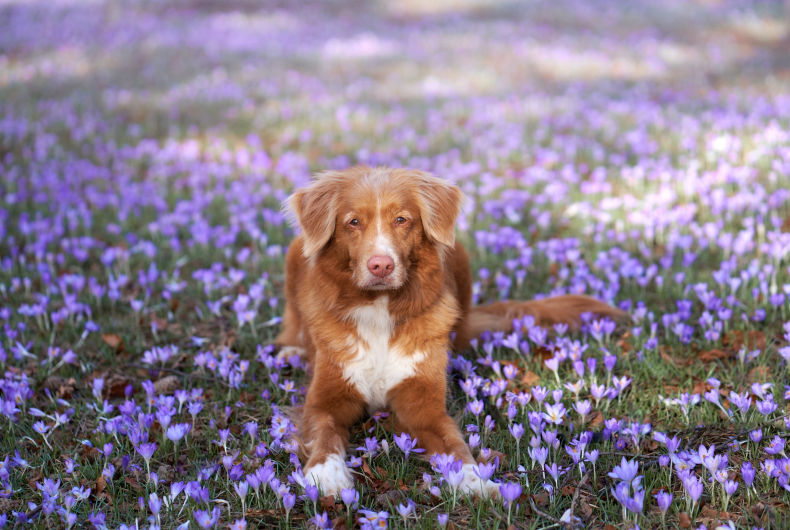
Common Health Problems of Nova Scotia Duck Tolling Retrievers
The average life span of a Nova Scotia duck tolling retriever is 12 to 14 years. This is a generally healthy breed but also one that is linked to certain autoimmune and genetic diseases.
These are some of the most common health issues that arise with Nova Scotia duck tolling retrievers:
- Addison’s disease
- Progressive retinal atrophy
- Cleft palate and syndactyly
- Deafness
- Collie eye anomaly
- Hip dysplasia
- Patellar luxation
- Hypothyroidism
Diet and Nutrition for Nova Scotia Duck Tolling Retrievers
Most adult dogs will thrive when eating high-quality, nutritionally complete and balanced dog food. Nova Scotia duck tolling retriever puppies should eat puppy food until they are around 12 months old. If you feed your dog homemade food, make sure you are working from a recipe that is designed by a veterinary nutritionist and is appropriate for your dog’s age and health status.
Feed the amount of dog food needed to keep your pet slim. You should be able to see your dog’s waist and feel (but not see) their ribs without having to press too hard. In general, puppies need more calories per day than adults, but a dog’s needs will vary with their activity level and other factors. Don’t leave food out all day for a Nova Scotia duck tolling retriever to graze on. Divide the total amount of food for the day into at least two meals for adults and three meals for puppies. Place the food out in a bowl at approximately the same times each day.
Talk to your veterinarian if you have any questions about your Nova Scotia duck tolling retriever’s diet or health.
Where to Adopt or Purchase Nova Scotia Duck Tolling Retrievers
The Nova Scotia Duck Tolling Retriever Club is the national breed club for these dogs in the U.S. and a source of breed information and breeder listings. To rescue a dog in need of a loving home, you can also fill out an adoption application with the club’s rescue program. A nonprofit, Toller Rescue, Inc., is a national organization incorporated in Delaware with a social media page where you can learn about available tollers that you can adopt.
Related Breeds
Various types of retriever dogs may also interest you if the Nova Scotia duck tolling retriever has caught your attention. Consider these other dog breeds before making the significant decision to purchase or adopt a new pet:
- Golden retriever
- Flat-coated retriever
- Curly-coated retriever
- Boykin spaniel
- Lagotto Romagnolo
- Portuguese water dog
Pet Insurance for Nova Scotia Duck Tolling Retrievers
As you learn more about your Nova Scotia duck tolling retriever and how to take the best care of the dog’s health, be sure to sign your pup up for pet insurance. Healthy Paws offers Nova Scotia duck tolling retriever insurance that covers accidents, illnesses, cancer, emergency care, genetic and hereditary conditions, breed-specific conditions, and alternative care. With the increasing cost of high-quality veterinary care, pet insurance can give you peace of mind that you will be able to afford the essential and life-saving treatment your Nova Scotia duck tolling retriever may need in the future.
Please visit our quote page today to see the cost of Nova Scotia duck tolling retriever insurance, and contact us at 855-898-8991 if you have any questions about how dog insurance works.
Authors
Stacy Painter
Stacy has always been an animal lover and has worked in the pet industry and pet insurance specifically for over a decade. As a writer since early childhood, content writing for Healthy Paws pet insurance was a natural career path to combine her two passions. She currently lives in Florida with her boyfriend and Taiwanese rescue dog, Kaya.
Jennifer Coates, DVM
Dr. Jennifer Coates received her Bachelor of Science degree in biology from McGill University in Montreal, Quebec, Canada. After graduation, she worked for several years in the fields of conservation and animal welfare before pursuing her childhood dream—becoming a veterinarian. She graduated with honors from the Virginia-Maryland Regional College of Veterinary Medicine and has worked as an Associate Veterinarian and Chief of Staff in Virginia, Wyoming, and Colorado. Jennifer is also a prolific writer about all things related to veterinary medicine and the well-being of our animal friends. She has published several short stories and books, including the Dictionary of Veterinary Terms, Vet-Speak Deciphered for the Non-Veterinarian. She currently contributes to the Healthy Paws pet insurance blog as a freelance writer. In her free time, Jennifer enjoys life in Colorado with her family and friends… many of whom walk on four legs.