

Learn how and why veterinary bills are increasing, and how a Healthy Paws plan can help.

Healthy Paws protects pets like family and makes peace of mind and more happy, healthy moments possible. Pet parents and industry reviews tell the story.

Rescue organizations across the U.S. received support for adoption efforts and ongoing care for vulnerable pets.

Make their food irresistible with the freshest nutritionally-balanced ingredients.
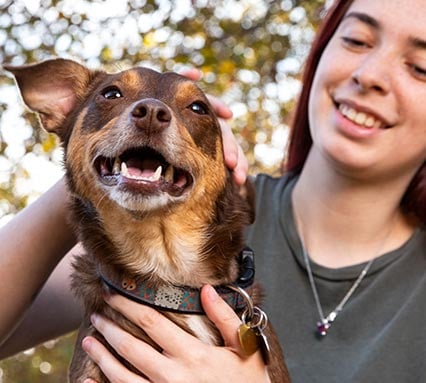
The Healthy Paws Community is a vibrant, social-first space for all pet lovers—whether you’re a Healthy Paws policyholder or simply passionate about pets. As a Pack Member, you can share your favorite pet photos and videos, connect with fellow pet parents, and stay informed with the latest Healthy Paws news and tips. It’s a welcoming place focused on connection, positivity, and celebrating the joy pets bring to our lives!
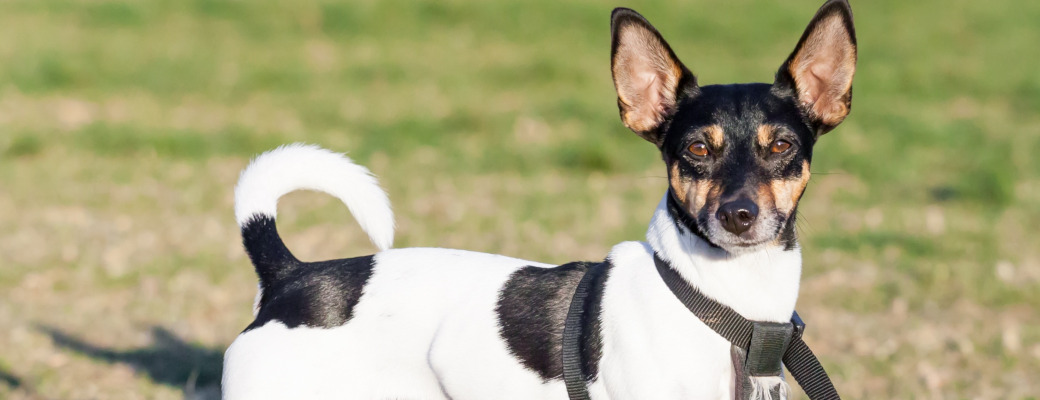
Introduction to To Fox Terriers
As the name suggests, toy fox terriers are Toy Group dogs with a tiny size – just four to nine pounds when fully grown. But these dogs pack a lot of personality into that tiny package.
They are balanced dogs that are very intelligent, full of charisma, and little comedians that will have you laughing your way through life. Toy fox terriers are devoted canine companions who excel in agility and obedience competitions. They’re adaptable dogs that are happy living wherever you are.
Here’s what you should know about toy fox terriers to determine whether this breed fits your personality and lifestyle.
Size of Toy Fox Terriers
When fully grown, toy fox terriers weigh four to nine pounds and stand 8.5 to 11.5 inches tall. The breed is typically grown by 12 months of age. There is very little difference between the size of male and female toy fox terriers.
Here’s how big you can expect your toy fox terrier to get as the dog grows from puppyhood to adulthood:
| Weight and Height Chart | 6 months | 12 months |
| Male and female toy fox terriers | 2.5 lbs. weight 5.5 in. height | 5 lbs. weight 9.5 in. height |
Characteristics of Toy Fox Terriers
Some common characteristics of toy fox terriers are playful, intelligent, affectionate, easy to train, and eager to please. These American-bred dogs were initially bred to hunt but are perfectly content cuddling up on the couch with you.
Toy fox terriers are skilled at learning tricks and remain active even into their senior years. Despite their tiny size, they make good watchdogs because of their protective instincts and tendency to bark when provoked.
As you get to know a toy fox terrier’s personality, here’s what you can expect based on the breed characteristics:
| Breed Characteristic | Level (High, Medium, Low) |
| Affectionate with People | Medium |
| Good with Kids | Medium |
| Good with Pets | Medium |
| Need for Exercise | High |
| Energy Level | High |
| Intelligence Level | High |
| Able to Be Trained | High |
| Amount of Barking | Medium |
| Amount of Shedding | Medium |
History of Toy Fox Terriers
The history of the toy fox terrier dates back to 20th-century American breeders who created a smaller-sized dog. In the 1930s, they combined litter runts of smooth fox terriers with toy-size miniature pinschers, chihuahuas, and Italian greyhounds. The toy fox terrier possesses true terrier characteristics and excels at hunting small prey and even performing in the circus.
The American Kennel Club recognized the toy fox terrier as a distinct breed in 2003. Before that, terrier enthusiasts and breeders debated the ideal size of the dog and the introduction of other breeds into the gene pool.
Toy Fox Terrier Standard Information
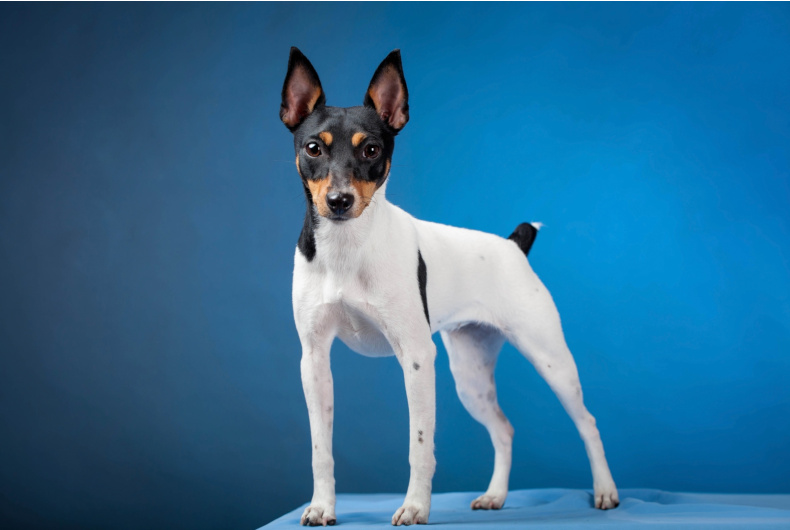
The American Kennel Club describes the general appearance of the toy fox terrier as well-balanced, athletic, agile, proud, and animated. The dog’s physical description includes an elegant heat, predominantly white coat, and short, high-set tail.
Here is an overview of the breed standard information for toy fox terriers:
Head:
- Eager, intelligent, and alert expression
- Clear, bright, and dark eyes
- Erect ears that are pointed and in an inverted V shape
- Moderate skull that is slightly rounded
- Strong muzzle in proportion to the head
- Black nose, but the nose can be self-colored in chocolate dogs
- Scissors bite is preferred
Neck, Topline, Body:
- Erect neck that is slightly arched and gracefully curved
- Topline is level when gaiting and standing
- Body tapers slightly from ribs to flank
- Croup is well-rounded and level with the topline
- Tail is set on high and held erect
Forequarters:
- Well-angulated with shoulder firmly set
- Forechest is well-developed
- Elbows are close and perpendicular to the body
- Feet are small and oval with strong, well-arched toes
Hindquarters:
- Strong, muscular, and well-angulated
- Strong upper and lower thighs
- Straight rear pasterns
- Hock joints are firm and well let down
- Dewclaws should be removed
Coat:
- Shiny, fine, and satiny texture
- Slightly longer in the ruff
- Uniformly covers the body
Color:
- Mostly black head
- Tan markings on cheeks, lips, and eye dots
- Over 50% white body
- With or without black spots
- Tri-color, white/chocolate/tan, white and tan, or white and black
Gait:
- Smooth and flowing with strong drive and good reach
- Topline remains straight, and the head and tail are erect during gait
Caring for Toy Fox Terriers
Caring for a toy fox terrier is a lot of fun because these dogs are confident, affectionate, and lively. However, new pet parents will need to get used to the dog’s high energy and playfulness if they are used to more calm, sedentary dogs.
Because of their size, toy fox terriers make fantastic apartment dogs. But you’ll still need to make sure your pup gets plenty of activity daily. Although terriers love being outdoors, they are not “outside dogs” for long periods of time because of their coat and intolerance for extreme weather.
Here are some general tips for taking the best care of a toy fox terrier:
Best Living Environments:
- Great for apartments
- Adaptable to various environments and different kinds of people
- Does well with older children
Type of Exercise:
- A 30-minute walk daily
- Keep leashed while on walks
- Fun times running around a house or apartment
- Short hikes with family members
Mental Enrichment:
- Interactive toys for stimulation
- Dog sports
- Agility competitions
Training Strategies:
- Not as stubborn as other terriers
- Use reward-based methods
- Try teaching the dog tricks
- Work to overcome strong prey drive
Grooming Tips:
- Low-maintenance coat
- A basic grooming routine is sufficient
- Only sheds moderately
- Brush weekly to remove dead hair
- Brush teeth daily
- Clean ears and check for debris
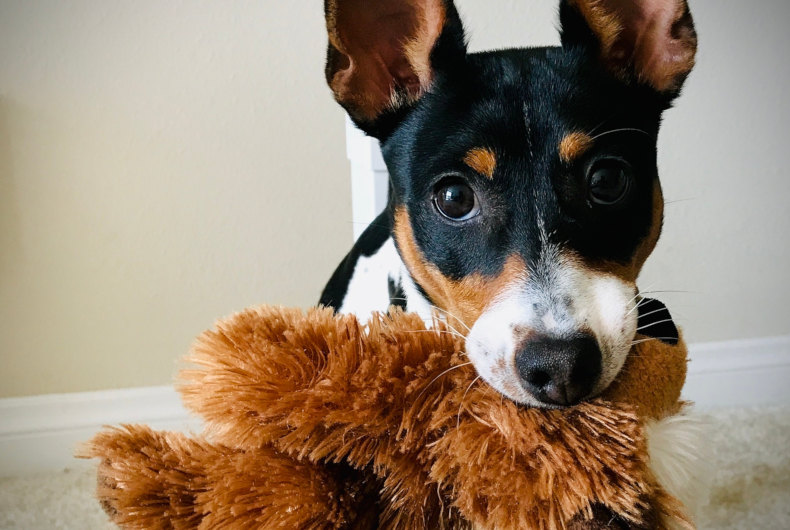
Common Health Problems of Toy Fox Terriers
Toy fox terriers are dogs with some serious longevity, with an average life expectancy of 13 to 15 years. They are resilient dogs you can enjoy many incredible years with while keeping up with regular vet checkups for preventative care. However, even toy fox terriers are prone to some medical issues due to their genetics, breeding, and older age.
These are some of the most common health issues that arise with toy fox terriers:
- Primary lens luxation (eye condition that causes pain and blindness)
- Mast cell tumors (cancerous growths)
- Demodectic mange (mites that cause skin issues)
- Legg-Calve Perthes disease (degenerative hip condition)
- Patellar luxation (knee joint issue)
- Von Willebrand disease (blood clotting condition)
- Congenital hypothyroidism (a thyroid condition that becomes apparent early in life)
- Obesity
Diet and Nutrition for Toy Fox Terriers
An adult toy fox terrier only eats about 0.8 cups of dry dog food daily, depending on the calorie content of the diet you select. If you serve your pup three meals per day, this comes out to about 1/4 cup to 1/3 cup of food per meal. Therefore, the average daily cost of feeding a toy fox terrier is $1 or less.
Talk to your vet about recommended food brands for small breeds to support growth and healthy weight. Obesity is a common problem in toy fox terriers, so your veterinarian can help ensure that you are meeting your dog’s nutritional needs without providing too many calories.
Where to Adopt or Purchase Toy Fox Terriers
The American Toy Fox Terrier Club is a nonprofit breed club for these dogs and a source for breeding, health information, and performance events. On the organization’s website, you can search for toy fox terrier puppies for sale and also learn about Toy Fox Terrier Rescue, Inc.
This separate organization is a rescue group that helps dogs of this breed find new homes. Available dogs up for adoption are listed on Petfinder.
Related Breeds
Has the toy fox terrier’s size, temperament, trainability, and adaptability caught your attention? If so, you might be interested in these similar dog breeds as well:
- Miniature pinscher
- Toy Manchester terrier
- Chihuahua
- Rat terrier
- Tenterfield terrier
Pet Insurance for Toy Fox Terriers
Whether your toy fox terrier is a puppy, an older dog, or somewhere in between, Healthy Paws has an insurance plan to help you afford veterinary care. Our toy fox terrier insurance plan has no maximum annual or lifetime payouts, and we process most claims within just two days.
Just submit your vet bills through our app for reimbursement, and stop worrying about the high costs of veterinary care. At Healthy Paws, we are here for you and your toy fox terrier through all stages of life and encourage pet parents to go to any licensed veterinarian they trust.
For your toy fox terrier insurance quote, please complete our online form or give us a call at 855-898-8991.

Meet Our Writer
Stacy Painter
Stacy has always been an animal lover and has worked in the pet industry and pet insurance specifically for over a decade. As a writer since early childhood, content writing for Healthy Paws pet insurance was a natural career path to combine her two passions. She currently lives in Florida with her boyfriend and Taiwanese rescue dog, Kaya.