

Learn how and why veterinary bills are increasing, and how a Healthy Paws plan can help.


Three rescues across North Carolina and Georgia received donations that made a big impact.

Make their food irresistible with the freshest nutritionally-balanced ingredients.
Introduction to Welsh Terriers
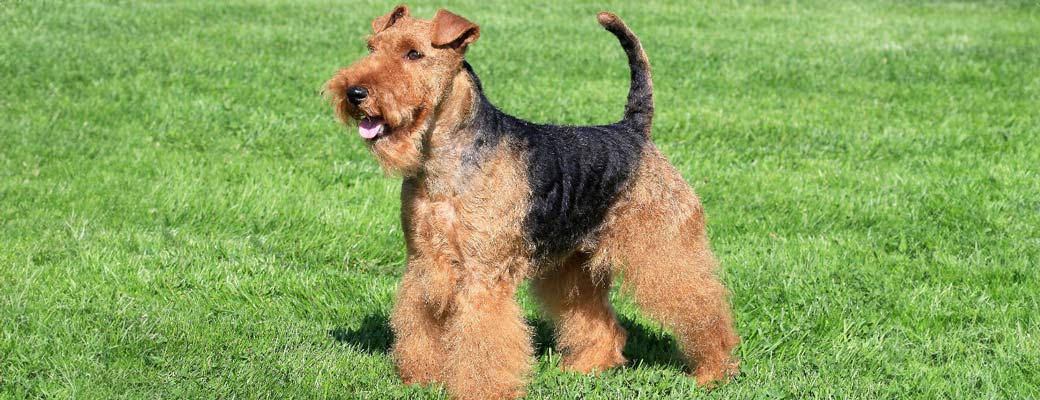
Welsh terriers are smart and friendly dogs that love life and live it to its fullest. These high-energy dogs were initially bred for hunting but today make wonderful playmates. Welsh terriers are excellent family dogs and typically get along well with kids.
To have a happy, healthy dog, you’ll need to keep your Welsh terrier well-exercised and mentally stimulated. But if you’re wondering if this is the right dog for you, our Healthy Paws breed guide is filled with helpful information and insights into the Welsh terrier’s temperament, size, care, and health concerns.
Get a pet insurance quote for your Welsh Terrier today
Size of Welsh Terriers
Fully grown Welsh terrier males weigh about 20 pounds, and females are just slightly lighter. Adult males are 15 inches tall when fully grown, with females proportionately smaller.
Here’s how big you can expect your Welsh terrier to get as the dog grows from puppyhood to adulthood:
| Weight Chart | 3 months | 6 months | 12 months |
| Male Welsh terriers | 7-10 lbs. | 14-17 lbs. | 18-21 lbs. |
| Female Welsh terriers | 6-9 lbs. | 12-15 lbs. | 17-20 lbs. |
Characteristics of Welsh Terriers
Welsh terriers are lively and independent dogs that love their families. They are friendly toward pretty much every person they meet and are wonderful around children. While they often enjoy the company of other dogs, they have a tendency to chase cats. Yet you’ll need to devote a lot of time to exercising your Welsh terrier and mentally stimulating your dog with playtime.
Many people purchase or adopt Welsh terriers because of their friendliness, trainability, and extroverted personalities. These dogs are ideal adventure dogs for people who love exploring and getting active outside.
As you get to know a Welsh terrier’s personality, here’s what you can expect based on the breed characteristics:
| Breed Characteristic | Level (High, Medium, Low) |
| Affectionate with People | High |
| Good with Kids | High |
| Good with Pets | Medium |
| Need for Exercise | High |
| Energy Level | High |
| Intelligence Level | High |
| Able to Be Trained | Medium |
| Amount of Barking | Medium |
| Amount of Shedding | Low |
History of Welsh Terriers
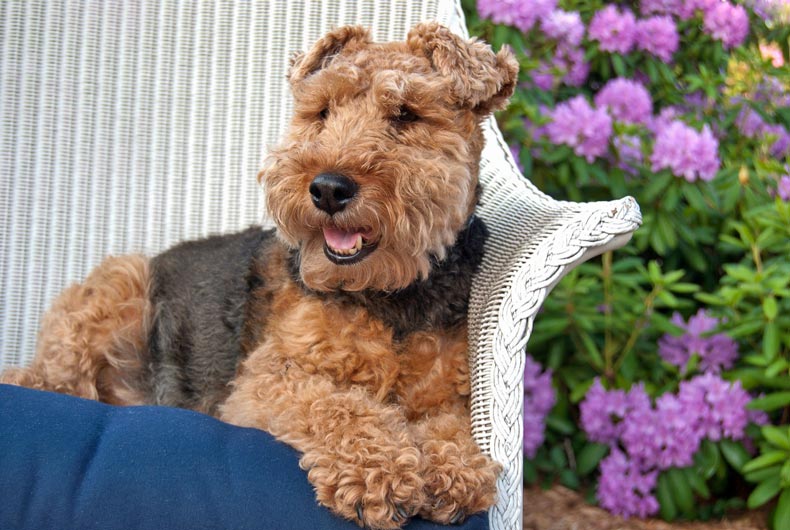
Welsh terriers originated in northern Wales in the 1700s. Breeders created Welsh terriers to hunt for badgers, otters, and foxes. They were skilled at confronting dangerous prey and digging them out of their hiding spots. Tough and determined dogs, Welsh terriers were formidable opponents with their tough jaws and fearless courage.
The breed descended from old English wire-haired black and tan sporting dogs, which are the parent breeds for many modern terrier dogs. They became show dogs in the 1800s and are beloved companions in many households today. The American Kennel Club recognized the breed in 1888.
Welsh Terrier Standard Information
The general appearance of the Welsh terrier is sturdy, compact, and medium size with a coarse and wiry coat. These dogs also have a particular expression based on their use of the ears and color, set, and position of the eyes.
Here is an overview of the breed standard information for Welsh terriers:
Head:
- Rectangular shape
- Small, dark brown, and almond-shaped eyes
- V-shaped and small ears
- Strong foreface and powerful jaws
- Muzzle that is one-half the length of the entire head
- Black and tight lips
- Scissors bite is preferable
Neck, Topline, Body:
- Moderate length and thickness in the neck
- Level topline
- Tail is docked in a way that completes the square shape of the dog
Forequarters:
- Long, sloping, and well laid back shoulders
- Small, round, and catlike feet
- Thick and black pads
- Strong and black nails with dewclaws removed
Hindquarters:
- Strong and muscular with well-developed second thighs
- Hocks are moderately straight and parallel
- Feet are the same as in front
Coat:
- Wiry, hard, and dense coat
- Close-fitting thick jacket
- Short, soft undercoat
Color:
- Black jacket spreads up to the neck, tail, and upper thighs
- Quarters, legs, and head are clear tan
- Tan is a deep reddish color, although lighter shades are acceptable
- Grizzle jacket is permissible
Gait:
- Free, effortless, straight, and with strong drive and good reach
- Alert, aware, and spirited movement
Caring for Welsh Terriers
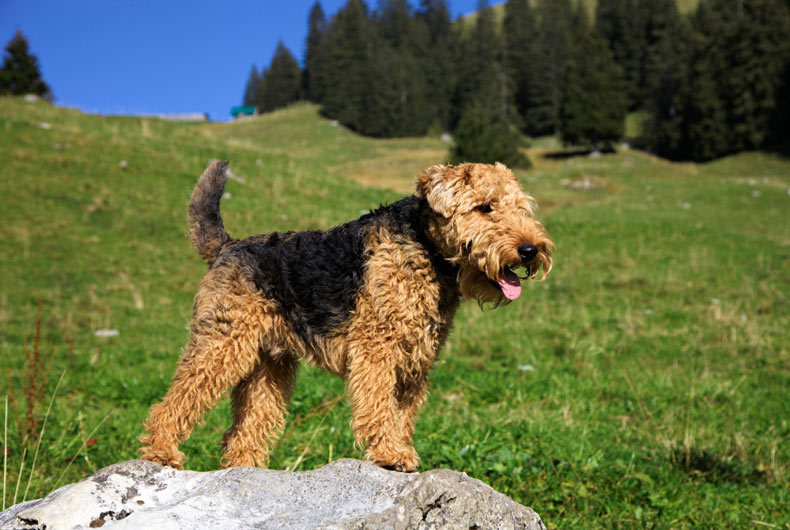
Many people adopt or purchase Welsh terriers because they are low shedding, which may make them better options for people with allergies. They tend to climb up on furniture and have a strong prey drive, so starting training early and socializing Welsh terriers with other pets is essential so they don’t develop problematic behaviors.
These affectionate pups do best in moderate climates rather than very cold or hot ones. However, they have water-resistant coats that protect them from moisture, and leaving their coat longer can help when temperatures drop.
Here are some general tips for taking the best care of a Welsh terrier:
Best Living Environments:
- Homes with active families
- Fenced yards
- Indoor dogs that should not live outside
Type of Exercise:
- At least 30-60 minutes of exercise daily
- Playtime at dog parks
- Long walks and hikes
- Jogging on a leash with family members
Mental Enrichment:
- Play fun games that aren’t repetitive
- Squeaky toys
- Food puzzles
- Agility or earthdog training
- Can become destructive if bored
Training Strategies:
- Keep training sessions positive and fun
- Initially practice crate training for a few hours at a time
- Supervise interactions with kids and other pets
Grooming Tips:
- Brush at least weekly
- Strip wiry coat several times per year for show-dog appearance
- Clip coat every eight to 12 weeks for easier care
- Can leave coat longer in cold weather
- Use shampoo with moisturizers when bathing
- Brush teeth daily
- Trim nails monthly if not worn down naturally
Common Health Problems of Welsh Terriers
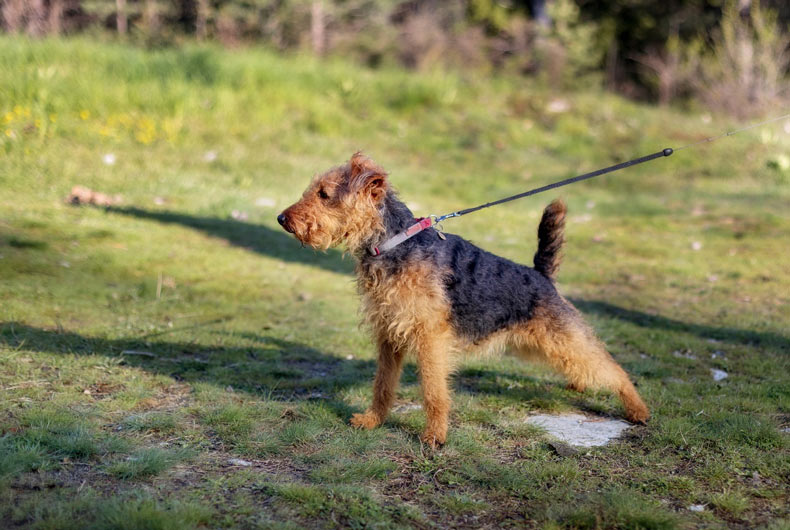
Welsh terriers have an average life expectancy of 12 to 15 years. However, it is not uncommon for Welsh terriers to live up to 18 years.
But like all dogs, Welsh terriers suffer from genetic diseases linked to past breeding. Therefore, it is beneficial to know the types of medical conditions that often affect dogs so that you can take preventative action with your veterinarian’s advice. The national breed club for Welsh terriers recommends that these dogs receive primary lens luxation DNA tests. Screening breeding animals for other eye conditions and hypothyroidism is also a good idea.
These are some of the most common health issues that can arise with Welsh terriers:
- Viral and bacterial infections
- Obesity
- Parasites like heartworms and roundworms when not on preventive
- Allergies
- Epilepsy
- Glaucoma and other eye conditions
- Bleeding disorders
- Hypothyroidism
- Patellar luxation
- Legge Calve Perthes disease
- Hip and elbow dysplasia
- Cancer
Diet and Nutrition for Welsh Terriers
Most adult Welsh terriers will thrive when eating high-quality, nutritionally complete and balanced dog food. Puppies should eat puppy food until they are 10-12 months old. If you feed your Welsh terrier homemade dog food, make sure you are working from a recipe that is designed by a veterinary nutritionist and appropriate for your dog’s age and health status.
Feed the amount of dog food needed to keep your pet slim. You should be able to see your Welsh terrier’s waist and feel (but not see) their ribs without having to press too hard. In general, puppies need more calories per day than adults, but a dog’s needs will vary with his or her activity level and other factors. Canine obesity is an issue in many households and can actually shorten the lifespan of an otherwise healthy Welsh terrier.
Don’t leave food out all day for a Welsh terrier to graze on. Divide the total amount of food for the day into at least two meals for adults and three to four meals for puppies. Place the food out in a bowl at approximately the same time of the morning and evening each day.
Talk to your veterinarian if you have any questions about your Welsh terrier’s diet or health.
Where to Adopt or Purchase Welsh Terriers
The Welsh Terrier Club of America is the national breed club for these dogs and a membership organization. It is a resource for finding a Welsh terrier breeder and attending dog shows and events.
WTCARES is a nonprofit rescue organization run by volunteers and dedicated to rehoming dogs of this breed. The organization formed as a committee of the Welsh Terrier Club of America in the early 1980s and became a charitable trust in 2007. On the organization’s website, you can complete an adoption application or arrange to surrender a Welsh terrier you can no longer care for. You may also be able to find Welsh terriers and mixes of this breed in local animal shelters near you.
Related Breeds
Welsh terriers are an incredible dog breed that is unique in many ways. But before you make the significant decision to adopt or purchase a new pet, you might consider these similar breeds as well:
- Irish terrier
- Airedale terrier
- Kerry blue terrier
- Lakeland terrier
- Wire fox terrier
Pet Insurance for Welsh Terriers
Like other breeds, Welsh terriers are genetically prone to certain medical conditions, so many pet parents choose to sign their pups up for pet health insurance through Healthy Paws. These active dogs can also get into trouble and injure themselves in accidents, even in your own home or yard.
Fortunately, our easy-to-understand pet insurance plan covers accidents, illnesses, cancer, emergency care, genetic and hereditary conditions, breed-specific conditions, and alternative care. We love our customers and their pets, and we’re here for you any time your Welsh terrier isn’t feeling well.
For your Welsh terrier pet insurance quote, please complete our online form or give us a call at 855-898-8991.
Authors
Stacy Painter
Stacy has always been an animal lover and has worked in the pet industry and pet insurance specifically for over a decade. As a writer since early childhood, content writing for Healthy Paws pet insurance was a natural career path to combine her two passions. She currently lives in Florida with her boyfriend and Taiwanese rescue dog, Kaya.
Jennifer Coates, DVM
Dr. Jennifer Coates received her Bachelor of Science degree in biology from McGill University in Montreal, Quebec, Canada. After graduation, she worked for several years in the fields of conservation and animal welfare before pursuing her childhood dream—becoming a veterinarian. She graduated with honors from the Virginia-Maryland Regional College of Veterinary Medicine and has worked as an Associate Veterinarian and Chief of Staff in Virginia, Wyoming, and Colorado. Jennifer is also a prolific writer about all things related to veterinary medicine and the well-being of our animal friends. She has published several short stories and books, including the Dictionary of Veterinary Terms, Vet-Speak Deciphered for the Non-Veterinarian. She currently contributes to the Healthy Paws pet insurance blog as a freelance writer. In her free time, Jennifer enjoys life in Colorado with her family and friends… many of whom walk on four legs.