

Learn how and why veterinary bills are increasing, and how a Healthy Paws plan can help.


Three rescues across North Carolina and Georgia received donations that made a big impact.

Make their food irresistible with the freshest nutritionally-balanced ingredients.
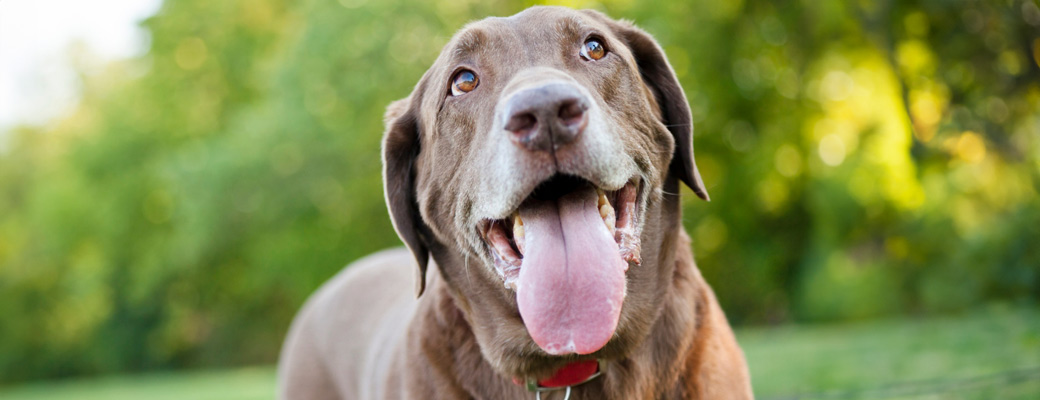
People sweat when temperatures get too high for our comfort and safety, but what about dogs? Contrary to what you may have heard, dogs do sweat, but not in the same way that we do. Read on to learn about dog sweating and the other ways dogs cool themselves down.
How Do Dogs Sweat?
Dogs have two types of sweat glands:
Eccrine Sweat Glands – Also called merocrine sweat glands, eccrine sweat glands are the type of glands that are located over most of a person’s body and cool us off. Dogs only have eccrine sweat glands on their paw pads and the non-haired part of their nose. While sweat production from eccrine glands does increase when a dog gets hot, it doesn’t do much to cool them off since it affects such a small portion of their body.
Apocrine Sweat Glands – The sweat glands people have in their armpits are called apocrine sweat glands and are similar to the glands associated with a dog’s hair follicles over most of their bodies. They produce a small amount of thicker sweat that doesn’t play a role in body cooling but is instead thought to be essential to the health of the skin and fur. Apocrine sweat glands also emit pheromones that are used as a form of chemical communication.
Can Dogs Sweat Too Much?
The eccrine sweat glands on a dog’s nose and paw pads can produce more sweat when a dog gets hot, but this isn’t the case for their apocrine sweat glands. Increased production of sweat from apocrine sweat glands on the furred parts of a dog’s body is rare and usually associated with allergic skin disease. Make an appointment with your veterinarian if your dog’s skin appears to be sweating.
How Do Dogs Cool Down?
Since dogs don’t really sweat to cool down, they have to rely on other methods and strategies, including:
- Panting – Sweating cools off the body because the process of turning water from a liquid to a gas (evaporation) requires energy (heat, in this case). Evaporation takes heat away from the body. Panting relies on the same mechanism, but the evaporation occurs within the respiratory system, not the skin.
- Flushed skin and gums – The blood vessels in a dog’s mucous membranes and skin will dilate when they start to get too warm. This allows more blood to flow to mucous membranes in the respiratory tract where it can be cooled through evaporation and to the skin where contact with (hopefully) cooler surfaces or air can lower the dog’s body temperature. This process can cause a dog’s gums and skin to become redder than they usually are.
- Reduced activity – Activity generates heat, so when it’s hot outside, animals will rest whenever they have a chance. Many dogs, however, are so keen to get outside and have some fun (particularly with their people) that they will continue to run around even when they are becoming overheated.
- Seeking shade, cool locations, and water – Dogs that need to cool off will try to find cool, shady spots or bodies of water that allow heat to flow away from their body. This is also why some dogs will dig a hole so they can lie in the cooler, deep soil rather than on the surface of the ground that has become hot. Panting also causes a dog to lose water, so they will often try to find water to drink.
Signs That a Dog is Overheating
All of the methods that dogs use to cool down have their limits. A combination of high temperature, high humidity, continued exercise, and a lack of shade, water, or wind all make it more likely that a dog will overheat. Some dogs are also at higher risk than others. For example, brachycephalic dogs (those with short snouts) like Pugs and Bulldogs cannot dissipate heat through panting very well. Also, very old or very young dogs and those with certain medical conditions (obesity and diseases of the upper respiratory tract, lungs, heart, and central nervous system, for example) are at higher than average risk for developing heat exhaustion or heat stroke.
Symptoms that indicate a dog may be overheated include:
- Excessive panting
- Drooling a lot
- Producing thick, ropey drool
- Flushed (reddened) gums and skin
- Seeking out cool places to rest and water to drink or lie in
- Lack of coordination
- Lethargy
- Disorientation
- High heart rate
- Vomiting or diarrhea
- Seizures
- Collapse
If your dog has symptoms like these, get them to a veterinarian as quickly as possible.
Tips for Helping Your Dog Cool Down
Dogs that are just getting a little warm should quickly bounce back with some commonsense home treatment. Stop whatever activity they are involved in and get them to a cool location. Offer them some cold water to drink and let them rest while you monitor their condition.
On the other hand, dogs that are developing heatstroke need immediate veterinary attention. If you can, dampen your dog’s skin and fur with cool water and then keep your car as cold as possible while you are on the way to the veterinary clinic. Direct your air conditioning vents towards your dog or keep the windows wide open to promote as much airflow as possible.
Of course, preventing health problems like heatstroke is always better than treating them. Any situation that is hot enough to make you sweat could be dangerous for your dog, but knowing how dogs stay cool can help you keep your pup happy and healthy.
Meet Our Writer
Jennifer Coates, DVM
Dr. Jennifer Coates received her Bachelor of Science degree in biology from McGill University in Montreal, Quebec, Canada. After graduation, she worked for several years in the fields of conservation and animal welfare before pursuing her childhood dream—becoming a veterinarian. She graduated with honors from the Virginia-Maryland Regional College of Veterinary Medicine and has worked as an Associate Veterinarian and Chief of Staff in Virginia, Wyoming, and Colorado. Jennifer is also a prolific writer about all things related to veterinary medicine and the well-being of our animal friends. She has published several short stories and books, including the Dictionary of Veterinary Terms, Vet-Speak Deciphered for the Non-Veterinarian. She currently contributes to the Healthy Paws pet insurance blog as a freelance writer. In her free time, Jennifer enjoys life in Colorado with her family and friends… many of whom walk on four legs.