
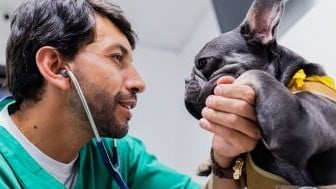
Learn how and why veterinary bills are increasing, and how a Healthy Paws plan can help.

Healthy Paws protects pets like family and makes peace of mind and more happy, healthy moments possible. Pet parents and industry reviews tell the story.

Rescue organizations across the U.S. received support for adoption efforts and ongoing care for vulnerable pets.

Make their food irresistible with the freshest nutritionally-balanced ingredients.
The Healthy Paws Community is a vibrant, social-first space for all pet lovers—whether you’re a Healthy Paws policyholder or simply passionate about pets. As a Pack Member, you can share your favorite pet photos and videos, connect with fellow pet parents, and stay informed with the latest Healthy Paws news and tips. It’s a welcoming place focused on connection, positivity, and celebrating the joy pets bring to our lives!

The inside of a dog’s stomach is a crazy place. Think of everything that goes in there (some of which probably shouldn’t). Plus, glands in the stomach wall secrete a strong acid that helps dogs digest food and kills off bacteria and other potential pathogens that could make them sick. However, gastric acid is so powerful that it can also damage the lining of a dog’s stomach and lead to a gastric ulcer when things go awry.
What is a Gastric Ulcer?
A gastric ulcer is simply an open sore on the inner surface of a dog’s stomach. Gastric ulcers usually develop when too much stomach acid is present or when something has gone wrong with the gastric mucosal barrier – the layers of mucus, tissues, and molecular compounds that normally protect the stomach wall.
Causes of Gastric Ulcers in Dogs
Dogs can develop gastric ulcers for many reasons, including:
- Drug side effects – Dogs who are treated with high doses or long courses of nonsteroidal anti-inflammatories (NSAIDs) and corticosteroid medications are at increased risk for gastric ulcers because these drugs lower the levels of prostaglandins that help protect the lining of the stomach.
- Other conditions that disrupt the barrier that protects the stomach – Lots of health problems can cause damage to the gastric mucosal barrier, including inflammatory bowel disease, infections (especially with a bacteria called Helicobacter), tumors in the stomach wall, eating foreign material, neurologic disorders, surgery to the stomach, gastric dilatation and volvulus, low protein levels, and shock.
- Health problems that make the stomach more acidic – Liver disease, chronic kidney disease, gastrinomas (a tumor in the pancreas), and mast cell tumors can all increase the production of gastric acid and may result in stomach ulcers.
- Extreme exercise – Several studies have found an extremely high (up to 48.5%) prevalence of gastric ulcers in sled dogs competing in the Iditarod.
In some cases, an underlying cause for a dog’s gastric ulcer may not be obvious.
Symptoms of Gastric Ulcers
Vomiting is by far the most common symptom of gastric ulcers in dogs, but lots of things make dogs vomit! Other signs to look for include:
- Vomit that may contain bright red blood or partially digested blood that resembles coffee grounds
- Poor appetite
- Weight loss
- Drooling
- Abdominal pain
- Dark stools, which can be seen when partially digested blood is present
Severe gastric ulcers can lead to significant blood loss or create a hole (perforation) that allows stomach contents to leak into a dog’s abdominal cavity resulting in a serious condition called peritonitis. Talk to your veterinarian if your dog has any of the symptoms associated with a gastric ulcer. They can tell you if your dog needs to be seen immediately.
How are Gastric Ulcers Diagnosed?
All of the symptoms of gastric ulcers in dogs can also be seen with other health problems. Therefore, a veterinarian will need to do a thorough workup to start narrowing down the potential causes. They will start by asking you questions about your dog’s health and lifestyle and then perform a physical examination. Be sure to mention any drugs or supplements that your dog is taking. Diagnostic testing will usually follow and may include:
- Fecal exams
- Bloodwork
- Urinalysis
- Imaging (x-rays and/or ultrasound) of your dog’s abdomen
- Additional tests may also be necessary
The results of all these tests will help your veterinarian rule out other causes of your dog’s symptoms and identify any potential underlying health problems. However, definitively identifying an ulcer usually requires the use of an endoscope or surgery that allows the veterinarian to look inside your dog’s stomach.
Treatment for Gastric Ulcers in Dogs
Mild to moderate gastric ulcers usually respond well to medical treatment. Several different types of drugs are available that can reduce the production of stomach acid or help protect the stomach’s lining as it heals. Veterinarians frequently prescribe omeprazole, misoprostol, or sucralfate, but other options are available too.
Dogs with severe gastric ulcers often need additional treatment and supportive care. Fluid therapy can counteract dehydration while transfusions may be required if a dog has lost a lot of blood. Your veterinarian will likely recommend surgery if a tumor is present, if your dog has a perforation and peritonitis, or if the ulcer doesn’t heal with medical treatment. If an underlying cause for the ulcer has been identified, it should be treated as well.
The diagnosis and treatment of gastric ulcers in dogs can get quite expensive, but the exact costs will depend on the specifics of a dog’s case.
Recovery and Management of Gastric Ulcers
Fortunately, most dogs with mild to moderate gastric ulcers will recover as long as they receive appropriate treatment. However, severe ulcers (including those that lead to perforation and peritonitis) and those associated with serious underlying health problems have a worse prognosis.

Meet Our Writer
Jennifer Coates, DVM
Dr. Jennifer Coates received her Bachelor of Science degree in biology from McGill University in Montreal, Quebec, Canada. After graduation, she worked for several years in the fields of conservation and animal welfare before pursuing her childhood dream—becoming a veterinarian. She graduated with honors from the Virginia-Maryland Regional College of Veterinary Medicine and has worked as an Associate Veterinarian and Chief of Staff in Virginia, Wyoming, and Colorado. Jennifer is also a prolific writer about all things related to veterinary medicine and the well-being of our animal friends. She has published several short stories and books, including the Dictionary of Veterinary Terms, Vet-Speak Deciphered for the Non-Veterinarian. She currently contributes to the Healthy Paws pet insurance blog as a freelance writer. In her free time, Jennifer enjoys life in Colorado with her family and friends… many of whom walk on four legs.