

Learn how and why veterinary bills are increasing, and how a Healthy Paws plan can help.


Three rescues across North Carolina and Georgia received donations that made a big impact.

Make their food irresistible with the freshest nutritionally-balanced ingredients.
Key Takeaways
- Dogs can eat strawberries, which are full of antioxidants, vitamin C, and fiber. Point 1
- In moderation, it is safe for dogs to eat raspberries and blackberries.
- Blueberries are a healthy and low-calorie treat that is safe for dogs.
- Cranberries are non-toxic for dogs; however, most dogs don’t like them.
- Certain berries can make dogs sick, including gooseberries, marionberries, salmonberries, cherries, and serviceberries.
Whether you’re on the trail or in your own kitchen, you may find yourself wondering if your dog can eat berries safely, whether that means accidentally or as a treat. Most berries are good for dogs, especially those on senior diets or those who prefer all-natural treats. There are some you shouldn’t share – see below for those that are no-no’s and get to the vet ASAP if you catch your dog munching on them.
Can Dogs Eat Strawberries?
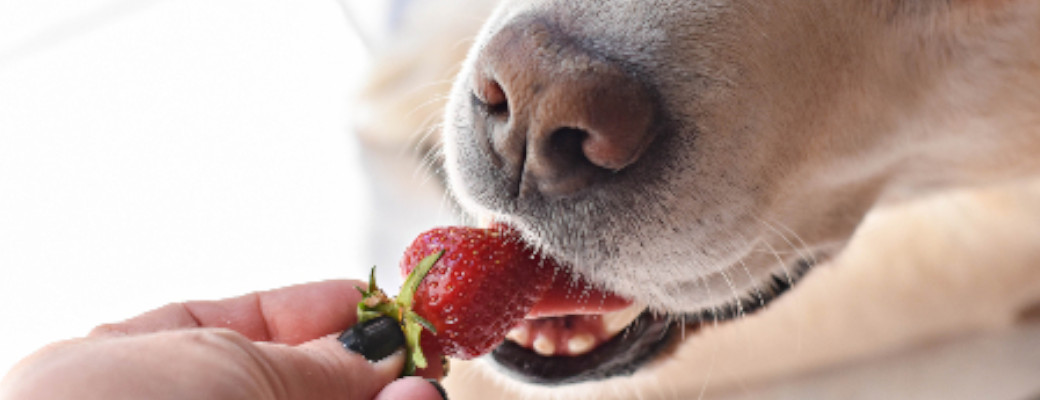
Strawberries are safe for dogs to eat, and are chock full of antioxidants, fiber and vitamin C. It’s also said that strawberries can help “whiten” your dog’s teeth! Only a few berries at a time, though, as strawberries are naturally sweet, and too much can cause diarrhea or gastrointestinal upset.
Most pet parents just want to make sure strawberries are okay should their dog sneak one. However, if you find your dog really likes strawberries, rest easy knowing the following benefits:
- Full of antioxidants
- High water content
- A good source of fiber and vitamin C
- Good for teeth
Although strawberries are safe for your dog in moderation, there are a few exceptions to avoid:
- Canned or strawberries in syrup: Canned or strawberries in syrup can be very sweet, or worse, sweetened with xylitol (which is toxic)
- Chocolate-covered strawberries: It’s also a firm “no” as chocolate is highly toxic to dogs. The ingredients behind chocolate’s toxicity, theobromine, and caffeine can speed up the heart rate and nervous system. Even a small amount of dark chocolate can send your pup to the emergency vet.
- Desserts like strawberry ice cream or shortcake: Desserts are just too rich and high in sugar for pups. Too much sugar can put dogs at risk of weight gain, diabetes, cavities, and metabolic conditions.
Strawberry recipe: Adapted from Strawberry Sensation Dog Treats from The Honest Kitchen
Ingredients
- 1/2 cup diced strawberries
- 1 banana
- 1 1/2 cups whole wheat flour
- 1/4 cup whole grain rolled oats
- 1/4 cup sugar-free (and no sweetener added) plain applesauce
Instructions
- Put banana and strawberries in a blender. Mix until smooth. Set aside.
- In a large bowl, add flour and whole grain rolled oats. Mix until combined.
- Add strawberry and banana mixture, and applesauce to the dry mixture. Stir until dough is moist but firm, knead with hands if necessary.
- On a parchment paper-lined surface, roll out dough to ¼ thickness. Cut with cookie cutters and place on cookie sheets.
- Place cookies in the oven and bake for 15-20 minutes.
- Remove cookies from oven and place on a cooling rack overnight.
- Store cookies in an airtight container or bag and keep in the refrigerator or freezer.
Tell us about your pet – get a quick quote
Can Dogs Eat Raspberries and Blackberries?
Both raspberries and blackberries are relatively safe for dogs to eat. Like their strawberry cousin, they both have fiber, vitamins, and antioxidants. However, it’s important to note that despite the fact that they’re low in sugar and very tart, they do have naturally occurring xylitol. Watch to make sure your dog does not ingest too much – while the amount is minuscule, it can add up.
Can Dogs Eat Blueberries?
Yes, blueberries are safe for dogs. They can be a fresh, delicious summer treat that some dogs love. With the buzz around blueberries being a “superfood” for humans, it’s good to know that they’re safe and healthy for dogs too. Blueberries are a healthy, low-calorie treat that provides your dog with lots of nutrients. Here’s what we’ve found:
- Full of vitamin C and fiber
- Antioxidants to help boost immunity
- Thanks to their small size, you don’t have to worry about cutting them, even for smaller dog breeds!
Blueberries are a perfect sweet treat for the summertime – especially a few frozen ones on hot days.
As with most human foods, however, there are some guidelines to follow. Only feed fresh washed blueberries to your dog, and as with all fruits, don’t overdo it. Consuming too much fiber can cause gastrointestinal upset and diarrhea, so only feed blueberries in moderation. As a general rule, fruits and veggies shouldn’t make up more than 10-20% of a dog’s diet.
Some people enjoy frozen blueberries as a summer treat, but it’s important to know that because they are solid, frozen blueberries can pose a choking hazard to small dogs.
Do not feed dogs special human desserts made with blueberry, like ice cream, pie, or muffins.
Blueberry recipes
Give your dog a few raw blueberries as a treat or add them to his food to give it some extra flavor. You can also treat your dog to a homemade dog treat recipe made with blueberries like the one below.
Blueberry popsicles recipe from Modern Dog Magazine
Ingredients
- 2 cups plain organic yogurt
- 1/3 cup fresh blueberries
- 6-bar silicon rectangle muffin mold or ice cube tray
Instructions
- Combine 1 cup yogurt and half of the blueberries in a blender to form a smoothie.
Pour smoothie mix into the silicon muffin mold or ice cube tray, dividing evenly. - Top up each bar with spoonfuls of the remaining plain yogurt and whole blueberries to create a pretty, layered look.
- Place in the freezer on a flat surface for 6 hours or until frozen solid.
Slide out each bar to serve. For easy removal, let the molds sit out on the counter for a few minutes or run them under warm water for a few seconds.
Can Dogs Eat Cranberries?
Cranberries are probably not your dog’s favorite go-to – in fact, not too many humans can eat a cranberry without added sugar – however, they are not toxic to dogs. They are known to help with urinary tract infections, but before you treat your pup’s UTI with cranberry, remember to check with your vet who may have more effective methods like antibiotics.
What Berries to Avoid
There are some berries that will make your dog sick although it may not affect humans. For example, regional berries can run the gamut: gooseberries, marionberries, salmonberries, and serviceberries may be toxic to your dog. While gooseberries are toxic, lesser-known species of berries yield hardly any research, so it’s better to be safe than sorry. Also stay away from holly, juniper, nightshade, dogwood, poke, and mistletoe berries as well as baneberries; they can be toxic and their pits are a hazard. If your dog has gotten into these berries, you may need to call poison control.
Two fruits (not berries) to avoid are grapes, which are toxic to dogs, and cherries, whose pits can pose a choking hazard (the flesh of a cherry is safe to share, however).
If you think your pup has ingested a toxic berry, call your emergency veterinary hospital and get vet treatment – time is of the essence. You’ll see symptoms such as vomiting, diarrhea, extreme lethargy, tremors, seizures, excessive drooling, or even trouble breathing. Your vet may administer an IV and induce vomiting even if the poisoning is mild. Bring samples of the berries in question, if you can.
If you’re not sure what to share, Healthy Paws has a comprehensive list of foods that are safe and not safe for dogs.
Want to make sure your pets are covered from those unexpected illnesses or injuries with no limits on payouts? Get a quote and make sure you’re covered for those dog and puppy mishaps and unpleasant surprises.

Meet Our Writer
Colleen Williams
Over the past decade, Colleen has written about health, wellness, beauty, and even pets for The New York Times, The Cut, Refinery29, xoVain, Healthy Paws Pet Insurance, and Seattle Met Magazine, as well as many beauty brands. She has a BFA in Art History from the University of New Mexico and an AAS in Fashion Design from Parsons School of Design in New York.