

Learn how and why veterinary bills are increasing, and how a Healthy Paws plan can help.


Three rescues across North Carolina and Georgia received donations that made a big impact.

Make their food irresistible with the freshest nutritionally-balanced ingredients.
Key Takeaways
- Don’t panic if your dog skips a meal; some dogs just aren’t big eaters.
- Several factors can cause a change in appetite, such as poor food quality, anxiety, and declining health.
- Contact your vet if your dog displays other symptoms, like vomiting and diarrhea, or if other dogs in the home are also refusing to eat.
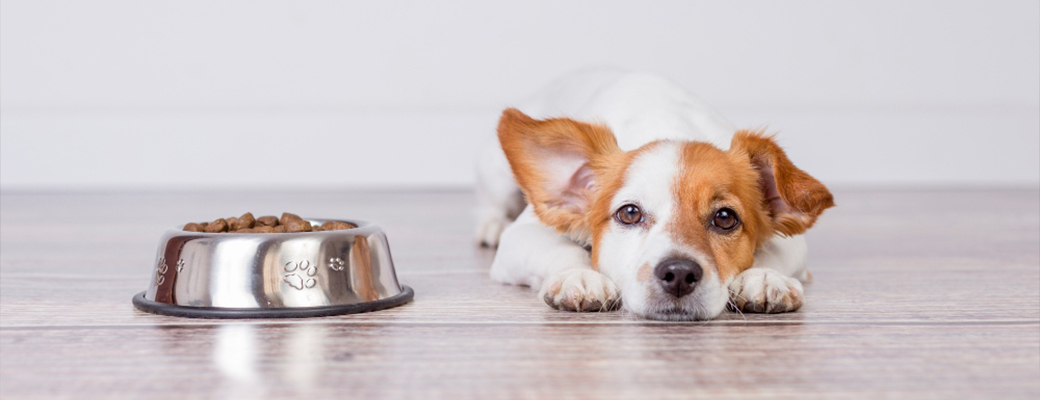
Has your chow-hound suddenly lost interest in food? Are you dealing with a canine picky eater? If so, read on to learn why your dog may not be eating regularly and what you can do to help.
First, Is There Really a Problem?
It’s natural to connect a good appetite to good health, but a dog who doesn’t eat at every opportunity isn’t necessarily unwell. Some simply aren’t big eaters, which can be jarring if your experience is limited to dogs who live for their next meal. If your dog seems to be healthy, isn’t losing weight, and has a good body condition, you may have nothing to worry about! Several studies (like this one) have shown that dogs who eat fewer calories and remain slim live longer and healthier lives than average.
On the other hand, you have good reason to be concerned if your dog:
- Used to have a good appetite, but it is worse now
- Is unexpectedly losing weight
- Has other symptoms of disease like vomiting, diarrhea, discomfort, loss of energy, difficulty chewing or swallowing, coughing, or anything else that is out of the ordinary
Tell us about your pet - get a quick quote
What Causes Loss of Appetite in Dogs?
Many things can cause dogs to eat poorly, some of which can be dealt with at home while others require a trip to the veterinarian.
Something is “wrong” with the food
Start by thinking about your dog’s food. Did you recently switch to a new diet or mix in a medication or supplement? If you can point to a recent change, go back to your dog’s old diet and see if that takes care of the problem.
Is your dog’s food old? Dry food only remains fresh for a month or so after the bag has been opened. It’s also possible that something went wrong when the food was being manufactured, stored, or transported. Check for a pet food recall, and when in doubt, throw it out.
Stress and anxiety
Dogs can feel vulnerable when they are eating. They may skip or shorten meals when they are anxious or under stress.
Feeding time should be as peaceful and predictable as possible. A familiar, quiet location separated from other pets (and young children!) is ideal. If you’ve recently changed where or how you feed your dog, returning to your old methods may also help. Talk to your veterinarian if you think your dog is suffering from anxiety.
Disease
Sick or injured dogs often don’t eat well. Some of the more common health problems that can reduce a dog’s appetite are:
- Eating something out of the ordinary that results in an upset stomach
- Conditions affecting the mouth, like dental disease, that make eating painful
- Gastrointestinal parasites
- Bacterial or viral infections
- Food allergies or intolerances
- Inflammatory bowel disease
- Gastrointestinal tumors, obstructions, or ulcers
- Pancreatitis
- Liver disease
- Kidney disease
- And many, many more
A veterinarian can start to narrow down this list with a physical examination and routine lab work.
Signs That It’s Time to Take Your Dog to the Vet
With so many potential causes behind a dog’s poor appetite (ranging from the not-so-serious to the potentially life-threatening), how do you know when it’s time to see your vet?
Don’t panic if your otherwise healthy, adult dog has skipped a meal. Simply discard their leftovers and offer their next meal at its regularly scheduled time. Monitor for the development of other symptoms and ensure that your dog is continuing to drink. Call your veterinarian for advice if your dog’s appetite hasn’t returned to normal in 24 to 48 hours.
But don’t wait to call your vet if any of the following apply:
- Your dog is very young, very old, or has underlying health problems
- They have other symptoms of illness like vomiting, diarrhea, discomfort, lethargy, or weakness
- Multiple dogs in your household are experiencing similar symptoms
- Your dog may have eaten something dangerous like medications, high-fat foods, bones, chocolate, grapes and raisins, toxic plants, or chemicals
How to Encourage a Dog to Eat
Once you’re sure your dog’s not in any danger, you can start working on improving their appetite. Good nutrition is essential to help dogs recover from illness or injury and for their long-term health and wellbeing. Here are some tricks of the trade for encouraging a dog to eat.
- Try a different type of food. Many dogs seem to think that wet foods taste better than dry. Homecooked or commercially-available fresh diets can be good options but make sure they are nutritionally complete and balanced if you are going to feed them for more than a week or so.
- Warming wet food to around 100 degrees Fahrenheit will increase its aroma.
- Make every bite count by feeding a high-quality food that is nutrient and calorie-dense. Foods designed for puppies or extremely active dogs are available over-the-counter, and recovery diets can be purchased through veterinarians.
- Don’t feed too many treats or human foods between meals. Mixing a small amount of something yummy (but still healthy) with your dog’s regular food is a better option.
- Get your dog in the mood to eat with a favorite activity—going for a walk or a play or snuggle session can all work.
- Hand-feed your dog and praise them when they take a bite. Never resort to force-feeding as this can lead to injuries and food being inhaled.
If you still have concerns about your dog’s appetite or diet, talk to your veterinarian or a veterinary nutritionist. They can customize recommendations based on the details of your dog’s case.
Meet Our Writer
Jennifer Coates
Dr. Jennifer Coates received her Bachelor of Science degree in biology from McGill University in Montreal, Quebec, Canada. After graduation, she worked for several years in the fields of conservation and animal welfare before pursuing her childhood dream—becoming a veterinarian. She graduated with honors from the Virginia-Maryland Regional College of Veterinary Medicine and has worked as an Associate Veterinarian and Chief of Staff in Virginia, Wyoming, and Colorado. Jennifer is also a prolific writer about all things related to veterinary medicine and the well-being of our animal friends. She has published several short stories and books, including the Dictionary of Veterinary Terms, Vet-Speak Deciphered for the Non-Veterinarian. She currently contributes to the Healthy Paws pet insurance blog as a freelance writer. In her free time, Jennifer enjoys life in Colorado with her family and friends… many of whom walk on four legs.