
Learn how and why veterinary bills are increasing, and how a Healthy Paws plan can help.

Healthy Paws protects pets like family and makes peace of mind and more happy, healthy moments possible. Pet parents and industry reviews tell the story.

Rescue organizations across the U.S. received support for adoption efforts and ongoing care for vulnerable pets.

Make their food irresistible with the freshest nutritionally-balanced ingredients.
The Healthy Paws Community is a vibrant, social-first space for all pet lovers—whether you’re a Healthy Paws policyholder or simply passionate about pets. As a Pack Member, you can share your favorite pet photos and videos, connect with fellow pet parents, and stay informed with the latest Healthy Paws news and tips. It’s a welcoming place focused on connection, positivity, and celebrating the joy pets bring to our lives!
Key Takeaways
- It may be necessary to give a puppy milk replacement if the mother isn’t able to nurse.
- Always seek the advice of a vet before attempting to bottle feed.
- Never give regular cow’s milk to a puppy because it can cause diarrhea and tummy aches.
- There are special puppy milk replacement formulas sold in stores.
- In a pinch, you can make your own DIY puppy formula with just a few simple ingredients.
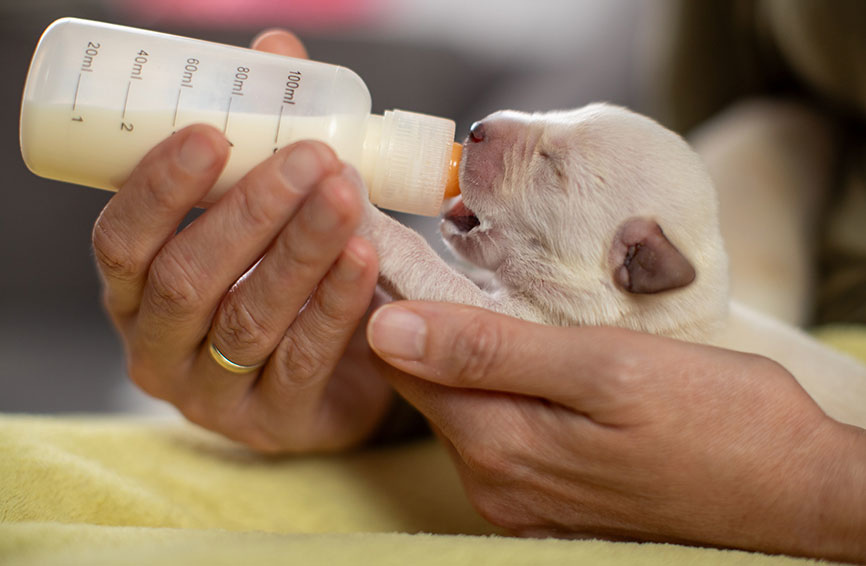
There are times when a mother is unable to nurse her pup; whether she isn’t lactating, isn’t present, or has (unfortunately) rejected the puppy. Those are the times when an alternative milk supply is necessary. Luckily, there are options.
Anyone who is trying to raise an orphaned animal should do so under the direction of a veterinarian. Things can go wrong quickly with young puppies, and you want to be able to correct any issues right away.
When do puppies need milk replacers?
While a mother’s milk is always going to be the healthiest food for puppies, there are a few situations where mothers may not be able to feed puppies properly.
Here are some examples, according to PetSmart:
1. When Mom isn’t around
Sometimes, a litter of puppies are found with the mother nowhere around. Or perhaps the mother has died. If a puppy’s mom isn’t present for any reason, they will need a puppy milk replacer until they can eat solid dog food.
2. When Mom won’t feed them
Occasionally, a puppy’s mother is available, but she has rejected her litter and refused to feed them. Experts say this can happen for a variety of reasons – she may not recognize them as hers, she is stressed during the birth, or the puppies are weak or sick.
3. Larger pups squeeze out the smaller ones
Sometimes a litter has puppies that are smaller than others. In this situation, the larger dogs might hog the milk source, making it difficult for smaller dogs to get what they need from mom. They might need some of their diet supplemented with milk replacers to keep them growing healthy and strong.
How to bottle feed a newborn puppy
Here are some tips on how to feed a newborn puppy, from PetSmart and Daily Paws:
- First, read the instructions on the formula label to find out the appropriate serving size and instructions. Follow those instructions exactly, along with your vet’s guidance, to ensure you are using them correctly.
- Feed your puppy while lying on their stomachs, with their heads upright, to mimic how they nurse in real life.
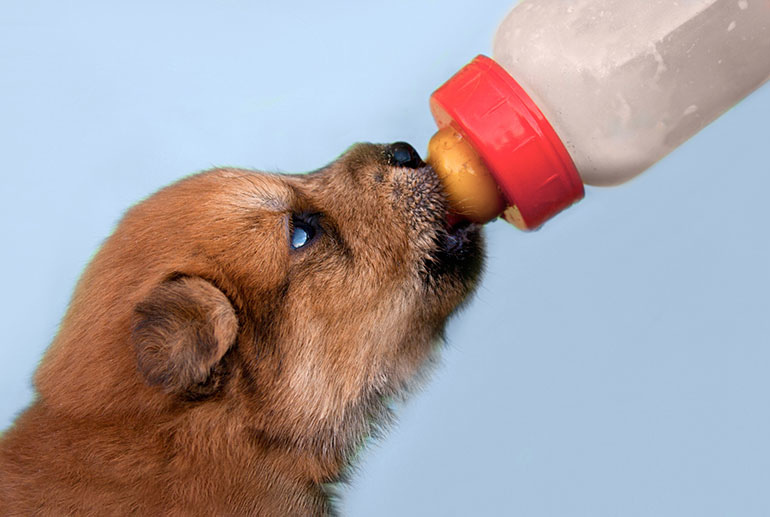
- Use a bottle with a small hole in the nipple, just large enough for the milk to drip out slowly.
- Your puppy should suck the milk out instead of having it fall into their mouth. Do not overfill your puppy’s mouth or force-feed them, which could cause pneumonia.
- Just as with human babies, puppies need to be burped after feeding.
- Feed growing pups several times a day, and weigh them three times a week to ensure they hit their growth milestones.
- When the vet says it’s time to transition from a bottle to a dog bowl, you can put the milk replacer in the bowl. Start adding puppy food to the milk when they are ready to move to solid food.
What to feed a newborn puppy
The most important consideration when giving milk to a puppy is not to use pasteurized cow’s milk, especially the reduced fat variety, or human infant formula. Giving a puppy regular cow’s milk from the grocery store can lead to sinus problems, diarrhea, or tummy aches. Instead, you’ll want to use commercial puppy milk replacement formula or make one yourself.
Another consideration to keep in mind when it comes to giving milk to a puppy is: never feed a puppy a cold or chilled formula. Puppies cannot regulate their body heat by themselves, and it is up to you to keep the ambient temperature warm for them.
Puppy milk replacement formula
When considering puppy milk replacement formulas, vets and breeders recommend well-known brands like Breeder’s Edge, Pet-Lac, Farnam, Nuturall, Just Born, GNC Pets Ultra Mega Premium Milk Replacer, and All-Star Universal Milk Replacer. These products are labeled with guidance on how much and how often to feed the puppies. Some are made with goat’s milk (which is easier for puppies to digest), and most are available as either a powder (which you reconstitute with water) or as a canned liquid formula. Pay attention to those with colostrum added – colostrum is a natural element in the mother’s milk that helps boost the puppy’s immune system.
Homemade puppy formula
You can also make your own puppy formula. While this is not as nutritionally complete as a commercial milk replacement formula, it can be used until you can get a higher-quality formula. The following recipe comes from Leerburg.com.
- To 10 ounces of goat’s milk (or canned, full-fat evaporated cow’s milk), add one raw egg yolk.
- 3 oz. sterilized water (not needed if using whole goat’s milk).
- Mix in 1 cup plain full fat (not skim) yogurt.
- Add 1/2 teaspoon of corn syrup or simple syrup made from sugar and water.
Mix well and bottle feed warm. Do not use a blender or whisk as you don’t want a lot of air bubbles wreaking havoc in the puppy’s tummy. This formula can be stored in the fridge for one week.
If the puppy is not thriving after a few days on the commercial or homemade milk formula, try adding two egg yolks and two dissolved packets of unflavored gelatin. The gelatin helps to build strong bones and teeth. Keep the formula in the refrigerator. Don’t be alarmed if it solidifies. When you warm it up before feeding, it will liquefy again.
Other things to note about feeding puppies formula
VCA Animal Hospitals offers these tips for feeding orphaned puppies:
- Feed puppies on a strict schedule, every 2-4 hours if possible.
- The VCA recommends warming puppy milk replacer to approximately 100°F (38°C) before feeding.
- Introduce small amounts of semi-solid or solid food to supplement the formula, and transition to solid food by five to six weeks of age.
- Bottles and nipples should be cleaned and then boiled in water to sterilize them between uses.
- Never prepare more milk replacer than can be used within 24 hours and always keep it refrigerated.
- Discard formula after one hour if left at room temperature.
- Keep a logbook of weights and milestones, so you can keep track of whether the puppy is progressing.
Some signs it’s time to check with the vet
If you have any concerns about your puppy’s health, see a veterinarian immediately, especially if you notice signs of malnutrition. Here are some common signs, according to PetSmart:
- A pup’s physical appearance will indicate malnutrition. If your puppy isn’t getting their nutritional needs met, they may have itchy/flaky skin, thin fur, weight loss and more.
- If your puppy isn’t going potty or isn’t going consistently, this can be a sign of malnutrition.
- Stunted growth: If a puppy just doesn’t seem to be growing at the right weight compared to their littermates, they are probably not getting enough nourishment.
This article is NOT a substitute for veterinary advice, and you should always follow your vet’s instructions as they are specifically tailored for your pup. While you set up a consultation with the vet, enroll your new friend in puppy insurance while he’s still very young to avoid exclusions like pre-existing conditions.
This article is provided by Cuteness—the go-to destination for passionate pet parents. Cuteness has answers to all of your health, training, and behavior questions – as well as the cutest, funniest, and most inspiring pet stories from all over the world.
Authors
Cuteness Team
Cuteness is the place for pet people. Whether you’re looking for adoption guides, in-fur-mation on your pet’s weird habits or showcases of pure pet cuteness, we’ve paw-sitively got it all. At Cuteness, we’re committed to working only with experts we’d trust with our own pets. We’ve done the legwork for you so you can focus your energy on loving and caring for your furry friends. We’re passionate about all things pet and fostering a community of pet lovers. Caring for pets isn’t always a walk in the park – but we’ve got you covered! Cuteness and Healthy Paws Pet Insurance had a content sharing agreement until 2021.
Cathy Barnette, DVM
Cathy Barnette is a veterinarian and freelance writer based in Punta Gorda, FL. Cathy creates educational content for pet owners and veterinary team members. She is passionate about making complex medical information accessible to pet owners, allowing them to partner with their veterinarians to make informed decisions about their pets’ health. In addition to her human family members, she shares her home with one dog, two cats, and a dove. Cathy Barnette on LinkedIn