

Learn how and why veterinary bills are increasing, and how a Healthy Paws plan can help.

Read stories of how Healthy Paws has protected pets like family and made peace of mind and more happy, healthy moments possible.

Rescue organizations across the U.S. received support for adoption efforts and ongoing care for vulnerable pets.

Make their food irresistible with the freshest nutritionally-balanced ingredients.
The Healthy Paws Community is a vibrant, social-first space for all pet lovers—whether you’re a Healthy Paws policyholder or simply passionate about pets. As a Pack Member, you can share your favorite pet photos and videos, connect with fellow pet parents, and stay informed with the latest Healthy Paws news and tips. It’s a welcoming place focused on connection, positivity, and celebrating the joy pets bring to our lives!
Everyday expenses for a pet now exceed $4,000 a year on average, according to new research. As prices continue to climb, pet owners face tough choices. Pet insurance can be a financial backstop against the unexpected.
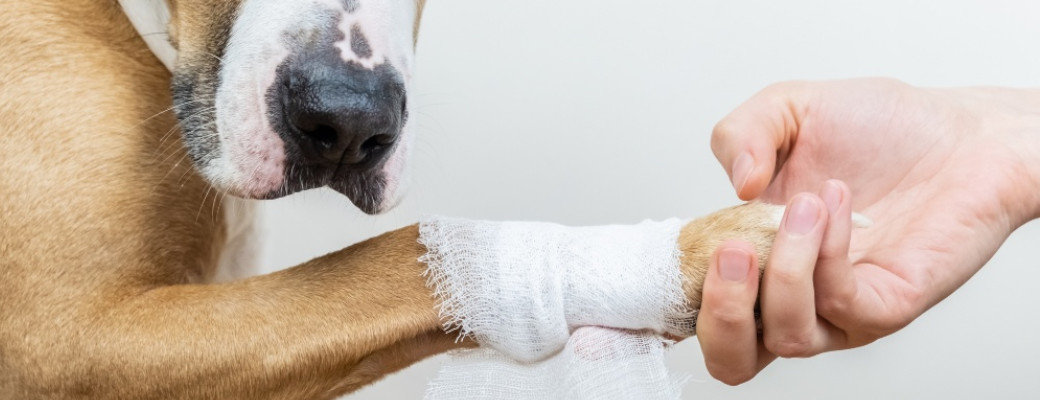
Table of Contents
- Is Neosporin safe for dogs?
- What is Neosporin?
- How to Apply Neosporin on Dogs
- Potential Side Effects
- Is it OK if my dog licks Neosporin?
- What are some alternatives to Neosporin for dogs?
- Can I put Polysporin on dogs’ paws?
- What is the best antiseptic for dogs?
- Can I put Vaseline on my dog?
- Word to the Wise
Key Takeaways
- With veterinarian approval, it is fine to use Neosporin on dogs.
- Neosporin should not be used on cats because of the potential of a life-threatening anaphylactic reaction.
- For dogs, Neosporin can help prevent and fight infections.
- Apply Neosporin on your dog after cleaning the wound and then cover it with a pet bandage.
- Neosporin should be used only on small cuts, burns, and scrapes on a dog – consult a vet for larger injuries.
Is Neosporin safe for dogs?
Yes, it is OK to use Neosporin on your dog with veterinarian approval, but we do not recommend using it on cats.
After receiving some veterinarian feedback, we have restricted our recommendation to dogs only, as there have been reports of cats having life-threatening anaphylactic reactions to the antibiotic ingredients in Neosporin (most specifically in ophthalmic preparations that include neomycin and polymyxin B). For that reason, we do not recommend using Neosporin on a cat.
Tell us about your pet – get a quick quote
What is Neosporin?
Neosporin is a topical antibiotic ointment that helps prevent and fight infections, and can be used in a number of situations to help keep your pet happy and healthy. The active ingredients are neomycin, polymyxin B, and bacitracin, which all come together to stop bacteria growth.
Note that Neosporin is a brand name and there are other topical antibiotic ointments that you can also use on your pets. A very close alternative is Polysporin. There are also some natural alternatives to Neosporin that you can use on your dog, including Curoxen and Burt’s Bees Res-Q Ointment.
Ask your vet if you’re not sure which antibiotic ointment to use on your pet.
How to Apply Neosporin on Dogs
After consulting your vet, you can apply Neosporin to your dog the same way you would on a human. Carefully cleanse the affected area by rinsing it with warm water and a drop of soap, if necessary. After gently patting dry, apply a thin layer of the antibacterial ointment over the affected area and then cover it with a pet-approved bandage. Try the Nurtured Pets Anti-Lick Strip Prevent Bandage ($5), Nutri-Vet Bitter Pet Bandage ($8), or PawFlex MediMitt Disposable Dog Bandage ($10). Apply the bandage securely but not so tightly that it cuts off circulation, which would be very uncomfortable for your dog and may prompt your dog to try to get the bandage off.
The bandage will prevent additional dirt or bacteria from entering the wound. It will also prevent your pet from licking the ointment away, which they’ll be very eager to do! You can also have your pet wear a cone for a few days to prevent any excessive licking. Change the bandage once or twice a day and you should see improvement within 24 to 72 hours.
Potential Side Effects
Neosporin can sometimes cause allergic reactions in dogs. Symptoms of a mild allergic reaction are itching, redness, and hives at the area where Neosporin is applied. Rarely, Neosporin can cause serious allergic reactions, which can cause difficulty breathing and facial swelling. Serious allergic reactions require immediate veterinary care.
To check if your dog is allergic to Neosporin, apply a small amount of it to a small patch of healthy skin and watch for an allergic reaction. Contact your vet if your dog’s skin reacts to the Neosporin. Your vet can recommend an alternative antibiotic ointment to use.
If there’s no skin reaction, apply the Neosporin as described above.
Dogs that ingest Neosporin may experience gastrointestinal upset, including vomiting, diarrhea, and reduced appetite.
Is it OK if my dog licks Neosporin?
Licking Neosporin may upset your dog’s stomach, causing vomiting, diarrhea, and appetite loss. It is best to cover the area where you applied Neosporin with a pet-appropriate bandage, such as the Nutured Pets Anti-Lick Strip Prevent bandage, to prevent your dog from licking the Neosporin.
What are some alternatives to Neosporin for dogs?
Alternatives to Neosporin include Polysporin, silver sulfadiazine, and bacitracin, all of which are antibiotic ointments. Other alternatives—Vetricyne and Sulfoden—are formulated specifically for dogs and can be purchased over the counter or from your veterinarian. You could also use natural alternatives like Curoxen and Burt’s Bees Res-Q Ointment.
Like Neosporin, these alternatives should be used only on minor wounds.
Can I put Polysporin on dogs’ paws?
Yes, you can put Polysporin on a dog’s paws. However, it lacks neomycin, one of the three ingredients in Neosporin. Therefore, it may be slightly less effective than neomycin for wound treatment. Speak to your veterinarian first before putting Polysporin on your dog’s paws and prevent your dog from licking the area.
What is the best antiseptic for dogs?
Neosporin is a popular over-the-counter antibiotic ointment that is generally safe for use in dogs. It contains three active ingredients (bacitracin, polymyxin B, neomycin) that kill bacteria in minor wounds.
However, there is no one-size-fits-all answer for the best antiseptic for dogs. Your veterinarian can recommend the most appropriate antiseptic to help treat your dog’s wound.
Can I put Vaseline on my dog?
You can use Vaseline on your dog, but it is not an antibiotic ointment. Therefore, it will not help kill bacteria in your dog’s wound. Also, ingesting Vaseline can upset your dog’s stomach and cause vomiting and diarrhea.
Word to the Wise
It’s important to keep in mind that Neosporin — and all antibiotic ointments for that matter — are intended for usage on small cuts, scrapes, and burns. If your pet has a large wound, a very deep cut, or is already showing signs of a serious infection, please see your veterinarian for proper treatment.
The content is not intended to be a substitute for professional veterinarian advice, diagnosis, or treatment. Always seek the advice of your veterinarian or other qualified health provider with any questions you may have regarding a medical diagnosis, condition, or treatment options.
It’s all fun and games until you have to break out that cone of shame! Make sure your sweet fluff is covered when it comes to their health so everyone — and your wallet —can rest easy. Get a dog insurance quote from Healthy Paws Pet Insurance to see how much you could save.
Authors
Wendy Rose Gould
Wendy Rose Gould is a freelance lifestyle reporter based in Phoenix, Arizona. She has been in journalism for over a decade, and has been freelancing almost that entire time. In addition to lifestyle reporting, she also works with brands to create marketing content for their websites and blogs.
JoAnna Pendergrass, DVM
JoAnna Pendergrass, DVM, is a veterinarian and freelance medical writer in Atlanta, GA. After graduating from the Virginia-Maryland College of Veterinary Medicine with her veterinary degree, JoAnna completed a 2-year research fellowship in neuroscience at Emory University. During this fellowship, she learned that she could make a career out of combining her loves of science and writing. As a medical writer, JoAnna is passionate about providing pet parents at Healthy Paws with clear, concise, and engaging information about pet care. Through her writing, she strives not only to educate pet parents, but also empower them to make good health decisions for their pets. JoAnna is a member of the American Medical Writers Association.