

Learn how and why veterinary bills are increasing, and how a Healthy Paws plan can help.

Read stories of how Healthy Paws has protected pets like family and made peace of mind and more happy, healthy moments possible.

Rescue organizations across the U.S. received support for adoption efforts and ongoing care for vulnerable pets.

Make their food irresistible with the freshest nutritionally-balanced ingredients.
The Healthy Paws Community is a vibrant, social-first space for all pet lovers—whether you’re a Healthy Paws policyholder or simply passionate about pets. As a Pack Member, you can share your favorite pet photos and videos, connect with fellow pet parents, and stay informed with the latest Healthy Paws news and tips. It’s a welcoming place focused on connection, positivity, and celebrating the joy pets bring to our lives!
Everyday expenses for a pet now exceed $4,000 a year on average, according to new research. As prices continue to climb, pet owners face tough choices. Pet insurance can be a financial backstop against the unexpected.
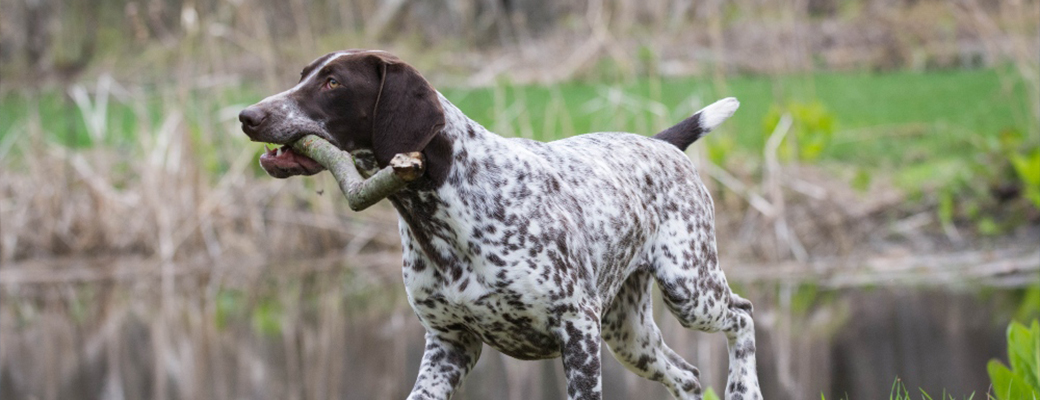
Introduction to German Shorthaired Pointers
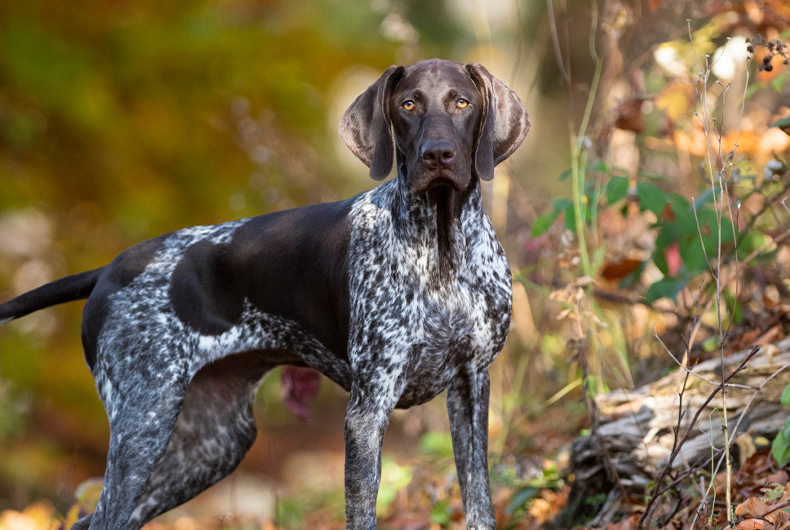
Intelligent and friendly, the German shorthaired pointer is a sporting group dog that is medium in size and eager to please. These are energetic dogs that are very trainable and that are always up for a physical challenge. You’ll need to devote a good amount of time to exercising these dogs, but in return, you’ll make a lifelong friend and have lots of fun living an active lifestyle.
German shorthaired pointers need plenty of room to exercise and play, or otherwise destructive behaviors could result. They need a good amount of mental and physical stimulation to thrive, but are very friendly dogs that you can train easily and find a lot of joy in spending time with.
Get a pet insurance quote for your German Shorthaired Pointer today
Size of German Shorthaired Pointers
When your male German shorthaired pointer is fully grown, he will be between 55 and 70 pounds. Meanwhile, fully grown females weigh more like 45 to 60 pounds. Adult males are 23 to 25 inches tall, while adult females are 21 to 23 inches tall.
German shorthaired pointers are unique in that they can continue to grow a bit between the ages of one and two. Male dogs weigh more and are taller than female dogs, but just by a few pounds and inches.
Here’s how big you can expect your German shorthaired pointer to get when fully grown for both weight and height.
| Weight Chart | 3 months | 6 months | 9 months | 12 months | 24 months |
| Male German Shorthaired Pointers | 24 lbs. | 44 lbs. | 55 lbs. | 62 lbs. | 64 lbs. |
| Female German Shorthaired Pointers | 20 lbs. | 40 lbs. | 46 lbs. | 51 lbs. | 53 lbs. |
| Height Chart | 3 months | 6 months | 9 months | 12 months | 24 months |
| Male German Shorthaired Pointers | 15 inches | 22 inches | 24 inches | 24 inches | 24 inches |
| Female German Shorthaired Pointers | 13 inches | 19 inches | 21 inches | 21 inches | 22 inches |
Characteristics of German Shorthaired Pointers
You’ll find that German shorthaired pointers are not as adaptable dogs as some other breeds and that they are quite sensitive. They don’t tolerate being left alone very well, and they do better in warm weather than cold weather.
Also, these are highly intelligent dogs with a high prey drive and tendency to wander off and be somewhat vocal. You’ll need to get your German shorthaired pointer plenty of exercise each day, which means an hour or two of a daily workout. Get ready for some high energy, and build a tall fence for your outdoor doggy play area!
As you get to know a German shorthaired pointer’s personality, here’s what you can expect based on his or her breed characteristics.
| Breed Characteristic | Level (High, Medium, Low) |
| Affectionate with People | High |
| Good with Kids | High |
| Good with Pets | Medium |
| Need for Exercise | High |
| Energy Level | High |
| Intelligence Level | High |
| Able to Be Trained | High |
| Amount of Barking | Medium |
| Amount of Shedding | Low |
History of German Shorthaired Pointers
As their name suggests, this breed of dog originated in Germany, where hunters spent many years trying to create the perfect bird dog. German bird dogs were part of the local tradition dating back to at least the 1700s. The dogs were bred to have a keen nose, be versatile, run swiftly, and have a noble appearance. Prince Albrecht zu Solms-Braunfels was an important figure in the development of the breed, which has been used to hunt everything from birds to rabbits, raccoons, possum, and deer.
The German shorthaired pointer is the result of crossing a Spanish pointer and a Hannover hound, while the addition of the English pointer gave the breed a distinctive look as well. It became known as the hunting dog that could really do it all because of its versatility.
The breed was recognized in Germany in the late 1800s and then came to America in the 1920s. The American Kennel Club first admitted this breed of dog to its Stud Book in 1930. The first licensed specialty show for this dog was held in 1941 in Chicago.
German Shorthaired Pointer Standard Information
Purebred German shorthaired pointers must fit within certain parameters with regard to their appearance, temperament, and other characteristics. This is why the American Kennel Club has developed a breed standard for the German shorthaired pointer, which is accepted by national and international organizations. In general, these are versatile hunting dogs that perform well on both land and in water. They are balanced, symmetrical, powerful, agile, intelligent, and animated.
Here is an overview of the breed standard information for German shorthaired pointers:
Head:
- Clean cut, neither too light nor heavy
- Ears broad and set fairly high
- Reasonably broad skull
- Sufficiently long muzzle to carry hunted game
- True scissors bite
Neck, Topline, Body:
- Muscular nape, larger towards shoulders
- Chest reaches down to elbows
- Moderate length loin, slightly arched
- Tail set high and firm
Forequarters:
- Shoulder blades nearly 45-degree angle
- Pasterns strong, short, nearly vertical
- Toes sufficiently arched and heavily nailed
- Pads hard, strong, and thick
Hindquarters:
- Thighs strong and well-muscled
- Stifles well-bent
- Hocks turn neither in nor out
Coat:
- Short, thick, tough to the hand
- Longer on the underside of the tail and back edges of haunches
- Softer, thinner, and shorter on ears and head
Color:
- Solid liver or combination of liver and white
- Liver and white ticked, liver patched and white ticked, or liver roan
Gait:
- Smooth lithe gait
- Legs converge beneath the body as gait increases from walk to faster speed
- Hindquarters drive the back legs smoothing and with power
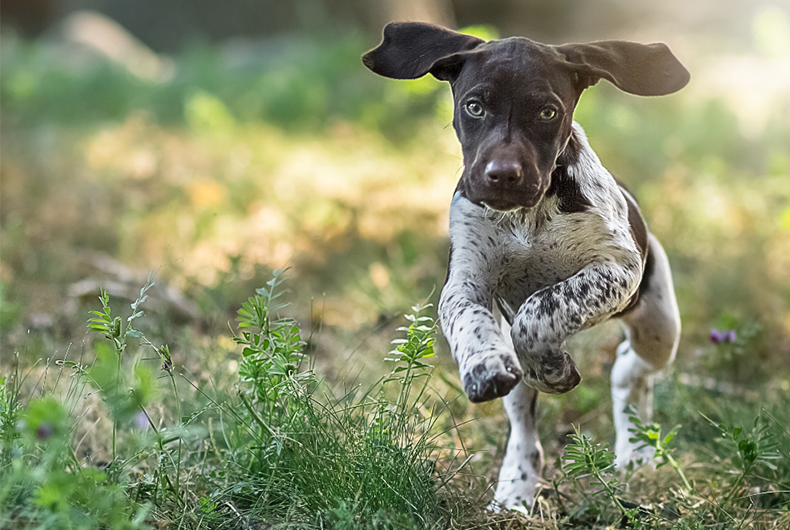
Caring for German Shorthaired Pointers
German shorthaired pointers are dogs that thrive on energy and activity, so these dogs need to be stimulated, challenged, and kept safe. Here are some general tips for taking the best care of a German shorthaired pointer:
Best Living Environments:
- No to small apartments
- Yes to houses with fenced backyards
- Households with children ok
Type of Exercise:
- Running in safe, open spaces
- Swimming in water
- Off-leash dog parks
- Hiking trails with family members
- Exercise for at least an hour per day
Mental Enrichment:
- Games of fetch in a yard
- Puzzle games for dogs
- Training to do tricks for treats and praise
- Cuddles with family after play sessions
Training Strategies:
- Easy to train because of high intelligence
- Positive and encouraging reinforcement
- Reward good performance with praise and treats
- Sensitive dogs so avoid harsh reprimands
Grooming Tips:
- Easy grooming needs
- Only very occasional baths
- Brush coat once per week
- Brush more during spring and fall shedding seasons
- Trim nails and clean ears regularly
Common Health Problems of German Shorthaired Pointers
German shorthaired pointers have an average life expectancy of about 10 to 12 years, which is slightly less than some other breeds of dogs. Yet you can naturally extend and support a long and healthy life of your pup by finding a good breeder (if you purchase rather than adopt), by keeping up with vet checkups, and by having pet insurance so that you can always provide your dog with the necessary medical treatment.
These are some of the most common health issues that arise with German shorthaired pointers:
- Hip dysplasia
- Cancer
- Entropion (eyelid that rolls inward)
- Lymphedema (lymph flow issue)
- Von Willebrand’s disease (blood disorder)
- Bloat
Lymphedema is the most major concern among these health issues for German shorthaired pointers and it will usually be apparent from an early age. Suggested tests for this breed involve having the dog’s hips, eyes, and heart checked during vet visits.
Diet and Nutrition for German Shorthaired Pointers
Most German shorthaired pointers need two to three cups of dry dog food per day. Divide this food into two meals per day, and give your dog less or more based on the activity level and your vet’s recommendation.
Some dog foods that are recommended for German shorthaired pointers are Royal Canin Large Adult Dog Food, Purina ProPlan Large Breed Dog Food, and Science Diet Large Breed Dog Food.
Where to Adopt or Purchase German Shorthaired Pointers
If you are interested in German shorthaired pointer dogs, one good resource to know is the German Shorthaired Pointer Club of America. This organization offers programs and activities related to the breed, as well as breeder listings.
There are also many rescue groups that specialize in this type of dog, including the Mid-Atlantic German Shorthaired Pointer Rescue, NorCal GSP Rescue, ad German Shorthaired Pointer Rescue of Pennsylvania. These dogs are often turned over to rescue groups because their owners can’t handle their high energy, exercise needs, or destructive behavior. But with a little extra love and attention, these rescue pups make wonderful household pets and can be trained to get along very well with children and other pets in the home.
Related Breeds
Has the German shorthaired pointer breed stolen your heart? There are other types of dogs that are similar that you may be interested to learn about as well before you purchase a puppy or adopt a shelter pup. These include the following:
- Pointer
- German wirehaired pointer
- German longhaired pointer
- Weimaraner
- English setter
Pet Insurance for German Shorthaired Pointers
There are many ways in which you can take the best care of your German shorthaired pointer, such as feeding your dog high-quality dog food, getting lots of exercise together, and keeping up with regular vet checkups. But to plan ahead for your dog’s long and healthy future, pet insurance from Healthy Paws is also a great idea.
Healthy Paws pet insurance covers German shorthaired pointers from head to paw when a new accident or illness happens so that you can just worry about getting the required treatment and about not how much it costs. With our insurance plan, you can take your German shorthaired pointer to any licensed vet in the U.S. and enjoy a fast and easy claims process whenever your pup has a bad day.
Tell us a bit about your German shorthaired pointer and get your pet insurance quote today!
Authors
Stacy Painter
Stacy has always been an animal lover and has worked in the pet industry and pet insurance specifically for over a decade. As a writer since early childhood, content writing for Healthy Paws pet insurance was a natural career path to combine her two passions. She currently lives in Florida with her boyfriend and Taiwanese rescue dog, Kaya.
Cathy Barnette, DVM
Cathy Barnette is a veterinarian and freelance writer based in Punta Gorda, FL. Cathy creates educational content for pet owners and veterinary team members. She is passionate about making complex medical information accessible to pet owners, allowing them to partner with their veterinarians to make informed decisions about their pets’ health. In addition to her human family members, she shares her home with one dog, two cats, and a dove.