

Learn how and why veterinary bills are increasing, and how a Healthy Paws plan can help.

Read stories of how Healthy Paws has protected pets like family and made peace of mind and more happy, healthy moments possible.

Rescue organizations across the U.S. received support for adoption efforts and ongoing care for vulnerable pets.

Make their food irresistible with the freshest nutritionally-balanced ingredients.
The Healthy Paws Community is a vibrant, social-first space for all pet lovers—whether you’re a Healthy Paws policyholder or simply passionate about pets. As a Pack Member, you can share your favorite pet photos and videos, connect with fellow pet parents, and stay informed with the latest Healthy Paws news and tips. It’s a welcoming place focused on connection, positivity, and celebrating the joy pets bring to our lives!
Everyday expenses for a pet now exceed $4,000 a year on average, according to new research. As prices continue to climb, pet owners face tough choices. Pet insurance can be a financial backstop against the unexpected.
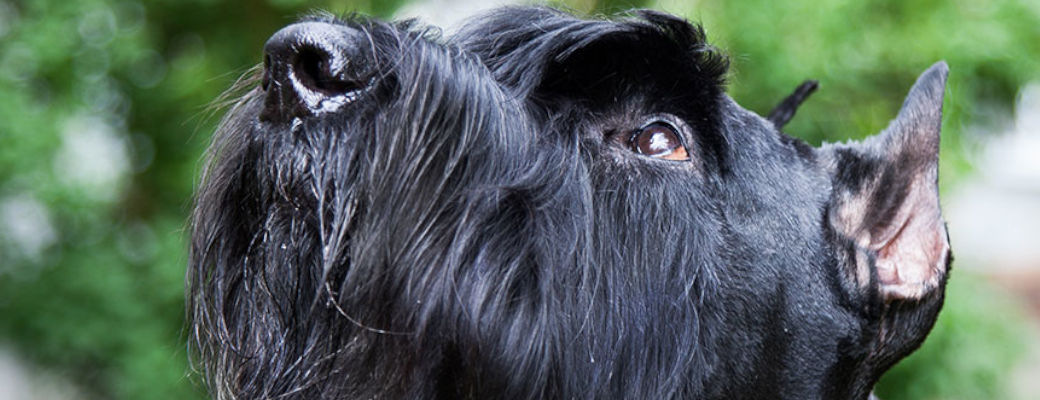
Introduction to Giant Schnauzers
The giant schnauzer is a loyal and highly trainable dog that is part of the Working Group breed of dogs. As the name suggests, this is a larger version of the standard-size schnauzer. The breed looks a lot like the smaller schnauzers but has an imposing size, weighing up to 95 pounds when healthy and fully grown. They have distinguishing characteristics that set them apart from other breeds, such as the bearded face, keen expression, and double coat that is either black or salt-and-pepper colored.
If you are looking for a big, intelligent, and hardworking dog in your life, read on to learn more about the giant schnauzer breed.
Get a pet insurance quote for your Giant Schnauzers today
Size of Giant Schnauzers
Giant schnauzers are large, but they certainly aren’t the largest dog breed that exists. When fully grown, an adult male will weigh between 60 and 85 pounds and stand between 25.5 and 27.5 inches tall. Adult females will be 55 to 75 pounds and 23.5 to 25.5 inches tall. These dogs typically keep growing until about 18 months of age but really slow down with their growth after 12 months. The biggest jump in growth usually takes place between three and six months of age.
On average, here’s how big you can expect your giant schnauzer to get as the dog grows from puppyhood to adulthood. Males often tend to weigh a bit more than these averages, while females are slightly less.
| Weight Chart | 3 months | 6 months | 9 months | 12 months |
| Average giant schnauzer | 31 lbs. | 75 lbs. | 88 lbs. | 92 lbs. |
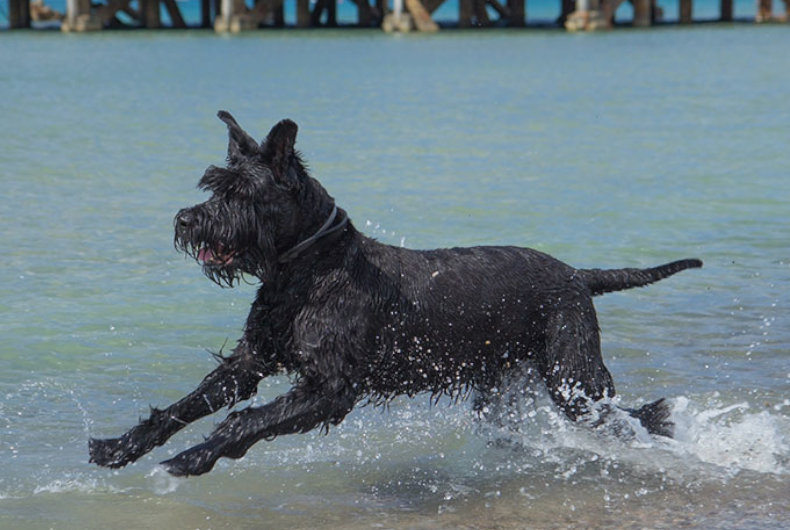
Characteristics of Giant Schnauzers
Giant schnauzers have big personalities and are intelligent, energetic, and playful. They are independent thinkers, courageous, and loyal to family members. These dogs are relatively easy to train and often excel at agility courses, obedience skills, carting, tracking, and herding. They can be protective, however, and may not do well with other animals or with strangers unless they are socialized from an early age.
Families of giant schnauzers need to be aware that these dogs need plenty of exercise and a job to do. If they become bored, they become destructive. They can come across as dominant, which is characteristic of the breed and a reason why they are not typically recommended in homes with children under age 12. They require strong leadership in a pet parent and, therefore, are best for people who have prior experience with dogs rather than first-time pet owners.
As you get to know a giant schnauzer’s personality, here’s what you can expect based on his or her breed characteristics:
| Breed Characteristic | Level (High, Medium, Low) |
| Affectionate with People | Medium |
| Good with Kids | Medium |
| Good with Pets | Low to Medium |
| Need for Exercise | High |
| Energy Level | High |
| Intelligence Level | High |
| Able to Be Trained | High |
| Amount of Barking | Medium |
| Amount of Shedding | Medium |
History of Giant Schnauzers
The history of the giant schnauzer dates back to the mid-1800s when breeders developed the dogs in the Bavarian Alps. They were designed to be rugged working dogs that had more strength and a larger size than the standard schnauzer. Breeders mixed the standard schnauzer with large, powerful dogs, including the Great Dane. Back then, people used the dogs to drive cattle from farms to the market. The breed’s name comes from the German word, Riesenschnauzer, which means “the giant.” Schnauzer dogs originated from Bavaria and Wuttemberg, which were agricultural hubs that required hardworking dogs on the farms.
Over the years, giant schnauzers have been used as guard dogs for innkeepers, farmers, and merchants. They have served in roles as police and military dogs too. Yet many giant schnauzers are family companions today and entered by their pet parents into dog shows to exhibit their superior obedience and training.
Giant Schnauzer Standard Information
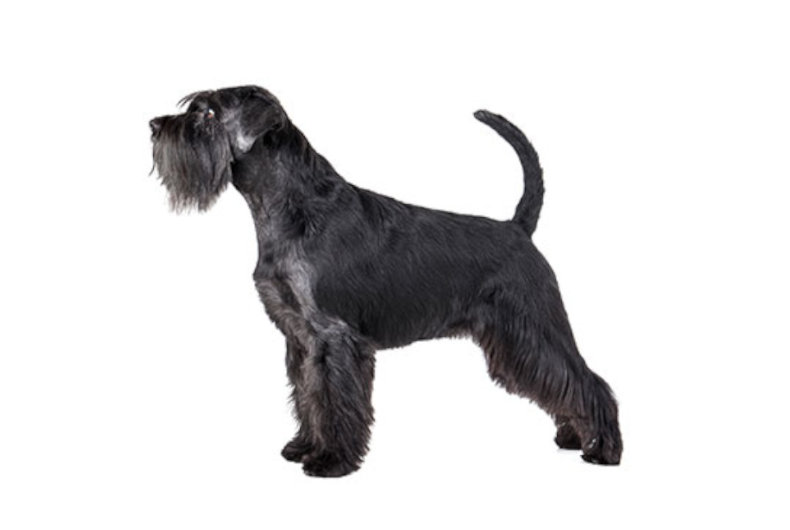
Since giant schnauzers are often included in dog shows and competitions, it is interesting to learn about the breed standards by which all dogs of this breed are judged and compared against each other. In general, the dogs should resemble the standard schnauzer but just be a larger and more powerful version of that breed. Yet the giant schnauzer should also exhibit characteristics of intelligence, reliability, watchfulness, loyalty, playfulness, and proportionality.
Here is an overview of the breed standard information for giant schnauzers:
Head:
- Rectangular and elongated
- Strong muzzle, well-filled under eyes
- Scissors bite
- Ears can be cropped or uncropped
- Medium-size, dark brown, and deep-set eyes
Neck, Topline, Body:
- Strong, well-arched, and moderate-length neck
- Compact, strong, and short-coupled body
Forequarters:
- Chest medium in width with ribs well-sprung
- Short, straight, strong, and firm back
- Tail set moderately high and carried high in excitement
- Dewclaws may be removed
Hindquarters:
- Strongly muscled in balance with forequarters
- Not over-built or higher than shoulders
- Declaws, if any, should be removed on hind legs
Coat:
- Hard, dense, and wiry
- Soft undercoat and harsh outercoat
- Coarse hair on the top of the head
- Harsh beard and eyebrows
Color:
- Solid black or salt and pepper colored
- A small white spot on the breast is permitted with solid black dogs
- Every shade has a dark facial mask
Gait:
- Free, balanced vigorous
- Single-track at a fast trot
- Back remains firm, strong, and flat
Caring for Giant Schnauzers
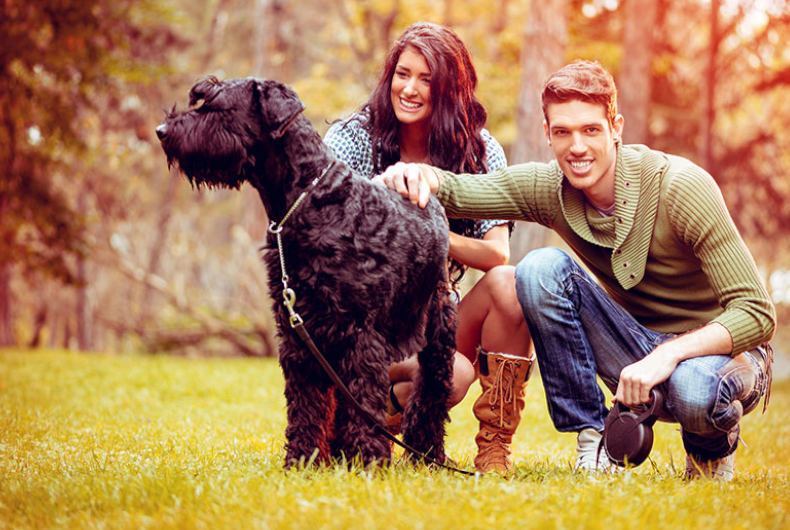
Due to the dog’s size, apartments are not typically the best options for giant schnauzers. This high-energy dog needs a lot of exercise and are excellent companions for active people who love spending time outside. They require regular grooming and ongoing maintenance but are not heavy shedders. A well-cared-for giant schnauzer is one that gets plenty of exercise daily, is mentally challenged to learn new tricks and skills, and has plenty of quality time with favorite people.
Here are some general tips for taking the best care of a giant schnauzer:
Best Living Environments:
- Property with acreage
- Large, fenced backyard
- Not ideal for apartments
- Best for adults-only households or families with older children
Type of Exercise:
- 60 or more minutes of vigorous exercise daily
- Time to run around in a fenced backyard
- Running
- Hiking
- Swimming
- Running alongside someone who is biking or cross-country skiing
Mental Enrichment:
- Keep mentally stimulated each day to prevent destructive behavior
- Agility and obstacle course training
- Puzzles and games to play
- Give the dog a job to do
Training Strategies:
- Train the dog to do tricks
- Avoid frequent repetition in training to prevent boredom
- Be firm and consistent, as these dogs can be stubborn
- Socialize from an early age to reduce protective/aggressive tendencies
Grooming Tips:
- Brush regularly to maintain the coat
- Brush about three times per week to prevent matting
- Wash the face and beard after meals
- Trim fur on the head
- Trim eyebrows and beard
- Trim nails at least monthly
Common Health Problems of Giant Schnauzers
The average life expectancy of a giant schnauzer is longer than that of many other large dogs: 12 to 15 years. These are generally healthy dogs but are still prone to certain health conditions because of their genetics and aging. The giant schnauzer is often prone to toe cancer and is at an increased risk of bloat after eating.
These are some of the most common health issues that arise with giant schnauzers:
- Osteochondritis dissecans (joint issue in the elbows and shoulders)
- Hip dysplasia
- Autoimmune thyroiditis (heritable hypothyroidism)
- Squamous cell carcinoma (cancer)
- Epilepsy
- Bloat
- Dilated cardiomyopathy (heart disease)
- Degenerative myelopathy (spinal disease)
- Progressive retinal atrophy (eye condition)
Diet and Nutrition for Giant Schnauzers
An adult giant schnauzer will need between 3 3/8 to 4 1/4 cups of dry dog food per day, depending on the caloric density of the diet. This total amount should be divided into two meals and not given to dogs immediately before or after exercising to reduce the risk of bloat.
Where to Adopt or Purchase Giant Schnauzers
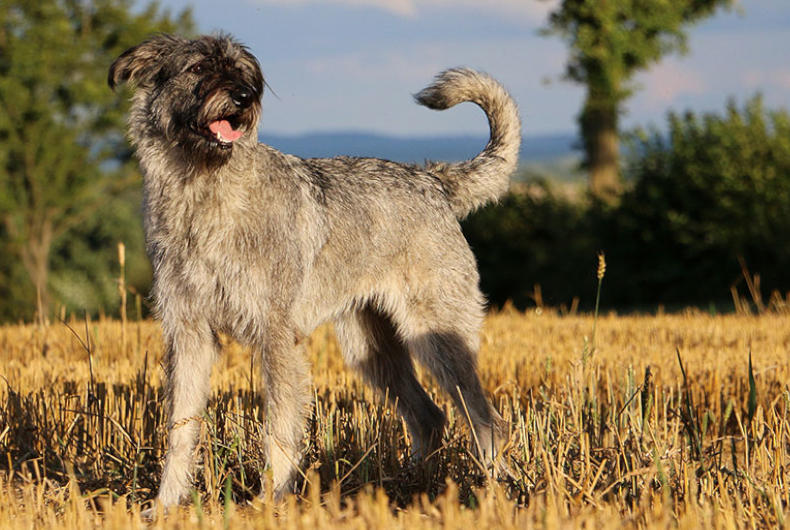
The Giant Schnauzer Club of America is a resource for finding a breeder and getting a healthy puppy in a responsible way. There are also numerous rescue groups that specialize in giant schnauzers, including the Giant Schnauzer Rescue Network, Valley of the Sun Giant Schnauzer Rescue, and Southern California Giant Schnauzer Rescue.
Related Breeds
If you like what you have learned so far about giant schnauzers but aren’t 100 percent sure about the type of dog to bring into your household, you might also be interested to learn about these similar and related breeds:
- Great Dane
- Black Russian terrier
- Bouvier Des Flandres
- Standard schnauzer
- Miniature schnauzer
Pet Insurance for Giant Schnauzers
To keep up with your giant schnauzer’s nonstop active lifestyle and be prepared for whatever comes his or her way, Healthy Paws offers dog insurance for giant schnauzers. We have offered the #1 customer-rated pet insurance plan for many years and cover everything from accidents to cancer, emergency care, breed-specific conditions and alternative care. Our easy-to-understand insurance policy comes with no costly-add ons and the freedom to use any licensed vet you choose.
Please complete our online form with details about your giant schnauzer so that we can send you a quote for the cost of pet health insurance today.
Authors
Christy True
Christy wrote about pets for Healthy Paws for 35 dog years. A background in journalism may be why she enjoys writing about offbeat animal studies and the latest viral pet trends. She has been owned by several dogs, including current pup Nelson, a rescued mini-Aussie, and she volunteers with a local dog rescue. In her free time, she can usually be found sliding down a mountain near her home in Bend, Ore. with Nelson in hot pursuit.
Cathy Barnette, DVM
Cathy Barnette is a veterinarian and freelance writer based in Punta Gorda, FL. Cathy creates educational content for pet owners and veterinary team members. She is passionate about making complex medical information accessible to pet owners, allowing them to partner with their veterinarians to make informed decisions about their pets’ health. In addition to her human family members, she shares her home with one dog, two cats, and a dove. Cathy Barnette on LinkedIn