

Learn how and why veterinary bills are increasing, and how a Healthy Paws plan can help.

Healthy Paws protects pets like family and makes peace of mind and more happy, healthy moments possible. Pet parents and industry reviews tell the story.

Rescue organizations across the U.S. received support for adoption efforts and ongoing care for vulnerable pets.

Make their food irresistible with the freshest nutritionally-balanced ingredients.

The Healthy Paws Community is a vibrant, social-first space for all pet lovers—whether you’re a Healthy Paws policyholder or simply passionate about pets. As a Pack Member, you can share your favorite pet photos and videos, connect with fellow pet parents, and stay informed with the latest Healthy Paws news and tips. It’s a welcoming place focused on connection, positivity, and celebrating the joy pets bring to our lives!

At a glance
- The average U.S. pet owner now spends over $4,000 a year on routine expenses for a single cat or dog.
- Over 12 years, that adds up to $50,000+ per pet — on par with a typical home down payment.
- Owners of pets with chronic conditions face significantly higher costs, with about a quarter spending $5,000–$10,000 annually, and report higher levels of financial stress.
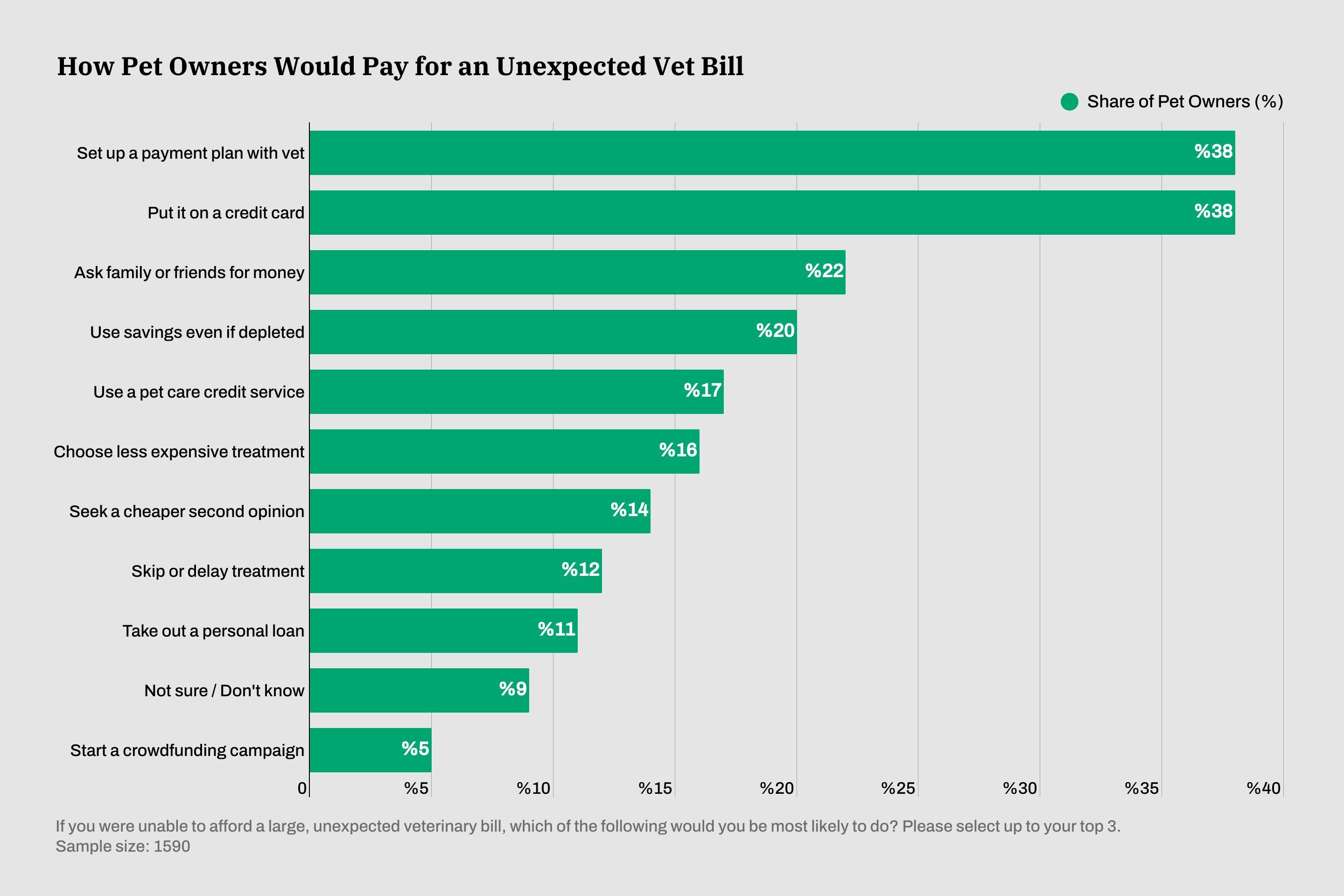
- If faced with veterinary expenses they couldn’t afford, many respondents said they would put it on a credit card (38%) or use savings even if it depleted them (20%).
- Most insured pet owners report lower out-of-pocket vet bills (75%) and greater peace of mind in emergencies (87%).
Table of Contents
- Pet costs are reshaping household budgets
- How pet owners cope with rising costs
- The changing role of pet insurance
- Methodology
Loving a pet means budgeting for the costs that come with it — and that line item keeps going up.
Routine expenses for a cat or dog, including food, vet visits, grooming and supplies, now average $4,272 a year, according to research conducted by Money.com and Healthy Paws Pet Insurance. Over a 12-year lifespan, that adds up to more than $50,000 — roughly the cost of four years of college tuition or a down payment on a home.
That’s just the baseline: Less predictable expenses like emergency surgeries and end-of-life care can push costs significantly higher. And as rising prices further strain household budgets, pet owners are finding it harder to keep up.
Pet costs are reshaping household budgets
Consumer prices have climbed across much of the economy in recent years. But pet care costs have risen especially quickly.
The price of “pet services,” including veterinary care, grooming and boarding, rose 38% from January 2021 to January 2026, according to data from the Department of Labor. Veterinary care alone has increased even faster, with prices climbing about 43% over the same time period.
For many households, those costs are becoming harder to absorb.
In February 2026, Money.com and Healthy Paws Pet Insurance surveyed 1,590 U.S. dog and cat owners to understand how they're coping with the financial strain. Nearly a third (31%) said they're spending more on their pets than a year ago, and a similar share (28%) expect the burden to climb even further in the year ahead.
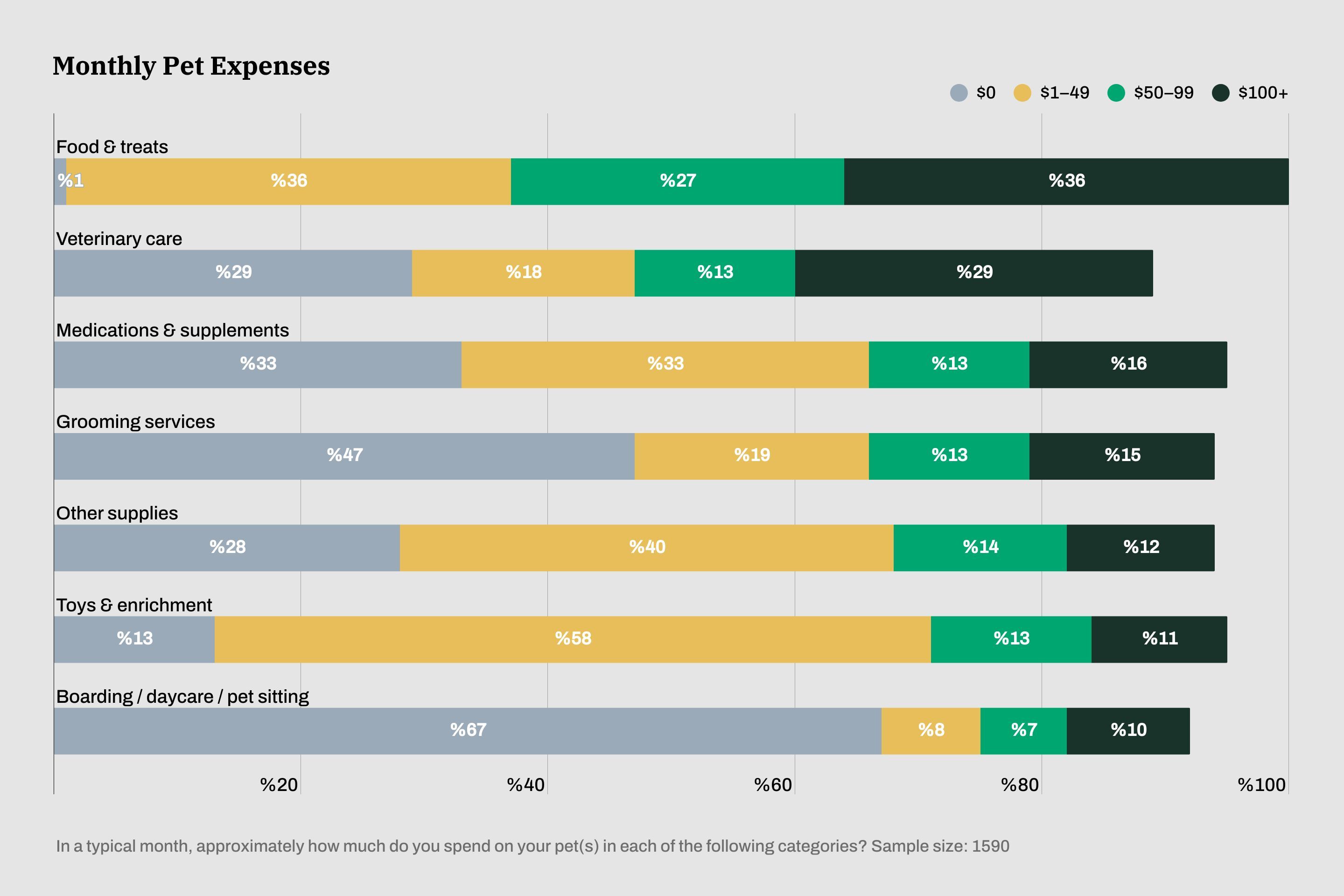
More than a third of pet owners (36%) report spending $100 or more per month on food and treats alone. Medical care is another major driver of pet spending: about 29% of pet owners say they spend $100 or more each month on veterinary care, while 16% report spending at least that much on medications and supplements.
Like many industries, veterinary practices have seen operating and supply costs rise in recent years. At the same time, advances in pet health care are also pushing prices higher. Treatments that were rare a decade ago are becoming more common today, often involving specialized procedures and sophisticated diagnostic tools.
These innovations can help pets live longer, healthier lives, but they’ve also reshaped the financial realities of caring for them.
“Modern veterinary medicine can potentially keep our dogs and cats living for more years than in the past,” says Dr. Matthew Murdoch, a veterinary surgeon and director of an international pet relocation service. “But that longevity comes with ongoing costs.”
Prices can climb even higher for pet owners caring for animals with chronic health conditions. About a quarter of survey respondents whose pets have issues like arthritis, allergies or dental disease say they spent between $5,000 and $10,000 on pet-related expenses over the past year.
Likewise, about 58% of owners with a chronically ill pet said pet-related expenses cause them financial stress, compared with 31% of owners whose pets don’t have chronic conditions. Those households are also more likely to make tradeoffs elsewhere: 62% say pet costs have forced them to cut back on other spending, versus about 48% of other pet owners.
“Chronic illness means ‘lifetime medicine,’ not a one-off bill,” Murdoch says.
How pet owners cope with rising costs
Faced with higher prices, many pet owners are adjusting both how they care for their animals and how they manage their budgets.
Some are making small changes to reduce routine spending — like shopping around for the best prices (43%), buying in bulk (30%), grooming their pets at home (32%) or switching to generic medications when possible (17%). Another 15% report setting aside money in a dedicated pet savings account.
Still, if faced with veterinary expenses they couldn’t afford outright, many respondents said they would turn to savings, credit cards or personal loans, veterinarian payment plans or even crowdfunding to help manage the cost.
For many pet owners, those tough financial choices are driven by a deep emotional bond they have with their animals. Even as costs climb, cutting back on care isn’t an option.
The changing role of pet insurance
As household budgets grow tighter, more people are turning to pet insurance to help balance the emotional rewards of loving a pet with the practical costs of caring for one.
Claims data from Healthy Paws Pet Insurance shows the typical vet bill has climbed steadily over the past five years, reaching about $392 per claim in 2025. That’s up 32% from 2020.
Some conditions have seen particularly steep increases. The average cost of treating abdominal conditions has nearly doubled since 2020, according to claims data. Treatment costs for cancer are up roughly 49%, and care related to foreign body ingestion, a common emergency when pets swallow objects they shouldn’t, has increased about 45%.
Pet insurance doesn’t eliminate the cost of care entirely. Premiums represent an ongoing monthly expense of roughly $62 for dogs and $32 for cats on average, according to the North American Pet Health Insurance Association (NAPHIA), and most plans require deductibles or copayments.
But for many pet owners, coverage helps soften the blow of an unexpected vet bill. And when serious medical decisions arise, it allows them to focus on what care is best for their animal rather than worrying about how to pay for it.
Among survey respondents who currently have pet insurance, three in four say their plan has “significantly reduced” their out-of-pocket veterinary expenses, and 87% say that it's provided peace of mind when it comes to their pet's health. Another 84% say they would recommend pet insurance to other pet owners.
“As veterinary costs continue to rise, pet insurance has become an indispensable resource,” says Alex Faynberg, Executive Vice President and Head of Healthy Paws. “With coverage in place, owners can focus on their pet’s recovery rather than worrying about the cost at the bottom of the invoice.”
Methodology
This survey was conducted by Morning Consult on behalf of Money.com and Healthy Paws Pet Insurance between February 3–5, 2026, among a national sample of 1,590 U.S. pet owners. Respondents were required to own at least one dog or cat to qualify for participation.
The data were weighted to be representative of U.S. dog and cat owners based on key demographic factors. Results have a margin of error of plus or minus 2 percentage points.

Meet Our Writer
Steph Weaver
Steph Weaver is a Philadelphia-based journalist and copywriter who writes frequently about pet health and the economics of pet care. Her work has appeared in Inc., Money and This Dog's Life, where she's reported on everything from fear-free veterinary care to pet insurance. She specializes in turning research into clear, actionable guidance for readers.