

Learn how and why veterinary bills are increasing, and how a Healthy Paws plan can help.


Three rescues across North Carolina and Georgia received donations that made a big impact.

Make their food irresistible with the freshest nutritionally-balanced ingredients.
Introduction to Gordon Setters
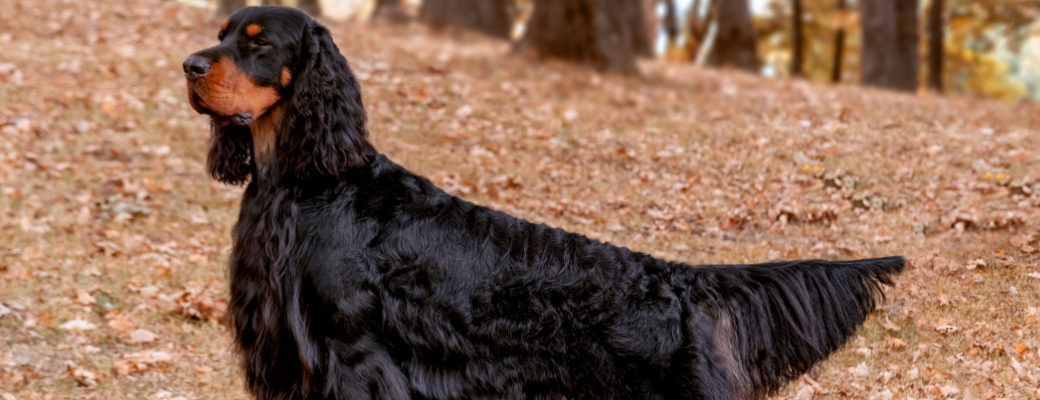
The Gordon setter is a sporting group dog that’s confident and affectionate. It is a medium/large size dog that hails from the Scottish Highlands. These are very energetic dogs that require plenty of daily exercise. As natural athletes and devoted companions, a Gordon setter might be the perfect addition to your active lifestyle.
In this Healthy Paws guide, we cover everything you need to know about the Gordon setter breed to decide whether this is the type of dog you want to adopt from a rescue organization or purchase from a breeder.
Get a pet insurance quote for your Gordon Setter today
Size of Gordon Setters
When fully grown, an adult male Gordon setter weighs 55 to 80 pounds and stands 24 to 27 inches tall. Adult females weigh 45 to 70 pounds and are 23 to 26 inches tall. As the dogs develop, males tend to be about 10 pounds heavier than females.
Here’s how big you can expect your Gordon setter to get as the dog grows from puppyhood to adulthood:
| Weight Chart | 6 months | 9 months | 18 months |
| Male Gordon setters | 40 lbs. | 50 lbs. | 67.5 lbs. |
| Female Gordon setters | 30 lbs. | 40 lbs. | 57.5 lbs. |
Characteristics of Gordon Setters
Gordon setters are loyal, affectionate, intelligent, high-energy, and eager to please. They are very active dogs with shiny and silky coats. As the largest breed in the setter category, they are known for their high endurance levels but not necessarily their speed.
As you get to know a Gordon setter’s personality, here’s what you can expect based on the breed characteristics:
| Breed Characteristic | Level (High, Medium, Low) |
| Affectionate with People | High |
| Good with Kids | Medium |
| Good with Pets | Medium |
| Need for Exercise | High |
| Energy Level | High |
| Intelligence Level | High |
| Able to Be Trained | High |
| Amount of Barking | Medium |
| Amount of Shedding | Medium |
History of Gordon Setters
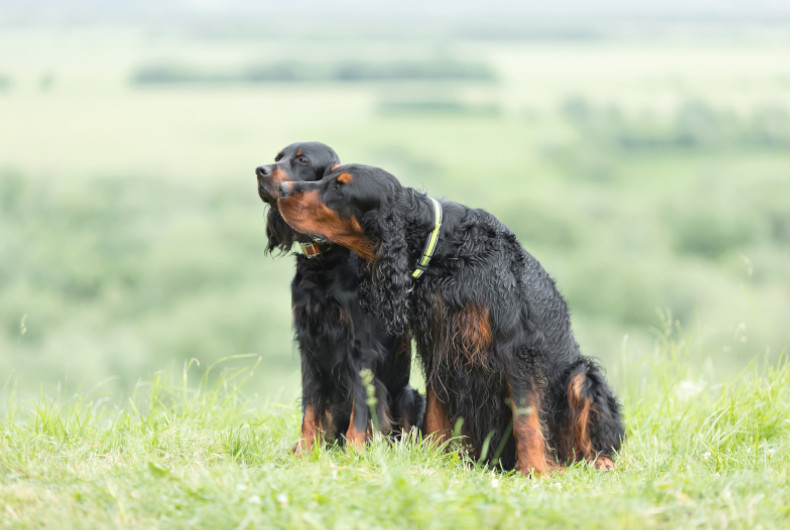
Gordon setters originated in Scotland, where huntsmen bred dogs that were mixes of hounds, collies, and setters. Their breeding efforts produced a large and rugged bird-dog that could work in the Scottish Highlands’ challenging conditions and harsh terrain. The earliest ancestors of the Gordon setter can be traced back to the 1600s.
The Fourth Duke of Gordon, Alexander Gordon, also the master of Castle Gordon, was particularly interested in this breed. His kennel produced these dogs in the early 1800s, and the breed is named after him. Gordon was also instrumental in developing the early Scotch whisky industry.
Gordon setters arrived in America in 1842, and the American Kennel Club recognized the breed in 1878. Prior names for the breed were the black and tan setter and the Gordon Castle setter.
Gordon Setter Standard Information
At dog shows and competitions, Gordon setters are judged according to a set of standards to determine winners. For example, the dog’s general appearance includes a sturdy build, black and tan coloration, and extreme strength and stamina.
Here is an overview of the breed standard information for Gordon setters:
Head:
- Deep and not broad head
- Dark brown and neither deep set nor bulging eyes
- Rounded skull
- Long and not pointed muzzle
- Teeth meet in a scissors bite
- Nose is broad and black
Neck, Topline, Body:
- Long, lean, and arched neck
- Moderately sloping topline
- Short body from shoulders to hips
- Short tail that does not reach below the hocks
Forequarters:
- Shoulders are fine at the points and well laid back
- Tops of shoulder blades are close together
- Pasterns are strong and short
- Feet are catlike in shape
- Toes are well-arched, with hair in between
- Feet are not turned in or out
Hindquarters:
- Flat and muscular hind legs
- Stifle and hock joints are bent and not turned in or out
- Feet are the same as in the front
Coat:
- Soft and shiny coat
- Slightly waved but not curly hair
- Feathering starts near the root of the tail
Color:
- Black with tan markings of rich chestnut or mahogany color
- Black penciling is okay on the toes
- No tan hairs mixed in the black
Gait:
- Bold, strong, and free-swinging
- Hock, stifle, and hip joints are in line
- Smooth-flowing with a well-balanced rhythm

Caring for Gordon Setters
Exercise is one of the most important things to focus on when caring for a Gordon setter. This active breed needs plenty of time to exercise, so it is best for active families who love hiking, running, playing, and walking.
Regular grooming is also essential to prevent tangles and mats in the dog’s fur. Here are some general tips for taking the best care of a Gordon setter:
Best Living Environments:
- Houses with large, fenced yards
- Not ideal for apartments
- Access to trails and spaces to run
- Better with older kids than young kids
Type of Exercise:
- At least two hours of exercise daily
- Long walks in the neighborhood
- Jogging alongside you as you run or bike
- Hiking on trails
- Vigorous playtime sessions
Mental Enrichment:
- Dog sports that provide mental and physical challenges
- Agility courses
- Disc catching
- Flyball
- Rally obedience activities
Training Strategies:
- Begin training as a puppy
- Use positive reinforcement methods
- Introduce to various people to prevent fear of strangers
- Train not to treat small household pets as prey
Grooming Tips:
- Brush the coat once per week
- Brush out feathered areas to remove tangles
- Expect more shedding in the spring and fall
- Brush more frequently during shedding periods
- Bathe the dog about once per month
- Trim nails monthly
- Check ears for wax weekly
- Brush teeth daily
Common Health Problems of Gordon Setters
Although Gordon setters are generally healthy dogs, you should be aware of some health concernss. These dogs are prone to bloat, cancer, eye issues, and hip and elbow dysplasia. The average life expectancy of a Gordon setter is 12 to 13 years.
These are some of the most common health issues that arise with Gordon setters:
- Bloat
- Sebaceous cysts
- Hypothyroidism
- Hip and elbow dysplasia
- Progressive retinal atrophy
- Cerebellar degeneration (a brain condition)
- Cancer (hemangiosarcoma, lymphoma, mammary tumors, and osteosarcoma)
Diet and Nutrition for Gordon Setters
A fully grown Gordon setter needs about three cups of dry dog food daily, though the exact amount will depend on the specific diet you are feeding. Therefore, the average daily cost of feeding a Gordon setter is $2 to $2.25.
It is best to feed your Gordon setter two meals per day. Since the breed is prone to bloat, smaller and more frequent meals are recommended, especially if your dog eats very quickly.
Where to Adopt or Purchase Gordon Setters
The Gordon Setter Club of America has most of its members in the U.S. but also in 15 to 20 countries worldwide. The organization’s website has breeder referrals and a breeder listing per state.
It also has a rescue program, which is a network of volunteer-run Gordon setter rescue programs. Through the program, you can typically find dogs between the ages of eight months and 10 years who need loving homes. Other places to adopt a Gordon setter include the Midwest Gordon Setter Rescue, Gundogz Rescue, and Petfinder.
Related Breeds
If a high-energy dog breed is just what you’re looking for, you might also consider other similar and related types of dogs before making an adoption or purchase decision. Here are some other breeds that share common characteristics with the Gordon setter:
Pet Insurance for Gordon Setters
To take the best care of your Gordon setter during all phases of life, Healthy Paws provides dog insurance you can rely on. Our Gordon setter insurance covers illnesses, accidents, cancer, chronic conditions, emergency and specialty hospitals, hip dysplasia, hereditary and congenital conditions, and alternative care.
Many Gordon setter pet parents have found that pet insurance is worth the investment because it saves them thousands of dollars when their dogs unexpectedly get sick or injured. When your Gordon setter needs life-saving treatment, you can say yes without thinking twice or being overwhelmed by expensive veterinary bills.
We are here for you and your Gordon setter whenever something goes wrong in your pet’s life. To learn more about how pet insurance works, visit our FAQ page or give us a call at 855-898-8991.
You can also view your Gordon setter pet insurance rates by entering a few details about your pet on our quote page. We are committed to providing you with the best customer service and an affordable, easy-to-understand policy to give you peace of mind about your Gordon setter’s health and care.
Authors
Stacy Painter
Stacy has always been an animal lover and has worked in the pet industry and pet insurance specifically for over a decade. As a writer since early childhood, content writing for Healthy Paws pet insurance was a natural career path to combine her two passions. She currently lives in Florida with her boyfriend and Taiwanese rescue dog, Kaya.
Cathy Barnette, DVM
Cathy Barnette is a veterinarian and freelance writer based in Punta Gorda, FL. Cathy creates educational content for pet owners and veterinary team members. She is passionate about making complex medical information accessible to pet owners, allowing them to partner with their veterinarians to make informed decisions about their pets’ health. In addition to her human family members, she shares her home with one dog, two cats, and a dove. Cathy Barnette on LinkedIn