

Learn how and why veterinary bills are increasing, and how a Healthy Paws plan can help.

Read stories of how Healthy Paws has protected pets like family and made peace of mind and more happy, healthy moments possible.

Rescue organizations across the U.S. received support for adoption efforts and ongoing care for vulnerable pets.

Make their food irresistible with the freshest nutritionally-balanced ingredients.
The Healthy Paws Community is a vibrant, social-first space for all pet lovers—whether you’re a Healthy Paws policyholder or simply passionate about pets. As a Pack Member, you can share your favorite pet photos and videos, connect with fellow pet parents, and stay informed with the latest Healthy Paws news and tips. It’s a welcoming place focused on connection, positivity, and celebrating the joy pets bring to our lives!
Everyday expenses for a pet now exceed $4,000 a year on average, according to new research. As prices continue to climb, pet owners face tough choices. Pet insurance can be a financial backstop against the unexpected.
Introduction to Pekingese
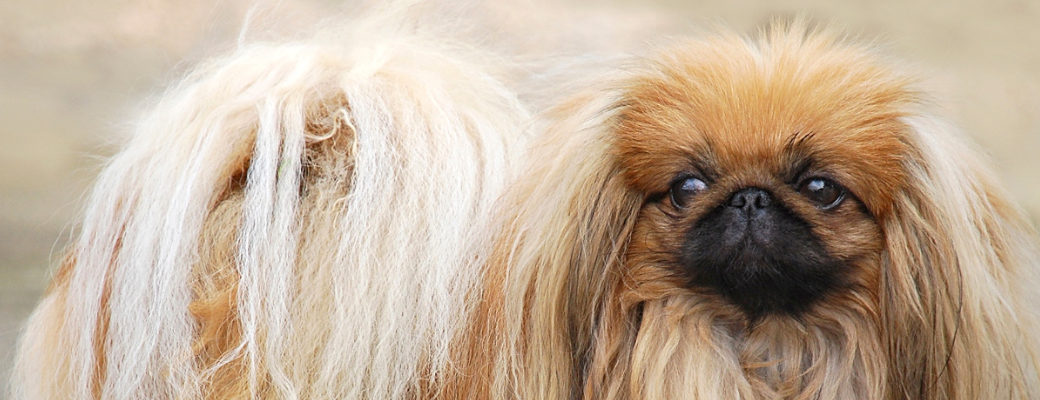
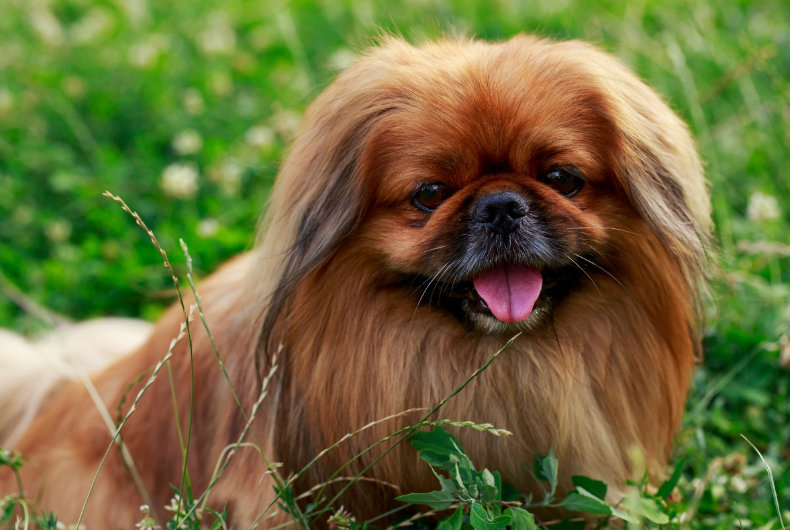
One of the most beloved small dog breeds in the world is the Pekingese. This loyal, regal, and affectionate dog is an ancient Chinese breed known for its sophistication and compact size. Affectionately called Pekes, the dogs have distinctive features, such as their flat faces and lion-like manes. But there’s much more to know about these dogs than their appearance before you bring one into your life and household.
Here is Healthy Paws’ Pekingese dog breed guide to help you learn more about this type of dog and whether one could be your perfect little companion.
Get a pet insurance quote for your Pekingese today
Size of Pekingese
Pekingese dogs weigh only up to 14 pounds and come into this world as tiny creatures weighing around just a half pound. They mostly finish growing after 12 months but may add a little more weight until 18 to 24 months. The dogs stand six to nine inches tall when fully grown.
Here’s how big you can expect your Pekingese to get as the dog grows from puppyhood to adulthood:
| Weight Chart | 3 months | 6 months | 12 months | 24 months |
| Male Pekingese | 4 – 6 lbs. | 6.5 – 9 lbs. | 7 – 14 lbs. | 8 – 14.5 lbs. |
| Female Pekingese | 3.5 – 5.5 lbs. | 5.5 – 7.5 lbs. | 6 – 12 lbs. | 6.5 – 12.5 lbs. |
Characteristics of Pekingese
Pekingese are unique dogs with low to moderate energy levels, meaning they do well in smaller homes and with short play sessions and walks. However, they have assertive personalities and a strong sense of independence, which can be challenging for their families. Pekingese are loyal to their humans but also may be territorial and stubborn. Although affectionate with people they know, they are not very friendly with strangers and can make decent watchdogs.
As you get to know a Pekingese’s personality, here’s what you can expect based on the breed characteristics:
| Breed Characteristic | Level (High, Medium, Low) |
| Affectionate with People | High |
| Good with Kids | Low |
| Good with Pets | Low |
| Need for Exercise | Low |
| Energy Level | Medium |
| Intelligence Level | Medium |
| Able to Be Trained | Medium |
| Amount of Barking | Low |
| Amount of Shedding | Medium |
History of Pekingese
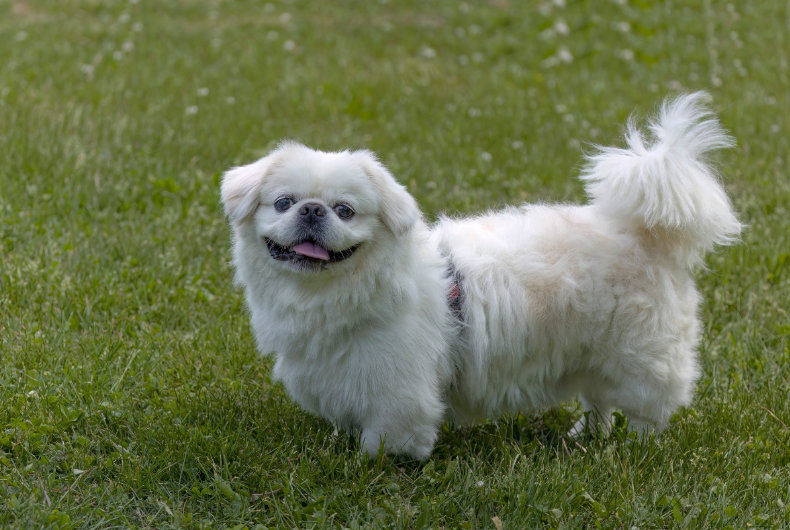
According to Chinese legend, the Buddha created the Pekingese, which shrunk down from a lion to a dog. It is a dog surrounded by myths and legends, but some people believe that it may have been bred down to a toy-size pup from a larger type of dog. Chinese nobles kept these dogs as their loyal companions that sat on their laps as they did their duties. When British troops invaded Peking (now known as Beijing) during the Opium Wars, the Western world first learned about the dogs. The royal family chose to kill their Pekes instead of letting them be at the hands of the enemy. However, five Pekes were found alive by a British captain and brought to England as a gift to Queen Victoria.
From that point, the breed’s popularity caught on quickly. Pekes arrived in America in the late 1890s, and the American Kennel Club registered its first Peke in 1906. The Pekingese Club of America was formed in 1909. Interestingly, a Pekingese onboard the Titanic became famous after it was one of just three dogs to survive the well-known sinking ship.
Pekingese Standard Information
According to the official standard of the Pekingese, this is a well-balanced and compact dog with a direct and independent temperament. This document outlines many other physical characteristics of the dog so that Pekingese can be judged at dog shows and to uphold the integrity of the breed.
Here is an overview of the breed standard information for Pekingese:
Head:
- Massive topskull with wide-set eyes
- Skull is wider than deep
- Heart-shaped ears
- Large, round, and lustrous eyes
- Flat and broad muzzle
- Black lips with neither tongue nor teeth showing with mouth closed
Neck, Topline, Body:
- Short and thick neck
- Pear-shaped, compact, and low body
- Heavy in front with well-sprung ribs
- Broad and full forechest
- Topline is straight, and loin is short
- High-set tail that is long and profuse
Forequarters:
- Short, thick, and heavy-boned forequarters
- Elbows are close to the body
- Front feet are turned out slightly when moving or standing
- Pasterns slope gently
Hindquarters:
- Lighter in bone than the forequarters
- Rear legs are close and parallel
- Feet point straight when moving or standing
Coat:
- Long, coarse, straight, and stand-off outercoat
- Thick and soft undercoat
- Mane on the neck and shoulders
- Long feathering on the toes and backs of thighs and forelegs
- Longer fringing on the ear and tail
Color:
- All colors and markings are of equal merit
- Black mask or self-colored face are acceptable
- Exposed skin of the nose, lips, muzzle, and eye rims is black
Gait:
- Unhurried and dignified
- Free and strong
- Slight roll over the shoulders
- Smooth and effortless
Caring for Pekingese
Pekingese are excellent apartment dogs that can live healthy and happy lives without a yard. Yet remember that these dogs once lived in mansions and massive estates, so they also feel at home in a large, elaborate space. However, you’ll still need to make sure your dog gets a daily walk and plenty of playtime. Pekingese are notoriously difficult to train because they’re stubborn, and they don’t tolerate heat well because of their short noses.
Here are some general tips for taking the best care of a Pekingese:
Best Living Environments:
- Any size of home, from an apartment to a mansion
- No yard is necessary
Type of Exercise:
- Daily walks
- Playtime each day
- Off-leash time in a fenced yard
Mental Enrichment:
- Practice training exercises for mental stimulation
- Search and rescue exercises
- Agility sports
- Interactive toys
Training Strategies:
- Independent dogs that may be difficult to train
- Incorporate training into daily routines
- Use positive reinforcement-based methods
Grooming Tips:
- Brush and comb daily
- Low shedders
- Especially brush the hindquarters to prevent matting
- Try dry shampoo
- Check the hairy feet for burrs
Common Health Problems of Pekingese
Pekingese are dogs with longevity, commonly living between 12 and 14 years. However, there are specific health issues that you should be aware of when you bring one of these dogs home. For example, this short-faced breed doesn’t have a muzzle to provide natural protection for the eyes. Please pay attention to your Pekingese’s eyes so that objects or environmental hazards do not irritate them.
These are some of the most common health issues that arise with Pekingese:
- Brachycephalic syndrome due to the short snout
- Patellar luxation
- Cleft palate
- Cataracts
- Distichiasis (additional row of eyelashes)
- Cryptorchidism (testicles that fail to descent)
- Ectopic cilia (abnormal eyelash growth)
- Entropion (eyelid that rolls inward)
- Fold dermatitis (skin fold condition)
- Chronic mitral valve disease
- Dental disease

Diet and Nutrition for Pekingese
As Toy Group dogs, Pekingese only need about ½ cup to 1 cup of dry dog food daily. Dogs of this size should consume between 296 and 404 calories daily.
Feed your Pekingese twice daily, and avoid leaving food out all the time to prevent overeating. The breed is more prone to gastrointestinal upset than other dogs, and foods like corn, wheat, and chemical preservatives can worsen the condition. Meanwhile, dog foods that contain probiotics can help with digestion troubles. Your veterinarian is a great source of information when it comes to choosing the best diet for your unique dog.
Where to Adopt or Purchase Pekingese
Many people interested in the Pekingese breed purchase their dogs from breeders. It is important to select a reputable breeder that produces healthy dogs, and the Pekingese Club of America has a breeder referral listing on its website. You may also be able to find a Pekingese or mixed-breed dog at a shelter or rescue organization near you, such as the Pekingese Rescue Network.
Related Breeds
If you love the idea of having a tiny, independent companion in your home, you might also be interested to learn about these similar breeds:
- Shih Tzu
- Lhasa apso
- Pug
- Shar-pei
- Chinese crested
- Peagle (Pekingese and beagle mix)
Pet Insurance for Pekingese
With lots of love and regular vet checkups to screen for health issues, your Pekingese can live a long and happy life with you. Healthy Paws is pleased to offer Pekingese pet insurance with no maximum annual or lifetime payouts and a speedy claims process. Our easy-to-understand dog insurance plan covers everything from accidents to illnesses, emergency care, breed-specific conditions, hereditary conditions, cancer, and emergency care. We help take the guesswork out of paying high-cost veterinary bills so that you can focus on your pet’s health and not how much it costs.
Please contact us today to learn more about Pekingese pet insurance or get your online quote.
Authors
Stacy Painter
Stacy has always been an animal lover and has worked in the pet industry and pet insurance specifically for over a decade. As a writer since early childhood, content writing for Healthy Paws pet insurance was a natural career path to combine her two passions. She currently lives in Florida with her boyfriend and Taiwanese rescue dog, Kaya.
Brittany Kleszynski, DVM
Dr. Brittany Kleszynski is a freelance veterinary and medical writer for Healthy Paws who specializes in creating meaningful content that engages readers and speaks directly to the intended audiences. She writes and edits educational articles for pet parents and creates continuing education and online learning modules for healthcare professionals. She has worked in research and small animal practice since graduating veterinary school and is a member of the American Veterinary Medical Association.