
Learn how and why veterinary bills are increasing, and how a Healthy Paws plan can help.

Healthy Paws protects pets like family and makes peace of mind and more happy, healthy moments possible. Pet parents and industry reviews tell the story.

Rescue organizations across the U.S. received support for adoption efforts and ongoing care for vulnerable pets.

Make their food irresistible with the freshest nutritionally-balanced ingredients.
The Healthy Paws Community is a vibrant, social-first space for all pet lovers—whether you’re a Healthy Paws policyholder or simply passionate about pets. As a Pack Member, you can share your favorite pet photos and videos, connect with fellow pet parents, and stay informed with the latest Healthy Paws news and tips. It’s a welcoming place focused on connection, positivity, and celebrating the joy pets bring to our lives!
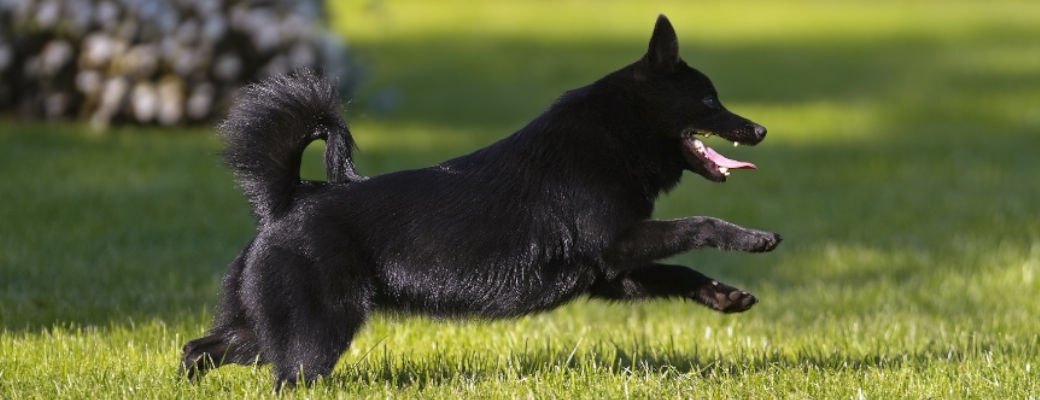
Introduction to Schipperkes
The schipperke is a curious and confident non-sporting group dog. It is known as Belgium’s “little captain” and a traditional barge dog of Belgian dockyards.
If you’re looking for a small, lively dog with a distinctive appearance, the schipperke might be the perfect addition to your household. These adaptable dogs are smart and prone to getting into trouble. But as long as you give them plenty of exercise and patient training sessions, one could very well become your new best friend.
This Healthy Paws breed guide covers everything you need to know about schipperkes, including their characteristics, breed standards, care, health, nutrition, and dog insurance needs.
Size of Schipperkes
A fully grown schipperke weighs between 10 and 16 pounds. Males are about 11 to 13 inches tall, and females are slightly shorter at 10 to 12 inches tall. Schipperkes are mostly done growing by one year of age but may gain a little more weight until their second birthday.
Here’s how big you can expect your schipperke to get as the dog grows from puppyhood to adulthood:
| Weight Chart | 3 months | 6 months | 9 months | 12 months |
| Average male schipperke | 7 lbs. | 10 lbs. | 12 lbs. | 14 lbs. |
| Average female schipperke | 6 lbs. | 9 lbs. | 11 lbs. | 13 lbs. |
Characteristics of Schipperkes
Schipperkes are feisty and beautiful dogs that are sweet family companions. They were originally bred to be guard dogs for boats but primarily live in homes with families today. They are great with kids of all ages and have a grooming routine.
However, these are active dogs that were made for work. So, they do best with active families that give them plenty of playtime and walks to burn off energy. Since they are well-known escape artists, you’ll want to keep your schipperke on a leash or in a fenced-in yard for safety.
As you get to know a schipperke’s personality, here’s what you can expect based on the breed characteristics:
| Breed Characteristic | Level (High, Medium, Low) |
| Affectionate with People | Medium |
| Good with Kids | High |
| Good with Pets | Low |
| Need for Exercise | High |
| Energy Level | High |
| Intelligence Level | Medium |
| Able to Be Trained | Medium |
| Amount of Barking | Medium |
| Amount of Shedding | Medium |
History of Schipperkes
Schipperkes were originally bred in Flanders, a Dutch-speaking region of northern Belgium. They are descendants of a black sheepdog called the Leauvenaar. Schipperkes were bred to be smaller than Belgian sheepdogs and were popular among peasants who could not accommodate large dogs.
Schipperkes got their start as farm dogs and watchdogs. However, they are named after the Flemish word “schip,” which means boat. They served as rattlers on canal barges and became captains’ dogs. They have a strong bark that can scare away strangers and a faithful and loyal demeanor. Because of their intelligence and vigilance, they still make excellent watchdogs today.
The first schipperkes came to the U.S. in 1888, and the American Kennel Club recognized the breed in 1904. The Schipperke Club of America was formed in 1929. They are often successful dogs at obedience, ability, and other dog sport competitions.
Schipperke Standard Information
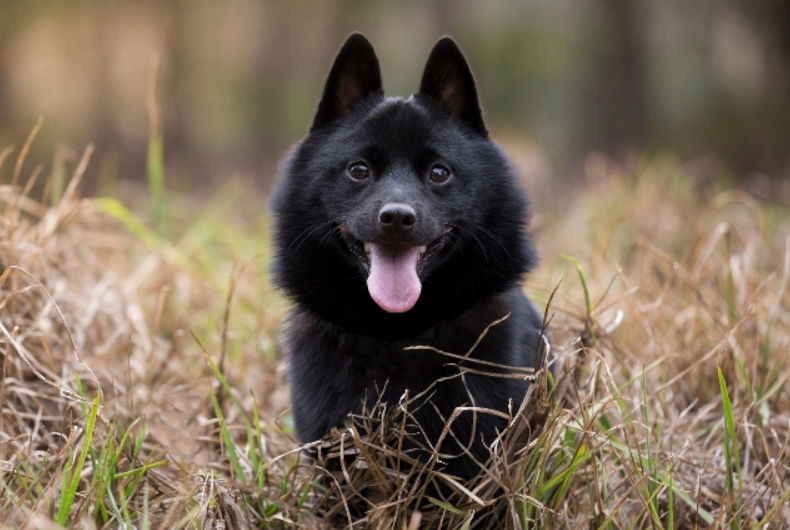
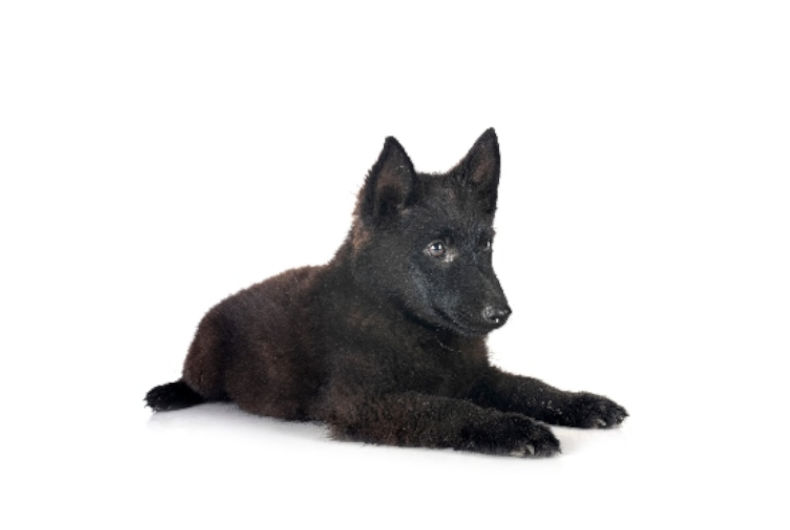
According to the official breed standard, schipperkes are agile, active watchdogs and skilled vermin hunters. They have a foxlike face, and there are distinct physical differences between males and females.
Here is an overview of the breed standard information for schipperke:
Head:
- Mischievous, alert expression
- Medium-width skull
- Moderately filled-in upper jaw
- Small, oval eyes that are dark brown
- Small, triangular ears high on the head
- Small and black nose
- Teeth meet in a scissors bite
Neck, Topline, Body:
- Moderate-length neck that is slightly arched
- Level topline or slopes slightly
- Well-sprung ribs that are wide behind the shoulders
- Tail is docked
Forequarters:
- Shoulders are well laid back
- Legs extend straight from the body
- Pasterns are short, strong, and thick
- Dewclaws are usually removed
- Feet are round, small, and tight
- Nails are black, strong, and short
Hindquarters:
- Hindquarters appear slightly lighter than forequarters
- Hocks are well let down
- Stifles are bent
- Dewclaws are removed
Coat:
- Distinct lengths of the coat that grow in a specific pattern
- Short on the face, ears, forelegs’ fronts, and hocks
- Medium length on the body
- Longer coat in the ruff, jabot, cape, and culottes
- Abundant coat that is straight and harsh to the touch
Color:
- Outercoat is black
- Undercoat may be slightly lighter
- Gray/white coloration due to age is not penalized
Gait:
- Smooth, well-coordinated, and graceful trot
- Front and rear are in perfect balance
- Elbows stay close to the body
- Feet point straight ahead
Caring for Schipperkes
Schipperkes love having a job to do, so ensure that you give your dog lots of playtime and attention daily. They should mostly live indoors, especially during hot weather, because the breed does not tolerate heat well.
It’s ideal for this breed to have a small, fenced yard. However, be mindful that schipperkes like to dig in yards, especially if there is prey down in a hole.
Here are some general tips for taking the best care of a schipperke:
Best Living Environments:
- Households with children
- Homes with fenced yards
- Apartments are ok, but be aware of barking tendencies
Type of Exercise:
- Two daily walks on a leash
- Daily playtime
- At least 30 minutes of daily exercise
Mental Enrichment:
- Dog sports
- Agility and obedience training
- Riding in a bicycle basket or pet store shopping cart
Training Strategies:
- Can be stubborn but also have a good sense of humor
- Add exercise to training with agility courses
- Practice patience and consistency
- Use positive reinforcement methods
- Can be difficult to housetrain
- Socialize dogs early to prevent overly territorial behavior
Grooming Tips:
- Brush the coat weekly
- Blows the coat twice per year
- Try a warm bath to loosen up dead hair during blow-out seasons
- Bathe only when dirty
- Brush teeth daily
- Trim monthly
Common Health Problems of Schipperkes
Schipperkes have a long life expectancy of 12 to 16 years. They are generally healthy dogs but prone to certain health conditions based on their breeding and genetics. For these reasons, the national breed club for schipperkes recommends patella, thyroid, and ophthalmologist evaluations.
These are some of the most common health issues that arise with schipperkes:
- Legg-Calve Perthes Disease (hip joint deformity)
- Autoimmune thyroiditis (causes hypothyroidism at age two to five)
- Patellar luxation (slipped stifles)
- Epilepsy (seizures)
- Mucopolysaccharidosis Type IIIB (gene mutation at age two to four)
- Eye diseases, such as cataracts and progressive retinal atrophy
- Dental or periodontal disease
- Arthritis
Diet and Nutrition for Schipperkes
An adult schipperke needs about 1 1/8 to 1 7/8 cups daily. This total daily amount should be divided into two meals.
Schipperkes love to eat and can quickly become overweight if you feed them too much. Consult your vet for exact portion size recommendations. The cost of feeding a schipperke is about a dollar or less per day.
Where to Adopt or Purchase Schipperkes
If you want to purchase a pure schipperke, the Schipperke Club of America is a good place to start. This national breed parent club organization promotes responsible breeding and showing of the dogs. It offers both a breeder list and rescue resources.
On the organization’s website, you’ll find a list of rescue groups based on geography, such as the Central Florida Schipperke Rescue, Arizona Schipperke Rescue, and Colonial Schipperke Club Rescue Program.
Related Breeds
The schipperke is undeniably a unique breed. However, some other breeds of dogs share similar characteristics and historic lineage with the schipperke.
Here are some examples of other dogs to consider before you decide on a pet to bring into your home:
- Danish-Swedish farmdog
- Belgian sheepdog
Pet Insurance for Schipperkes
Once you adopt or purchase a schipperke, one of the next important things to do is enroll your dog in pet health insurance. Healthy Paws offers schipperke health insurance that covers new illnesses and accidents, chronic conditions, emergency and specialty hospitals, hereditary and congenital conditions, and cancer care.
Due to the rising costs of veterinary care, pet health insurance is worth it so that you can afford to pay for costly treatments without worrying about finances. You’ll have peace of mind that you can always do what’s best for your schipperke and enjoy many wonderful years together.
For your online schipperke insurance quote, please tell us a few details about your dog. We are here to answer all your questions about how dog insurance works and how to submit vet bill claims easily and conveniently online or through our mobile app.
Authors
Christy True
Christy wrote about pets for Healthy Paws for 35 dog years. A background in journalism may be why she enjoys writing about offbeat animal studies and the latest viral pet trends. She has been owned by several dogs, including current pup Nelson, a rescued mini-Aussie, and she volunteers with a local dog rescue. In her free time, she can usually be found sliding down a mountain near her home in Bend, Ore. with Nelson in hot pursuit.
Brittany Kleszynski, DVM
Dr. Brittany Kleszynski is a freelance veterinary and medical writer for Healthy Paws who specializes in creating meaningful content that engages readers and speaks directly to the intended audiences. She writes and edits educational articles for pet parents and creates continuing education and online learning modules for healthcare professionals. She has worked in research and small animal practice since graduating veterinary school and is a member of the American Veterinary Medical Association.