

Learn how and why veterinary bills are increasing, and how a Healthy Paws plan can help.

Read stories of how Healthy Paws has protected pets like family and made peace of mind and more happy, healthy moments possible.

Rescue organizations across the U.S. received support for adoption efforts and ongoing care for vulnerable pets.

Make their food irresistible with the freshest nutritionally-balanced ingredients.
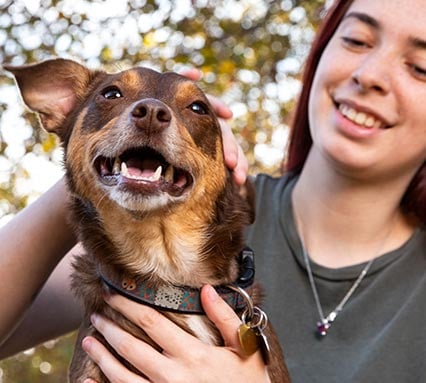
The Healthy Paws Community is a vibrant, social-first space for all pet lovers—whether you’re a Healthy Paws policyholder or simply passionate about pets. As a Pack Member, you can share your favorite pet photos and videos, connect with fellow pet parents, and stay informed with the latest Healthy Paws news and tips. It’s a welcoming place focused on connection, positivity, and celebrating the joy pets bring to our lives!
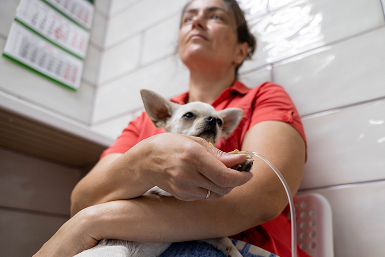
Everyday expenses for a pet now exceed $4,000 a year on average, according to new research. As prices continue to climb, pet owners face tough choices. Pet insurance can be a financial backstop against the unexpected.

Table of Contents
- Are certain dogs more prone to fractures?
- How can I recognize a broken bone?
- Diagnosing a fractured bone
- How do you treat a broken bone in a dog?
- How much do treatments for broken bones in a dog cost?
- Recovering from a Fracture
- Can I prevent broken bones?
- How do I transport a dog with a broken bone?
- The good news
Key Takeaways
- Bone fractures are a common injury in dogs and are usually caused by trauma.
- There are several types of bone fractures – some more serious than others.
- All fractures require a veterinarian’s care and home care including limiting your dog’s movements.
Accidents happen, even to the best pet parents. It’s important to be well-prepared to recognize the symptoms of a broken limb, and be aware of treatments, situations, and costs that may arise.
How do broken bones most commonly occur?
Dogs can break bones in a variety of ways. Common examples include car accidents, falls from a height or even playing too hard with other dogs or people. Dogs with a pre-existing condition such as a tumor or a metabolic bone disease like rickets will have weaker bones, more prone to break.
What are the most common types of broken bones in dogs?
The most frequently broken bones in dogs are the femur (thigh bone), pelvis, skull, jaw, and spine, according to the UK Kennel Club.
There are several different types of fractures, listed below.
- Closed fracture: The dog’s bone may be cracked, but the skin is not broken. Swelling of the area, inability to move the limb, and whimpering are all likely clinical signs. Seek veterinary attention and try to keep your pet as still as possible to prevent the fracture from worsening.
- Greenstick fracture: In these cases, the bone is cracked but not broken. There may be minor swelling and limping, and you should still see a vet for assessment and appropriate splinting. Improper healing can result in lameness and reduced mobility of the joint.
- Compound (Open) fracture: This is the most dangerous type of fracture because the bone has penetrated the skin. This puts the dog at high risk for infection since bacteria can easily enter the open wound. Bleeding, swelling, and visible bone will be seen.
- Epiphyseal fracture: These fractures occur most commonly in young dogs because their bones are still growing. The break happens on the soft area of the bone, known as the growth plate. This can result in the affected leg being shorter than the non-affected legs due to a damaged growth plate. Your veterinarian can repair the fracture to allow for minimal growth defects.
Are certain dogs more prone to fractures?
Small dogs and toy dog breeds are more likely to experience leg fractures because their bones are much smaller and more fragile. It is especially important to be gentle when playing with tiny dogs and to prevent them from jumping off furniture or falling from elevated surfaces, such as out of a person’s arms.
Some medical conditions, like osteoporosis, can make a dog more prone to fractures. Older dogs have weaker, more brittle bones and are also more susceptible to injuries.
Tell us about your pet - get a quick quote
How can I recognize a broken bone?
Broken bones manifest as lumps or bumps on a dog’s joint that are swollen and painful to the touch. The animal may refuse to lay or put pressure on the limb, or excessively lick it. Limping or limited mobility are also indicators of a broken bone. If you suspect a broken bone, you’ll want to get to a veterinarian quickly, so they can perform an exam and do x-rays to determine the damage and treatment.
Diagnosing a fractured bone
If your dog is exhibiting signs of pain, such as limping or vocalizing, it is important to seek immediate veterinary care. Your veterinarian will perform a physical examination, ask questions about how the injury occurred, and take radiographs (x-rays).
How do you treat a broken bone in a dog?
The type of break determines the handling of the injury. Splints, casts, pins, steel plates, and screws are all potential treatments of a broken bone. The age of the dog is also taken into account; older and younger animals have weaker bones and are more prone to fractures. An X-ray will be taken to confirm the break.
Your veterinarian may temporarily stabilize the fracture by applying a splint, padded bandage or another device. Depending on the severity of the break, your veterinarian may apply a cast or splint without surgery to stabilize the bone. For more severe breaks, a vet will perform surgery using metallic implants such as a pin, wire, plate, screw, nail or fixator.
How much do treatments for broken bones in a dog cost?
It varies, depending on the severity of the break. Generally, the cost of a dog’s broken bone runs from $200 to $1,000 and up. Some minor fractures don’t require any treatment besides rest; others, like compound fractures, may involve surgery and steel plates inserted into the animal’s limb.
Recovering from a Fracture
Your veterinarian will provide at-home instructions specific to your dog’s injury. While your pup’s fracture heals, it is important to reduce any activity that could worsen the injury.
- Confine your pet as directed by your veterinarian. This may include using a crate or baby gates to restrict access to certain areas of the home. Use a short leash when going outside for potty breaks.
- Reduce activity. Do not allow playing, running, or jumping on or off furniture. Consider keeping your dogs occupied with mental games, such as puzzles or KONG toys.
Your dog will try to use the broken leg before the fracture is completely healed. Please continue to follow your veterinarian’s recommendations of reduced activity until bone healing has been confirmed with x-rays. Getting back to regular activities too soon can cause serious complications.
Can I prevent broken bones?
Most of the time, yes! Car accidents are a major cause of broken bones in dogs; by keeping your pet leashed or inside, you can easily prevent any traffic-related injuries. Bone cancer, or osteosarcoma, can also be a cause of broken bones. Feeding your pet a healthy, nutritious diet can ward off cancer and also prevent bone breaks due to malnutrition.
How do I transport a dog with a broken bone?
In an emergency, it’s important to know the right steps to follow in order to protect your pet’s health.
- Call your local veterinarian or animal hospital and describe the injury. This prepares them for your arrival, and they may also require you to perform minor first aid.
- Try to stabilize the limb by wrapping it loosely in a towel. Be careful – hurt animals sometimes lash out, even at their owners! Most emergency experts recommend muzzling your dog before attempting any care.
- If possible, have someone help you move the animal into the car. Lift the animal onto a blanket and lift the corners of the blanket, moving the dog as little as possible.
- Again, if possible, have someone else drive, and try to keep the animal stationary and calm it down until you reach the vet clinic or hospital.
Even the most diligent and careful pet parents can have something happen to their pet. Part of being a responsible pet owner is knowing what to do in an emergency situation. The treatments and costs that follow an injury like a broken bone are also important knowledge for a pet parent. Keep yourself educated in order to provide a healthy life for both you and your pet.
The good news
Fractures do heal and bones often resume near normal shape and strength. Being vigilant, getting the right treatment, and easing your dog back into normal activity slowly means your injured pet can usually return to a completely normal, happy, and active life.
Broken bones are just the kind of unexpected accident that pet insurance is designed to cover, given that it’s not a pre-existing condition and the two-week waiting period after enrollment has passed. With Healthy Paws, you can be reimbursed up to 90% of your vet bills for broken bones and other incidents.
The content is not intended to be a substitute for professional veterinarian advice, diagnosis, or treatment. Always seek the advice of your veterinarian or other qualified health provider with any questions you may have regarding a medical diagnosis, condition, or treatment options.

Meet Our Writer
Colleen Williams
Over the past decade, Colleen has written about health, wellness, beauty, and even pets for The New York Times, The Cut, Refinery29, xoVain, Healthy Paws Pet Insurance, and Seattle Met Magazine, as well as many beauty brands. She has a BFA in Art History from the University of New Mexico and an AAS in Fashion Design from Parsons School of Design in New York.