

Learn how and why veterinary bills are increasing, and how a Healthy Paws plan can help.

Healthy Paws protects pets like family and makes peace of mind and more happy, healthy moments possible. Pet parents and industry reviews tell the story.

Rescue organizations across the U.S. received support for adoption efforts and ongoing care for vulnerable pets.

Make their food irresistible with the freshest nutritionally-balanced ingredients.

The Healthy Paws Community is a vibrant, social-first space for all pet lovers—whether you’re a Healthy Paws policyholder or simply passionate about pets. As a Pack Member, you can share your favorite pet photos and videos, connect with fellow pet parents, and stay informed with the latest Healthy Paws news and tips. It’s a welcoming place focused on connection, positivity, and celebrating the joy pets bring to our lives!
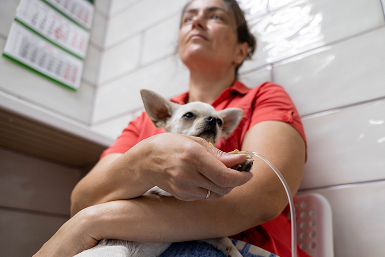
Everyday expenses for a pet now exceed $4,000 a year on average, according to new research. As prices continue to climb, pet owners face tough choices. Pet insurance can be a financial backstop against the unexpected.

Table of Contents
Key Takeaways
- Blood cancers in dogs are dangerous and include hemangiosarcoma, canine leukemia or canine lymphoma.
- Early detection provides the best chance for treating cancers of the blood in dogs.
- Treatment for blood cancers in dogs includes radiation, chemotherapy and surgery, and successful treatments may extend your dog’s life for months or years.
Blood cancer in dogs, also known as hemangiosarcoma, canine leukemia or canine lymphoma is not a diagnosis any pet parent wants to hear. Cancers of the blood are especially dangerous, as the disease can occur and spread to blood vessels or blood-forming organs throughout the body.
Early detection is key to the successful treatment of cancer in pets, so it’s important to recognize the signs and symptoms of these devastating diseases.
Hemangiosarcoma in dogs
Hemangiosarcoma in dogs is a malignant tumor that arises from the walls of blood vessels. Described by one researcher as “one of the meanest cancers out there,” the tumors are difficult to predict, and treatment only prolongs the dog’s life for a few months.
Like other types of cancer in dogs, hemangiosarcoma has a strong genetic component and is more likely to occur in certain breeds, specifically medium to large breed dogs, the Flint Animal Cancer Center says. Although dogs of any age can develop the disease, middle-aged to older dogs are more susceptible. Below is a list of breeds that are more likely to develop this type of cancer.
- Golden Retrievers
- German Shepherds
- Boxers
- Labrador Retrievers
- English Setters
Hemangiosarcoma can develop on any blood vessels, but it most frequently occurs as a mass in the spleen, liver, or right atrium of the heart. Sometimes cancer develops on the skin, which is referred to as dermal hemangiosarcoma. The tumor’s initial growth is slow and painless, making it difficult to detect until it has become more severe or metastasized to other areas of the body. Often clinical signs are nonspecific, such as lethargy or weakness. Pale gums, loss of appetite, weight loss, difficulty breathing, and abdominal swelling are also signs of hemangiosarcoma. Most dogs are brought into the veterinary hospital after they have collapsed once the tumor has ruptured and caused internal bleeding.
Hemangiosarcoma treatment for dogs
Unfortunately, there is no way to cure hemangiosarcoma. Treatment for cancer may involve surgery and/or chemotherapy, depending on the severity and location of the tumor(s).
- Surgery – If your dog has dermal hemangiosarcoma, it can be removed surgically, and the chances of a full recovery are high. The internal form of hemangiosarcoma, however, is often fatal. Surgery may be an option for some dogs, during which the tumor is removed with wide margins.
- Chemotherapy – Since a vast majority of the tumors have already metastasized at the time of diagnosis, chemotherapy is recommended following surgery. It may also be administered to reduce the severity and clinical signs of the disease if surgery is not an option. It is administered intravenously every three weeks.
The average survival rate after treatment for hemangiosarcoma in dogs is 60 days for surgery alone and five to seven months with chemotherapy and surgery.
Tell us about your pet – get a quick quote
Leukemia in dogs
Leukemia occurs when abnormal white blood cells, specifically immature lymphocytes, are released into the blood at high rates. Lymphocytes originate in the bone marrow, thymus, and spleen and are crucial to the immune system. When they do not develop properly or are released from the bone marrow prematurely, the body’s immune system is dysfunctional. This type of blood cancer can be either acute or chronic.
Acute lymphoblastic leukemia is more severe and often goes undetected until it has progressed in severity. Nonspecific clinical signs, such as loss of appetite, lethargy, and weight loss may be present.
Chronic lymphocytic leukemia is much rarer but may also be difficult to detect. Some dogs experience increased thirst and urination, fevers, or enlarged lymph nodes with this type of cancer. To diagnose leukemia in dogs, a thorough physical exam, bloodwork, and a bone marrow biopsy are done.
Leukemia treatment for dogs
Acute leukemia can be treated with aggressive chemotherapy, while continued monitoring may be recommended for chronic leukemia. The prognosis for pets diagnosed with acute leukemia varies widely but is considered grave. Regular veterinary checkups for your dog can help detect this disease early and provide the best chance for treatment success and longer survival times.

Leukemia in dogs is more likely to occur in male and senior pets. (Flickr.com/jdehaan)
Lymphoma in dogs
Canine lymphoma is a malignant disease affecting middle-aged to older dogs. This type of cancer arises from lymphoid tissue within the bone marrow, thymus, lymph nodes, spleen, and gastrointestinal tract. The exact cause is unknown, but environmental and genetic factors have been thought to play a role. VCA hospitals say the following breeds have the greatest predisposition to developing this type of cancer:
- Boxers
- Labrador Retrievers
- Basset Hounds
- Saint Bernards
- Scottish Terriers
Multicentric lymphoma – originating in multiple places – is the most common type, responsible for roughly 80 percent of canine cases. The primary indicator of this form of cancer is the enlargement of lymph nodes. A dog’s lymph nodes may swell up to ten times larger than normal. Alimentary (digestive tract) lymphoma in dogs is fairly rare. It accounts for only about 5-7 percent of lymphomas in dogs, and it causes gastrointestinal signs, such as vomiting, diarrhea, or loss of appetite. Other less common forms include mediastinal and extranodal lymphomas.
Lymphoma symptoms include:
- Enlargement of the lymph nodes, spleen, and/or liver
- Anorexia
- Weight loss
- Fluid in the abdomen
- Difficulty breathing
- Increased thirst
- Vomiting and/or diarrhea
- Fever
- Weakness
- Lethargy
- Skin lesions
How is lymphoma diagnosed?
After doing a thorough physical exam, your veterinarian may perform a needle aspirate to identify the cells within any enlarged lymph nodes. Other tests, such as bloodwork, urinalysis, chest and abdominal x-rays, and abdominal ultrasound may be recommended to assess your dog’s overall health and identify any metastasis.
Lymphoma treatment for dogs
Treatment will be determined by the stage and location of the disease. Your veterinarian may recommend a combination of chemotherapy, radiation, and surgery. With treatment, some dogs may live 6-12 months, but this is variable depending on what type of lymphoma is present and whether or not it has metastasized.
Treatments include:
- Chemotherapy is most commonly administered orally or intravenously. The majority of dogs treated with chemotherapy do not experience the severe side effects that humans; however, it is common for them to lose their fur, experience vomiting and diarrhea, and have low blood cell counts. Because chemotherapy causes immunosuppression, they also have an increased risk of infection. Chemotherapy is given until remission occurs or it is deemed ineffective, according to PennVet Hospital.
- Radiation therapy may be recommended instead of or in combination with chemotherapy as a more targeted treatment. Whole or half-body radiation is used since the cancer is not usually contained to one area. Your veterinarian will determine an appropriate dosing schedule for your dog.
- Surgery may be an option for localized lymphoma that only affects a single lymph node. Usually, this has the best chance for treatment success since it is more likely that the lymphoma has been caught early on before metastasis.
If treatments are unsuccessful, palliative care can be instituted to minimize pain and help your dog maintain a good quality of life for whatever time remains. Your veterinarian will work with you to determine the best approach to your dog’s care in this emotional time. If you have dog insurance, it will allow you to get the highest quality of treatment without breaking the bank.
The content is not intended to be a substitute for professional veterinarian advice, diagnosis, or treatment. Always seek the advice of your veterinarian or other qualified health provider with any questions you may have regarding a medical diagnosis, condition, or treatment options.
Authors
Colleen Williams
Over the past decade, Colleen has written about health, wellness, beauty, and even pets for The New York Times, The Cut, Refinery29, xoVain, Healthy Paws Pet Insurance, and Seattle Met Magazine, as well as many beauty brands. She has a BFA in Art History from the University of New Mexico and an AAS in Fashion Design from Parsons School of Design in New York.
Brittany Kleszynski, DVM
Dr. Brittany Kleszynski is a freelance veterinary and medical writer for Healthy Paws who specializes in creating meaningful content that engages readers and speaks directly to the intended audiences. She writes and edits educational articles for pet parents and creates continuing education and online learning modules for healthcare professionals. She has worked in research and small animal practice since graduating veterinary school and is a member of the American Veterinary Medical Association.