

Learn how and why veterinary bills are increasing, and how a Healthy Paws plan can help.


Three rescues across North Carolina and Georgia received donations that made a big impact.

Make their food irresistible with the freshest nutritionally-balanced ingredients.
Key Takeaways
- Many people enjoy having their pets sleep in bed with them – in fact, 65% of Healthy Paws customers say their pets sleep with them.
- There is nothing wrong with having your dog sleep on the bed – it’s an individual preference.
- There are some health and behavioral circumstances where it’s not a great idea to sleep with dogs.
- If you’ve been allowing a dog on your bed and now want to change that – it’s possible to train them to snooze elsewhere.
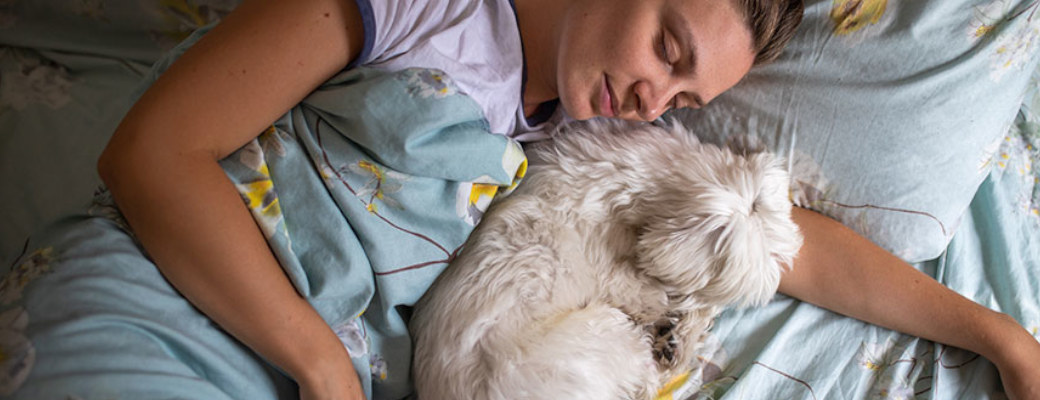
Given the choice, most dogs would like to sleep on their pet parents’ bed rather than their own cozy bed or floor. This sometimes leads to hilarious situations that pet parents have shared on social media. The dog or dogs are sprawled right in the middle, with the humans clinging to the edge or contorting themselves to avoid crowding the intruder.
You may wonder, is having your dog in bed with you healthy? While it may not be a good idea in some instances because of a medical condition or behavioral issues, most experts say it’s not a problem to have your dog snooze in bed with you. You are not alone if co-sleeping with a dog is your practice. In the U.S., almost half of dogs sleep in bed with their pet parents, according to research by the VCA Animal Hospitals, and over 65% of Healthy Paws pet parents welcome their pets to sleep in bed with them, according to our June 2023 e-news survey.
It’s absolutely an individual preference if you want your dog to join you on your bed. There’s no right or wrong answer.
Why does my dog want to sleep with me?
The biggest reason a dog wants to sleep in their pet parent’s bed is their comfort in being close to you. Remember that dogs are pack animals, and it’s natural for them to want to snuggle up beside you or join you on the bed. If they were in the wild or living on the streets, they would huddle up close to other pack members in the ‘den’ for warmth and protection against the elements and potential predators.
These are other reasons your dog wants to sleep with you:
- The closer they are to their family members, the more relaxed your dog will feel because they know you are all within sight and aren’t in harm’s way. For protective dogs, if they aren’t close to their family members and can’t check on their safety, it can cause anxiety.
- For dogs who suffer from separation anxiety, not being with you during the night could cause stress.
- Dogs may be especially on guard at night, as that is when predators are on the hunt, so some dogs are extra sensitive to shadows and noises outside. They may bark to alert you of the potential danger, as they assume a threat is nearby, and they are doing their job to keep everyone safe.
- Many dogs love the comfort of sleeping on a soft, fluffy pillow surrounded by cozy blankets. And some dogs love burrowing under the blankets as they tuck themselves in for the night. They feel warm and safe, completely covered, like a den.
Tell us about your pet – get a quick quote
Benefits of sleeping with your dog
Many people love having their dog snuggled beside them, as it also brings the person comfort. Dogs tend to calm people and can lower blood pressure and stress levels, helping them to sleep better. It can also provide a sense of security, especially for people living alone.
Besides comfort, here are some other ways it benefits your dog and yourself:
- If your dog needs to go potty during the night, and you are a light sleeper, it’s easier to notice when they move to get up so that you can take them outside quickly before they eliminate on the floor.
- Your dog is less likely to bark during the night if they are snuggled up with you in the bed, especially if the bedroom door is closed, preventing them from roaming during the night. The less territory they are responsible for, the more they can relax.
When NOT to let dogs sleep in your bed
Dogs who don’t get along
If you have multiple dogs who don’t always get along, having them sleep on the bed with you is not a good idea. It would be difficult to handle a dog fight as you are lying down or being woken up abruptly by one. And you are more likely to become injured when breaking it up. In this situation, it’s best to have the dogs who don’t get along separated in different rooms or by using crates.
However, you shouldn’t allow one dog to sleep on the bed but not the other, as this can cause issues in the pack dynamic. The dog permitted to sleep on the bed would believe they are higher ranking in the pack because they are the only dog allowed to sleep with you. Plus, the higher a dog is off the ground, the higher their ranking, so having one dog on the bed and another sleeping on the ground could cause behavioral issues.
Puppies not yet potty trained
If you are potty training a puppy and aren’t a light sleeper, you may have accidents on your bedding and need to replace your mattress by the time they are potty trained.
Medical reasons for keeping your dog out of the bed
There are a few situations where you should not let your dog sleep on the bed for health reasons – either theirs or yours.
VCA Animal Hospitals advises that if your dog has musculoskeletal issues, like arthritis, climbing on the bed can take a lot of effort, and soft beds do not support aging joints well enough. Dogs in pain may prefer more padding than the bed allows. Older dogs may also be incontinent and leak urine on your sheets. If you want your dog on the bed, you can mitigate messes with pee pads.
Regarding your health, dogs can carry certain intestinal parasites, fleas, and ticks that cause human illnesses, the VCA says. Sleeping with a dog increases your exposure to these parasites and vector-borne diseases. Children, older people, and immune-compromised people are particularly at risk of infection. Keeping your dog up to date on vaccinations and flea and heartworm preventatives will eliminate this risk for most people.
Some light sleepers may be unable to sleep well with a dog in the bed due to movement or snoring. If it’s a small dog, anxiety about crushing them could also cause sleeplessness or less sound sleep.
If you have any allergies to dogs, having them sleep next to you would obviously worsen the symptoms. Remember, if you enjoy co-sleeping with your dog, you will need to wash your bedding more often due to the hair and drool. A good habit to develop is to wipe your dog with a damp towel every time they come in from outside to decrease the amount of outdoor pollen and dust they carry inside. Bathing your dog, using HEPA filters, and frequently washing your linens will reduce your exposure to allergens.
How do I retrain my dog not to sleep in my bed?
If you have allowed your dog on the bed, and now you would prefer that they sleep on their dog bed or somewhere other than your bed, it’s vital to do this gradually to not cause stress for your dog.
If you want to teach them to stay on their dog bed:
- Bring their favorite dog bed into the bedroom during the day to practice teaching them to stay on their bed.
- As you begin training them, they will need to wear a leash. Escort them to their bed via the leash, and when they are on their dog bed, say “Bed” in a friendly tone and use their name. Give them a treat, then walk away and sit on the side of your bed. Don’t look at or talk to them, as this is like starting a conversation with them, and they will be more likely to leave their bed.
- If they leave their bed, don’t look at them; simply step on the leash trailing after them, pick it up, and take them back to their own bed. When they are on it, say “Bed” and use their name, but don’t give them a treat this time, as they will leave it just to get a goodie! Repeat this every time they leave their bed.
- When you are ready to release them, call them to you, and praise them, saying “Good Come” using their name. Remember to call them to you to release them, or it will be confusing for them.
- Don’t ask them to “Sit” or “Stay,” as you teach them to stay in a particular space, not ask them to change body position. They do whatever they like, sit, lay down, play with a toy, or chew on a bone, for example, as long as they stay on their bed. This is helpful because when you travel, you can take their dog bed with you, and they will know to stay on their bed at night. You can also ask them to go to their bed at other times during the day, for example, while you eat dinner.
- It’s essential to make it easy for them to ‘get it right’, and give them opportunities to learn what’s expected as you guide them patiently.
- At first, practice for 5-10 minutes, gradually increasing the time when it’s easier for them to stay in their bed. Begin by sitting on your bed so you can quickly see when they move.
- When they stay on their dog bed, practice by laying down on your bed, just as you would at night.
- Eventually, they won’t need to wear a leash, and you will be able to say “Bed,” and they will automatically go to their bed and stay there.
Meet Our Writer
Sarah-Anne Reed
Sarah-Anne Reed is a holistic dog trainer, animal communicator, and former owner of Pack Dynamics®. She has specialized in working with dogs since 2008. Her practice focuses on helping dogs with behavioral issues and teaching people how to effectively communicate with their dogs by understanding and respecting them as a different species and honoring them as individual beings. Sarah-Anne's passion is working with and helping dogs, writing about dog behavior, and working with dog rescue organizations. Sarah-Anne has written blog posts and acted as a media contact on dog training topics for Healthy Paws Pet Insurance since 2020. She has expertise in separation anxiety, aggression, obsessive-compulsive behavior, food aggression, excessive barking, pet fears and more.