

Learn how and why veterinary bills are increasing, and how a Healthy Paws plan can help.

Healthy Paws protects pets like family and makes peace of mind and more happy, healthy moments possible. Pet parents and industry reviews tell the story.

Rescue organizations across the U.S. received support for adoption efforts and ongoing care for vulnerable pets.

Make their food irresistible with the freshest nutritionally-balanced ingredients.

The Healthy Paws Community is a vibrant, social-first space for all pet lovers—whether you’re a Healthy Paws policyholder or simply passionate about pets. As a Pack Member, you can share your favorite pet photos and videos, connect with fellow pet parents, and stay informed with the latest Healthy Paws news and tips. It’s a welcoming place focused on connection, positivity, and celebrating the joy pets bring to our lives!
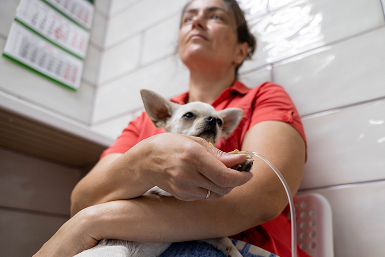
Everyday expenses for a pet now exceed $4,000 a year on average, according to new research. As prices continue to climb, pet owners face tough choices. Pet insurance can be a financial backstop against the unexpected.

Fleas are tiny parasites that pack a big, annoying punch. They can cause intense itchiness and skin irritation for dogs and be a frustratingly hard-to-eliminate pest for dog parents.
Keeping fleas off of your dog and out of your house is essential. But how do you do that?
Fortunately, many flea prevention products and methods are available for dogs. One of those methods is the flea collar.
Flea collar in the news
Flea collars work by either emitting a gas or slowly distributing an insecticide into a dog’s subcutaneous fat, located just under the skin. The gas will kill the fleas on contact, while the insecticide will kill the fleas after a blood meal.
The Seresto flea collar is a popular flea control product for dogs. Recently, though, a USA Today article reported that, from 2012 until June 2020, the United States Environmental Protection Agency “received more than 75,000 incident reports related to the collars.”
Don’t get too concerned just yet, though. Elanco (the company that sells Seresto) and a wide swath of the veterinary community have widely disputed the article’s reported findings. Also, The Canine Review, an investigative veterinary news outlet, has published an article that calls into question the quality of the reporting in the USA Today article.
Healthy Paws is not going to take sides on this issue, but we do want you to be aware of this current development in the world of canine flea prevention.
Below, we’re going to go into some detail about flea collar alternatives. Always talk with your veterinarian to determine the most appropriate flea prevention method for your dog.
Tell us about your pet – get a quick quote
Flea collar alternatives
Spot-on treatments
Spot-on flea treatments are applied to the skin between a dog’s shoulders, where a dog’s tongue can’t easily reach. They absorb slowly into the skin, get into the bloodstream, and are effective for one month. These treatments primarily target adult fleas: when the flea makes the unfortunate decision to take a blood meal from the dog, the toxic treatment enters the flea and kills it.
Some spot-on treatments go further by preventing flea larvae from developing into eggs or preventing those eggs from hatching in the environment.
Oral flea treatments
Oral flea treatments also target adult fleas and prevent flea eggs from hatching. The pill’s flea-killing ingredients get absorbed into the bloodstream. After an adult female flea takes a blood meal and lays her eggs, the eggs won’t hatch, ending the flea life cycle. She probably won’t survive the ordeal, either.
Flea shampoos
Flea shampoos are a quick fix for a heavy flea infestation, killing adult fleas. They are effective for about 24 hours.
When a dog has a heavy flea infestation, that means that there’s also a big flea problem in the home. After the bath, the dog quickly gets reinfested.
Flea powders and sprays
Flea powders and sprays last a little longer than flea shampoos, but not by much. They can target adult fleas and prevent flea larvae and eggs from developing into adult fleas.
Regardless of which flea prevention method you use, keep these tips in mind:
- Use flea prevention year-round. Winter temperatures may not be cold enough to kill all fleas in the environment, so your dog needs year-round protection.
- Don’t use multiple products. More is not better when it comes to flea prevention. Using more than one product could expose your dog to toxic levels of flea-killing ingredients.
- Treat all dogs at the same time. If you have a multi-dog household, treat all dogs simultaneously to ensure that they’re equally protected.
- Follow all product instructions. Flea prevention products are most effective when used correctly. Read the instructions carefully and contact your vet if you have any questions about using the product.
- Tell your vet about side effects. Most dogs don’t experience any adverse side effects from flea prevention products. However, if you think that your dog has had a reaction to a product, contact your vet.
- Use a flea comb. A flea comb will rid your dog’s skin of adult fleas and flea dirt (aka flea poop).
Environmental flea prevention
If your dog has a flea problem, there’s an even bigger flea problem in the environment. Even the best canine flea prevention product can’t be fully effective if your home has become a perpetual flea haven. Thus, effective flea prevention requires a multi-pronged approach.
Follow these tips to keep your home flea-free:
- Vacuum regularly. Vacuum all carpeted areas, couch cushions, and hard-to-reach nooks and crannies. Place a flea collar in the vacuum bag to break the flea life cycle and go outside to throw away the bag.
- Wash all bedding—yours and your dog’s. Use the ‘hot water’ setting on the washer to kill the fleas. Consider taking the bedding to a commercial laundromat.
- Cut your grass. Keeping your grass short will take away one of fleas’ favorite outdoor hiding spaces. When you’re raking the leaves in the fall, dispose of the leaf piles promptly to take away another flea hiding place.
- Call an exterminator. Sometimes, it’s just better to call in the professionals. An extermination company will make sure your home, inside and out, is protected from fleas.
Bringing it together
Flea prevention is a critical component of responsible dog ownership. Work with your vet to choose the flea prevention method that works best for your dog and use the product correctly for maximum flea protection.
Content provided by JoAnna Pendergrass, DVM. Dr. Pendergrass is owner and founder of JPen Communications, a medical communications company specializing in consumer education.

Meet Our Writer
JoAnna Pendergrass, DVM
JoAnna Pendergrass, DVM, is a veterinarian and freelance medical writer in Atlanta, GA. After graduating from the Virginia-Maryland College of Veterinary Medicine with her veterinary degree, JoAnna completed a 2-year research fellowship in neuroscience at Emory University. During this fellowship, she learned that she could make a career out of combining her loves of science and writing. As a medical writer, JoAnna is passionate about providing pet parents at Healthy Paws with clear, concise, and engaging information about pet care. Through her writing, she strives not only to educate pet parents, but also empower them to make good health decisions for their pets. JoAnna is a member of the American Medical Writers Association.