
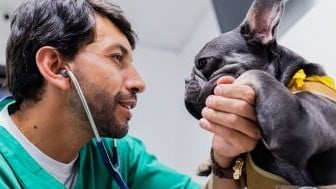
Learn how and why veterinary bills are increasing, and how a Healthy Paws plan can help.

Healthy Paws protects pets like family and makes peace of mind and more happy, healthy moments possible. Pet parents and industry reviews tell the story.

Rescue organizations across the U.S. received support for adoption efforts and ongoing care for vulnerable pets.

Make their food irresistible with the freshest nutritionally-balanced ingredients.
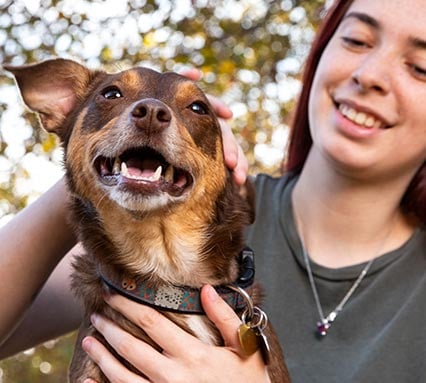
The Healthy Paws Community is a vibrant, social-first space for all pet lovers—whether you’re a Healthy Paws policyholder or simply passionate about pets. As a Pack Member, you can share your favorite pet photos and videos, connect with fellow pet parents, and stay informed with the latest Healthy Paws news and tips. It’s a welcoming place focused on connection, positivity, and celebrating the joy pets bring to our lives!

Insurance is a way to protect yourself financially against unexpected events, and pet insurance is no different -- it's meant to help cover new accidents and illnesses your pet may experience in their life. Healthy Paws pet insurance doesn't cover pre-existing conditions, so it's important to insure your pet early to make sure any future incidents are eligible for coverage.
Here is a rundown of pre-existing conditions, and what your insurance policy may or may not cover.
What is a pre-existing condition?
A pre-existing condition is defined as any illness, injury, or condition that displayed symptoms prior to your pet insurance policy taking effect (including during any applicable waiting periods). This includes a recurrence of a condition your pet showed signs of prior to enrollment.
Basically, any health condition your pet had before coverage started—whether you received a formal diagnosis from a vet or not—would likely be considered pre-existing and ineligible for coverage.
What is and is not a pre-existing condition?
Here are some hypothetical scenarios of what may or may not be considered a pre-existing condition.
- Your dog has been itchy ever since you adopted her from the shelter. Over the past month, she's been in several times to see her veterinarian for her itchy skin, loss of fur, and hot spots. Your veterinarian is treating the symptoms but has not diagnosed the condition yet. You decide to enroll her in pet insurance. A couple of months later your dog has another flare-up of the same itchy skin symptoms, and you take her to see her veterinarian who prescribes additional medication. This would be considered pre-existing since the clinical signs and symptoms of the condition were noted before enrollment.
- Your cat is playing with a feather toy and ingests some of the string. Your veterinarian induces vomiting to expel the string and sends your cat home with some medicine to calm his stomach. The accident inspires you to get pet insurance. Several months later your cat eats a hair tie and needs surgery to remove the foreign body. This would be considered a separate accident and not related to the previous foreign body, therefore not a pre-existing condition. They are both acute, isolated events, and the second one would be covered.
- Your dog was seen at the vet for frequent urination, excessive thirst, and weight loss that began about a month prior to enrolling with pet insurance. The doctor recommends diagnostic tests. You enroll her in pet insurance after which she has lab work performed that reveals diabetes. Though the diagnosis is determined after enrolling with pet insurance, diabetes would be considered pre-existing, since the clinical signs and symptoms occurred before enrollment.
- Your kitty darts outside one morning, just after the perimeter of the yard was sprayed with insecticide. Exposed, she becomes ill and requires hospitalization at the emergency vet. The doctor advises that she have follow-up bloodwork in weeks ahead to make sure that all after-effects of the toxicity are resolved. After this very expensive emergency visit to the vet, you enroll your cat in pet insurance in case of another accident or illness. The follow-up bloodwork tests for the toxicity are not eligible for coverage, because the signs and symptoms were pre-existing, meaning they were noted prior to enrollment.
Are there any exceptions?
One possible exception to this rule applies to acute conditions (a short duration) that completely resolve or heal. A good example is an ear infection. Let's say your pet had one ear infection when they were six months old, and then you enrolled your pet one year later. Approximately two years later, your pet gets an ear infection; this treatment would most likely be covered simply because the first infection had completely healed and it wasn't a chronic condition.
That "chronic" word matters – if your pet suffers from chronic ear infections, requiring medical treatment several times per year before you enroll them for pet insurance, those conditions are considered pre-existing.
Other examples of curable conditions (not chronic) include respiratory, ear, or urinary tract infections, common gastrointestinal upsets, vomiting, diarrhea, dermatitis, and some types of skin rashes.
Are bilateral conditions covered?
A bilateral condition is an injury that has happened on one side of the body, and then occurs on the opposite side. In most cases, bilateral conditions would be covered, with one exception. A pre-existing cruciate ligament injury has a bilateral exclusion. That means if the cruciate ligament on one leg is injured prior to enrollment or during the 15-day waiting period, that would not be covered, and were the same injury on the other leg to occur, it would be excluded from coverage. This is the only bilateral exclusion in the Healthy Paws plan.
How can I avoid conditions being pre-existing to policy coverage?
The easiest solution is to enroll your pet early. Don’t wait until your pet has an unexpected trip to the vet to consider pet insurance. The Healthy Paws plan covers pets as young as 8 weeks, and enrolling sooner rather than later can help you to avoid pre-existing condition exclusions.
If my pet has a pre-existing condition, should I still enroll?
Even if your pet has a pre-existing condition, pet health insurance can still be very helpful when it comes to paying your vet bills should any other ailments occur after enrollment. Many conditions are unrelated to that which was determined as pre-existing, so future accidents and illnesses can still be covered.
Find out more on our Coverage and Exclusions page, and feel free to give us a call at 855.898.8991 (or email) with any questions about your pet's situation. If you'd like to see your rates, start by getting a free quote.
The material presented herein is advisory in nature and is not intended as a substitute for legal, insurance, or other professional advice, but rather is presented for general information only. You should consult knowledgeable experts as to any technical questions you may have.

Meet Our Writer
Colleen Williams
Over the past decade, Colleen has written about health, wellness, beauty, and even pets for The New York Times, The Cut, Refinery29, xoVain, Healthy Paws Pet Insurance, and Seattle Met Magazine, as well as many beauty brands. She has a BFA in Art History from the University of New Mexico and an AAS in Fashion Design from Parsons School of Design in New York.