
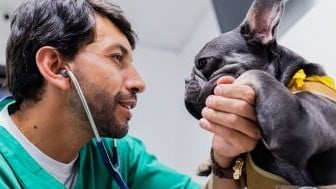
Learn how and why veterinary bills are increasing, and how a Healthy Paws plan can help.

Healthy Paws protects pets like family and makes peace of mind and more happy, healthy moments possible. Pet parents and industry reviews tell the story.

Rescue organizations across the U.S. received support for adoption efforts and ongoing care for vulnerable pets.

Make their food irresistible with the freshest nutritionally-balanced ingredients.
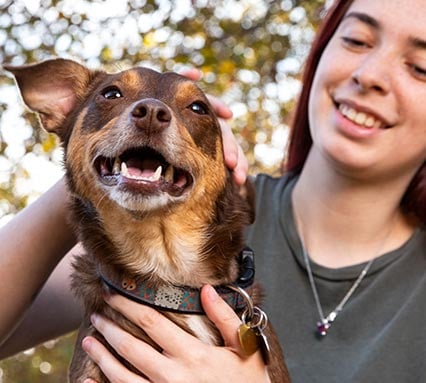
The Healthy Paws Community is a vibrant, social-first space for all pet lovers—whether you’re a Healthy Paws policyholder or simply passionate about pets. As a Pack Member, you can share your favorite pet photos and videos, connect with fellow pet parents, and stay informed with the latest Healthy Paws news and tips. It’s a welcoming place focused on connection, positivity, and celebrating the joy pets bring to our lives!

Introduction to Scottish Terriers
The Scottish terrier is one of the most recognizable dogs in the world and is known for its iconic beard and spunky demeanor. Scottish terriers are independent and confident dogs that are full of personality and have almost human-like characteristics. This breed comes in various colors and requires regular grooming to keep the wiry coat free of tangles.
Although Scottish terriers were originally bred to hunt small animals in Scotland, they are beloved family pets today that typically live long and healthy lives. Here are the basics of what you need to know about Scottish terriers before purchasing or adopting one, as well as why pet health insurance is highly recommended for Scottish terriers.
Size of Scottish Terriers
Scottish terriers are small dogs that reach weights of 19 to 22 pounds for males and 18 to 21 pounds for females. They are compact and have short legs and a sturdy build. A Scottish terrier’s head is long compared to the rest of its body, and the breed is more powerful than you might expect at first glance.
Scottish terriers grow the most during the first six months of life. These dogs generally reach their adult height (about 10 inches tall) and weight by one year of age. There are only slight differences in weight between male and female Scottish terriers, with males tending to weigh just a pound or two more.
Here’s how big you can expect your Scottish terrier to get as the dog grows from puppyhood to adulthood:
| Weight Chart | 3 months | 6 months | 9 months | 12 months |
| Average weight for male and female Scottish terriers | 8 lbs. | 15.5 lbs. | 19.75 lbs. | 21.5 lbs. |

Characteristics of Scottish Terriers
Common characteristics of Scottish terriers are alert, watchful, intelligent, and stubborn. These dogs are loving toward family members but wary of strangers. They can be strong-willed when faced with training, making them a better option for experienced dog owners, and need a moderate amount of exercise to stay healthy and fit. Scottish terriers can be aggressive with other dogs, so good training is necessary at an early age if you have other pets in the house or just to go out in public. Scottish terriers are often okay with older children, but Scottish terriers may be prone to snap at young kids.
As you get to know a Scottish terrier’s personality, here’s what you can expect based on his or her breed characteristics:
| Breed Characteristic | Level (High, Medium, Low) |
| Affectionate with People | Medium |
| Good with Kids | Low to Medium |
| Good with Pets | Low |
| Need for Exercise | Medium |
| Energy Level | Medium |
| Intelligence Level | High |
| Able to Be Trained | Low |
| Amount of Barking | Medium |
| Amount of Shedding | Low |
History of Scottish Terriers
As their name suggests, Scottish terriers originate from Scotland, where they were bred to hunt rats, foxes, badgers, and other small animals in the Scottish Highlands. This is among the oldest dog breeds in the world. The dog's origin can be traced to 55 B.C. when Pliny the Elder described small, working dogs that were present when the Romans invaded Britain. The Scottish terrier is also described in a 1436 book about the history of Scotland. However, the breed was developed and refined in the 1800s and distinguished by the Scottish terrier that had rough hair and the English terrier that had smooth hair.
King James I of England gave Scottish terrier dogs to people as gifts in the 17th century, and the first of these dogs arrived in America in 1883. The American Kennel Club registered its first Scottie, named Prince Charles, in 1885. Many celebrities have had Scottish terriers over the years, especially in the 1930s and 1940s. The dogs are still popular today and make wonderful pets!
Scottish Terrier Standard Information
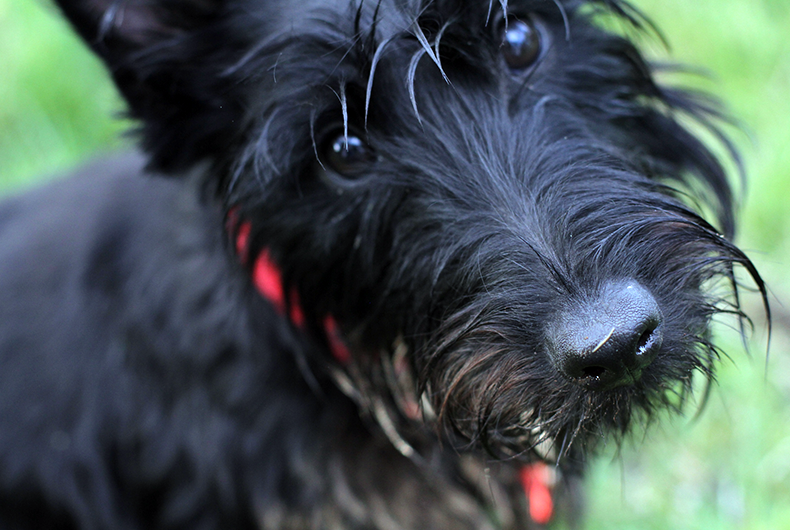
Scottish terriers often compete in dog shows and are judged based on their physical characteristics and movements. In general, these dogs have weather-resistant coats, keen expressions, erect ears and tails, and a bold and dignified demeanor.
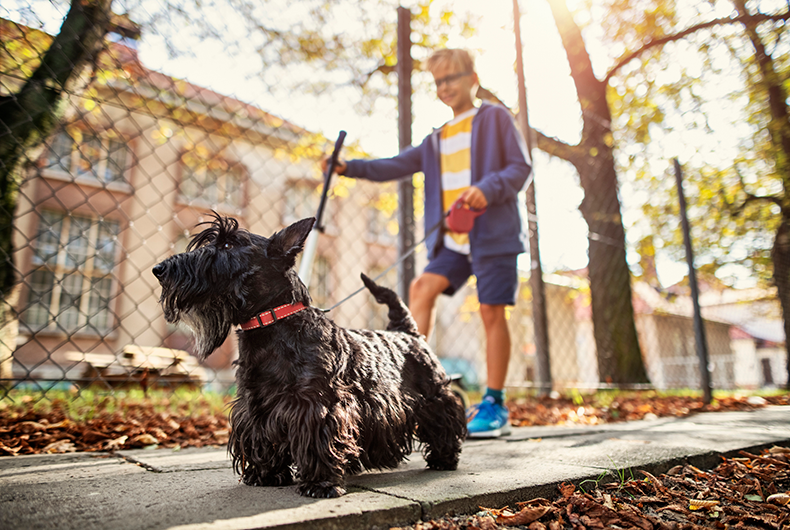
Here is an overview of the breed standard information for Scottish terriers:
Head:
- Head is long in proportion to the overall size of the dog
- Muzzle approximately equal to length of the skull
- Scissor bite is preferred, but level bite is also acceptable
- Eyes set wide apart, small, piercing, and almond-shaped
- Small and pricked ears
Neck, Topline, Body:
- Moderately short neck that is thick and strong
- Moderately short body with strong loin
- Topline of the back is firm and level
- Chest is broad and very deep
- Tail is about seven inches long and never cut
Forequarters:
- Shoulders are well laid back and moderately well-knit at withers
- Forelegs are heavy in bone and straight or slightly bent
- Forefeet are larger than hind feet, also round and compact
- Dewclaws may be removed
Hindquarters:
- Thighs are very muscular and powerful
- Hocks well let down and parallel to each other
Coat:
- Broken coat with a hard, wiry outercoat and soft, dense undercoat
- Coat should be trimmed and blended to give a distinct outline
- Coat on beard, legs, and lower body may be softer than body coat but not fluffy
Color:
- Can be black, wheaten, or brindle of any color
- May have sprinklings of white or silver hairs
- White is only allowed on the chest and chin
Gait:
- Free, agile, and coordinated with a powerful drive
- Rear legs' action is square, with hocks and stifles flexed and a vigorous motion at the trot
- Back is firm and level while in motion
Caring for Scottish Terriers
Scottish terriers make excellent apartment dogs because of their size and exercise needs. However, these dogs still need at least a moderate walk or two each day and to get about an hour of exercise daily.
Here are some general tips for taking the best care of a Scottish terrier:
Best Living Environments:
- Apartments are fine if exercised daily
- Always keep in a fence while in a yard due to high prey drive
Type of Exercise:
- An hour of exercise per day
- Morning and evening walks with playtime in between
- No swimming or aquatic activities
Mental Enrichment:
- Puzzle toys
- Dog sports
- Running and chasing games
Training Strategies:
- Not always willing to learn or be trained
- Keep training sessions short and not boring
- Use positive reinforcement with treats and praise
- Expose your dog to other dogs and different people from an early age
Grooming Tips:
- Doesn’t shed very much
- Requires a professional groomer or to learn grooming skills yourself
- Coat should be hand-stripped once per month or clip the coat roughly every two months
- Brush the coat weekly to remove tangles between grooming sessions
- Bathe monthly depending on the level of dirt collected
- Trim nails monthly
- Check ears for wax build-up and irritation

Common Health Problems of Scottish Terriers
Scotties are generally healthy dogs that have an average life expectancy of 12 years. However, like all breeds, they are prone to certain kinds of health conditions and genetic disorders. This is why so many pet parents sign their Scottish terriers up for dog insurance so they can always get the vet care they need without having to worry about finances.
These are some of the most common health issues that arise with Scottish terriers:
- Scottie cramp (can affect walking and running)
- Von Willebrand’s disease (inherited blood disorder)
- Craniomandibular osteopathy (skull bone disorder among puppies)
- Cerebellar abiotrophy (neurologic disease)
- Patellar luxation (kneecap condition)
- Portosystemic shunt (liver disease)
- Thyroid issues
- Eye disorders (cataracts, progressive retinal atrophy)
Diet and Nutrition for Scottish Terriers
When a Scottish terrier is fully grown, the dog will need about one to 1.5 cups of dry dog food per day. However, the exact amount of food should be determined by the dog’s size, health, and level of activity, as well as the food’s caloric density. So, make sure to discuss portion sizes and food recommendations with your veterinarian.
Where to Adopt or Purchase Scottish Terriers
The Scottish Terrier Club of America is the national breed club for this type of dog and is a membership organization connected to at least 20 regional clubs nationwide. The organization's website provides resources for member breeders, foreign breeders, available litters, and rescue organizations.
There are also local and regional rescue organizations that specialize in getting Scottish terriers adopted into loving homes. Some examples are the St. Louis Scottish Terrier Rescue, North Texas Scottie Rescue, Rocky Mountain Scottie Rescue, and Scottish Terrier Rescue of the Southeast.
Related Breeds
If everything that you have been reading about Scottish terriers sounds great and you find yourself falling in love with this breed, you might also want to learn about similar dogs before making a final decision. Here are some related and similar breeds that share common characteristics with the Scottish terrier:
- Dandie Dinmont
- West Highland white terriers
- Schnauzer
- Skye terrier
- Border terrier
- Cairn terrier
Pet Insurance for Scottish Terriers
To keep your Scottish terrier safe and protected during all stages of life, Healthy Paws offers Scottish terrier pet insurance. We are a top-rated pet insurance plan in America and cover everything from accidents to illnesses, cancer, emergency care, genetic and hereditary conditions, breed-specific conditions, and alternative care.
More than 560,000 pets are enrolled in our health plan, which features no enrollment or administrative fees plus flexible premium and deductible options. Get your Scottish terrier insurance quote today to make the best decision for your beloved pet.