

Learn how and why veterinary bills are increasing, and how a Healthy Paws plan can help.

Healthy Paws protects pets like family and makes peace of mind and more happy, healthy moments possible. Pet parents and industry reviews tell the story.

Rescue organizations across the U.S. received support for adoption efforts and ongoing care for vulnerable pets.

Make their food irresistible with the freshest nutritionally-balanced ingredients.
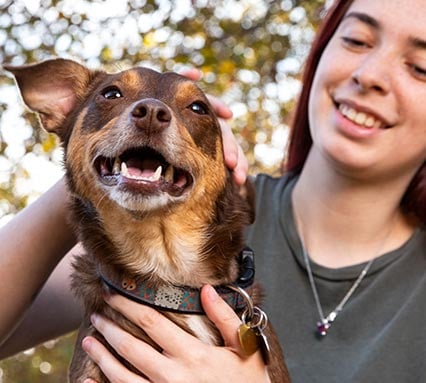
The Healthy Paws Community is a vibrant, social-first space for all pet lovers—whether you’re a Healthy Paws policyholder or simply passionate about pets. As a Pack Member, you can share your favorite pet photos and videos, connect with fellow pet parents, and stay informed with the latest Healthy Paws news and tips. It’s a welcoming place focused on connection, positivity, and celebrating the joy pets bring to our lives!

Introduction to Silky Terriers
Weighing less than 10 pounds, the silky terrier is a toy group dog known for its elegant appearance. Its showy, flowing coat is striking yet equally matched by its lively personality.
These spirited pups are sometimes called big dogs in small packages because of their fun personalities and social demeanors. They make excellent additions to many households and are instantly lovable by family members.
Is a silky terrier the right pet for your home and lifestyle? Read this Healthy Paws breed guide to learn more about the silky terrier’s characteristics, personality, care, health, and insurance needs.
Size of Silky Terriers
When a silky terrier is fully grown, it will stand nine to 10 inches tall and weigh 10 pounds or less. There is only a negligible difference between the weights of males and females of this breed.
Here’s how big you can expect your silky terrier to get as the dog grows from puppyhood to adulthood:
| Weight Chart | 6 months | 12 months | 18 months |
| Female and male silky terriers | 6 lbs. | 8 lbs. | 9.5 lbs. |
Characteristics of Silky Terriers
Silky terriers are ideal companions for both individuals living alone and families. They are quick learners and adaptable to city and suburban life.
This breed might seem feisty initially, but they quickly become cuddly with family members and can be trained to bark less with time and attention. Overall, they are loyal and devoted dogs that are a delight to have around the house. However, be aware that terriers, including this breed, have a naturally strong prey drive that makes them less than ideal in homes with cats or other small pets.
As you get to know a silky terrier’s personality, here’s what you can expect based on the breed characteristics:
| Breed Characteristic | Level (High, Medium, Low) |
| Affectionate with People | Medium |
| Good with Kids | Medium |
| Good with Pets | Medium |
| Need for Exercise | Medium |
| Energy Level | Medium |
| Intelligence Level | Medium |
| Able to Be Trained | Medium |
| Amount of Barking | Medium |
| Amount of Shedding | Low |

History of Silky Terriers
Breeders began establishing the silky terrier in the early 20th century. They bred Yorkshire and Australian terriers to create the breed, possibly as well as other dogs like the cairn, Dandie Dinmont, and Skye terrier. Silky terriers are smaller than Australian terriers but larger than Yorkshire terriers.
The Australian National Kennel Council recognized the breed in 1958, and the American Kennel Club in 1959.
Silky Terrier Standard Information
This toy terrier dog is moderately low set to the ground and longer than tall. The breed has a refined bone structure and the potential to hunt rodents. These are inquisitive dogs famous for their silky texture coats that are parted and well-groomed.
Here is an overview of the breed standard information for silky terriers:
Head:
- Strong, wedge-shaped head that is moderately long
- Small, V-shaped ears
- Small, dark, almond-shaped eyes
- Skull is flat and not too wide between the ears
- Nose is black
- Teeth are strong and meet in a scissors bite
Neck, Topline, Body:
- Neck fits gracefully into sloped shoulders
- Level topline
- Body is about one-fifth longer than height at withers
- Tail is docked and carried at a 12 to two-o’clock position
Forequarters:
- Shoulders are well laid back
- Forelegs set nicely under the body
- Feet are round, small, and catlike
- Pads are thick and springy
- Nails are dark and strong
- Dewclaws are removed
Hindquarters:
- Thighs are strong and well-muscled but not heavy in appearance
- Stifles are well-angulated
- Feet are the same as in front
Coat:
- Straight, glossy, and silky in texture
- Coat falls below and follows the body outline
- Should not be floor-length
- Hair forms a topknot on the head
- Hair is parted on the head and down to the root of the tail
Color:
- Blue and tan
- Blue from the base of the skull to the tip of the tail
- Blue should be very dark on the tail
- Tan is on the cheeks, muzzle, base of ears, legs, and feet
Gait:
- Free and light-footed
- Straightforward and lively
- Hindquarters have strong propelling power
Caring for Silky Terriers
Even though they are small, silky terriers require daily exercise. They also need substantial grooming and consistent training. They should spend most of their time indoors to help regulate their temperature and stay safe from being prey for wild animals.
Silky terriers often make good travel dogs, which is good to know if you enjoy an occasional road trip. At home, expect a silky terrier to follow you from one room to another as you go about your daily routines.
Here are some general tips for taking the best care of a silky terrier:
Best Living Environments:
- Apartments are fine
- Households with people at home most of the day
- Families with children
- Best with kids older than 10
Type of Exercise:
- Daily walks
- Playtime in a yard
- Short hikes
- Visits to the dog park in a small breed area
- Plan on about an hour of daily exercise
Mental Enrichment:
- Use fun lessons to keep stimulated
- Puzzle games
- Dog sports and agility competitions
Training Strategies:
- Try training to do tricks
- Consider crate training due to destructive tendencies when unsupervised
- Never leave your dog in a crate for more than a few hours at a time
Grooming Tips:
- Must commit to frequent grooming
- Brush at least twice weekly
- Brush with a soft bristle brush or pin brush to prevent tangles and mats
- Bathe and trim the coat every four to six weeks
- Use conditioner to work through tangles
- Trim nails regularly
- Check ears for wax buildup weekly
- Brush teeth daily

Common Health Problems of Silky Terriers
The average life expectancy for a silky terrier is 13 to 15 years. These are generally healthy dogs but can be prone to certain health conditions because of their past breeding. Responsible breeders check their dogs for patellar luxation and eye diseases.
These are some of the most common health issues that arise with silky terriers:
- Legg-Calve-Perthes Disease (hip joint disorder)
- Patellar luxation (knee joint condition)
- Epilepsy (seizures)
- Diabetes mellitus (inability to regular blood sugar)
- Tracheal collapse (obstructed airway)
- Dental disease
- Portosystemic shunts (congenital liver defect)
- Cushing’s disease
Diet and Nutrition for Silky Terriers
An adult silky terrier needs about one cup of dry dog food daily. If your dog is on the lower end of the weight scale or less active, feeding your pup ½ cup or ¾ cup daily may be best. Ask your veterinarian for recommendations about exact portion sizes and food brands.
Many vets will recommend a small-breed dog food for silky terriers with plenty of protein and omega-3 fatty acids. As your dog ages, joint-support nutrients may benefit your silky terrier's daily food.
Where to Adopt or Purchase Silky Terriers
If you would like to buy a pure silky terrier from a breeder, consider starting your search at the Silky Terrier Club of America. The organization’s website provides information about the breed and breeder resources.
To give a silky terrier needing a home a loving place to live, check out Silky Terrier Rescue Charitable Trust or your local animal shelter. You can ask a local shelter to contact you if a silky terrier comes into their facility as a stray or because a former pet parent can no longer care for the dog.
Related Breeds
There are breeds similar to and related to the silky terrier that you might consider before making the significant decision to bring a new dog into your household. It's important to do your research about a breed's temperament and trainability to determine whether you and a new pup are a good fit for each other.
Here are some other breeds similar to the silky terrier:
- Maltese
- Biewer terrier
- Australian terrier
- Yorkshire terrier

Pet Insurance for Silky Terriers
After purchasing or adopting a silky terrier, one of the next important steps to take is investing in pet health insurance. Dog insurance gives you peace of mind that you will be able to pay pricey vet bills if your silky terrier gets injured or becomes sick.
Healthy Paws’ silky terrier insurance comes with no maximum or lifetime payouts and a straightforward claims process that typically takes two days or less. With our plan, you’ll get coverage for injuries, accidents, emergency hospitals, chronic conditions, hereditary and congenital conditions, cancer, and alternative care.
Please contact us at 855-898-8991 if you have any questions about our insurance coverage and how to file a claim. For your silky terrier insurance quote, please tell us a few details about your canine companion.
We look forward to helping you take the very best care of your silky terrier from puppyhood to the senior years.