

Learn how and why veterinary bills are increasing, and how a Healthy Paws plan can help.

Healthy Paws protects pets like family and makes peace of mind and more happy, healthy moments possible. Pet parents and industry reviews tell the story.

Rescue organizations across the U.S. received support for adoption efforts and ongoing care for vulnerable pets.

Make their food irresistible with the freshest nutritionally-balanced ingredients.

The Healthy Paws Community is a vibrant, social-first space for all pet lovers—whether you’re a Healthy Paws policyholder or simply passionate about pets. As a Pack Member, you can share your favorite pet photos and videos, connect with fellow pet parents, and stay informed with the latest Healthy Paws news and tips. It’s a welcoming place focused on connection, positivity, and celebrating the joy pets bring to our lives!
Key Takeaways
- Tuxedo cats have a unique black and white coloring that makes them look red-carpet-ready.
- These cats are an assortment of breeds, including the Persian, sphynx, and Maine coon.
- About 70 percent of cats in royal Egyptian tombs had tuxedo coloring.
- Health issues of tuxedo cats depends largely on the cat’s breed.
- Many famous and wealthy people have owned tuxedo cats.
Table of Contents
- Personality and Physical Description
- History and genetics of tuxedo cats
- Common health issues of tuxedo cats
- Fun Facts about tuxedo cats
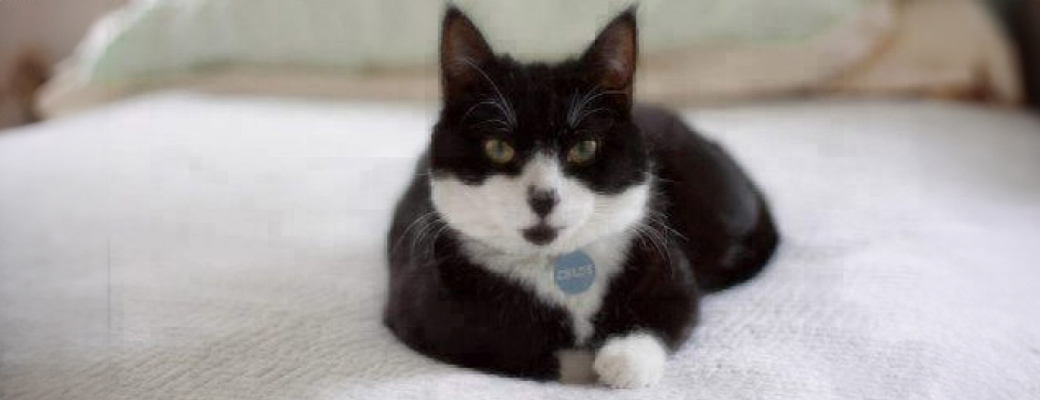
If there’s any cat born ready to stroll down the red carpet, it’s definitely the tuxedo cat in all his black and white glory. This feline gets its name from its unique “tuxedo jacket” coat: there is usually a triangle-shaped white patch on the chest and white paws, then black fur everywhere else. Sometimes they even have interesting patterns on their face that make it look like they have a mustache, beard, or masquerade-esque mask!
Personality and Physical Description
Undoubtedly dapper, the tuxedo cat is known for being laid-back, sociable, and friendly, and she approaches many situations with sweet curiosity and kindness. They’re technically considered a type of “bicolor” or “piebald” cat, and can actually be an assortment of breeds. For example, British and American shorthairs, Persians, Sphynx, and Maine Coons can all have tuxedo coloring; and mixed breeds can have the quintessential patterning, as well. Because they can be a variety of breeds, the tuxedo cat’s size and lifespan varies.
Regardless of the breed they belong to, research and anecdotal information from vets and owners have found that tuxedo cats tend to be vocal, inquisitive, playful, and highly intelligent. They are great companions who adore their owners, enjoy a good cuddle session, love to play, and have a dog-like disposition. Also, they have mastered the ability to remain super chill even in intense environments.
History and genetics of tuxedo cats
The actual history of the tuxedo cat depends on the breed. However, we do know that roughly 70% of cats depicted in royal Egyptian tombs had the tuxedo coloring, which means this pattern of fur goes back a long way. Another interesting fact is that Western Europe saw its first tuxedo cat in the 1800s, and it was a longhaired Persian!
Whether a cat ends up with tuxedo coloring boils down to having the right set of genetics (the genetics can get a little hairy, but this article by The Nest does a great job of breaking it down if you’re curious). To make a long story short, know that the cat must possess either a dominant piebald (white fur) gene, or an incomplete dominant gene in order to be born with black and white fur. From there, how that coloring presents itself will determine whether or not the cat is a true tuxedo.
Common health issues of tuxedo cats
Common health issues for a tuxedo cat depends greatly on the breed. In general, you should stay on top of veterinary appointments and maintain a grooming schedule. Keep an eye out for anything amiss — such as sudden change in temperament and appetite, or atypical litter box behavior.
Fun Facts about tuxedo cats
- Chelsea Clinton owned a tuxedo cat that, aptly, lived at the White House from 1993 through 2001. His name was Socks and he lived to be 20 years old.
- Another famous tuxedo cat is The Looney Toons’ Sylvester — formally Sylvester J. Pussycat Sr. — who’s known for his lisp and love-hate relationship with Tweety Bird.
- A tuxedo cat named Sparky received the biggest inheritance left to a feline to date. The amount? A whopping 3 million.
- In the UK, tuxedo-colored cats are also referred to as Felix cats, named after a famous kitty in a 1920s silent cartoon.
Share a picture of your dapper tuxedo with us on Instagram by tagging @gohealthypaws. And if you aren’t already part of the Healthy Paws family, look into getting a free pet insurance quote to help safeguard not just your special cat or kitten, but your wallet too.

Meet Our Writer
Wendy Rose Gould
Wendy Rose Gould is a freelance lifestyle reporter based in Phoenix, Arizona. She has been in journalism for over a decade, and has been freelancing almost that entire time. In addition to lifestyle reporting, she also works with brands to create marketing content for their websites and blogs.