
Learn how and why veterinary bills are increasing, and how a Healthy Paws plan can help.

Healthy Paws protects pets like family and makes peace of mind and more happy, healthy moments possible. Pet parents and industry reviews tell the story.

Rescue organizations across the U.S. received support for adoption efforts and ongoing care for vulnerable pets.

Make their food irresistible with the freshest nutritionally-balanced ingredients.
The Healthy Paws Community is a vibrant, social-first space for all pet lovers—whether you’re a Healthy Paws policyholder or simply passionate about pets. As a Pack Member, you can share your favorite pet photos and videos, connect with fellow pet parents, and stay informed with the latest Healthy Paws news and tips. It’s a welcoming place focused on connection, positivity, and celebrating the joy pets bring to our lives!
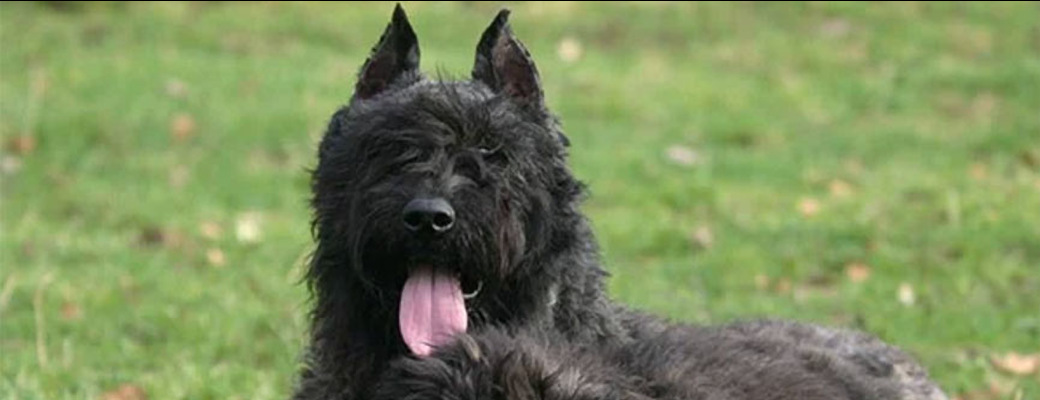
Introduction to Bouviers des Flandres
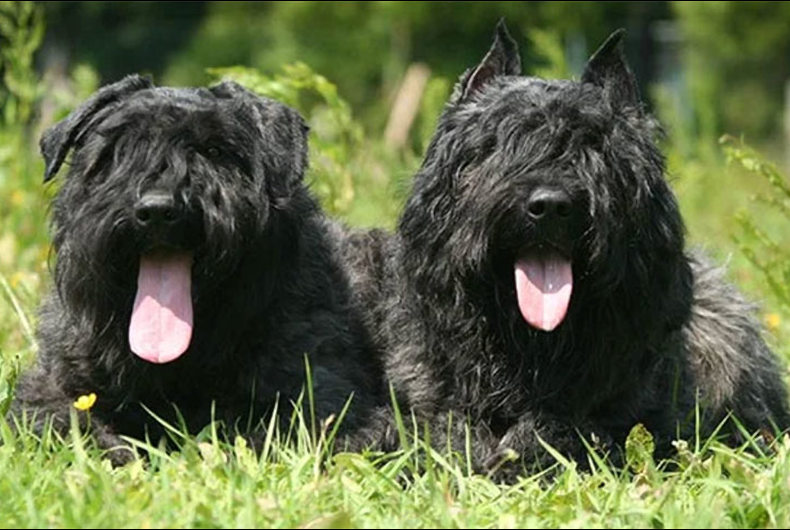
The bouvier des Flandres dog breed is hardworking and known for being an excellent watchdog. Its name means “cowherd from Flanders” and originates from the Flanders region of Belgium and the French northern plain. This sturdy and robust dog has a large head, beard, mustache, and intelligent mind. They’re lovable, versatile dogs on the farm or at home as family companions.
Is the bouvier des Flandres the right dog for your household and lifestyle? We cover everything you need to know about the bouvier des Flandres in this Healthy Paws breed guide.
Size of Bouviers des Flandres
When fully grown, a bouvier des Flandres male stands 24.5 to 27.5 inches tall, and an adult female is 23.5 to 26.5 inches tall. These dogs weigh between 70 and 110 pounds, with males on the heavier end of the scale. They are mostly done growing by age one but may gain a bit more weight in their second year of life.
Here’s how big you can expect your bouvier des Flandres to get as the dog grows from puppyhood to adulthood:
| Weight Chart | 3 months | 6 months | 9-12 months | 24 months |
| Male bouviers des Flandres | 40 – 50 lbs. | 70 – 80 lbs. | 95 – 110 lbs. | 95 – 120 lbs. |
| Female bouviers des Flandres | 35 – 45 lbs. | 65 – 75 lbs. | 80 – 90 lbs. | 80 – 100 lbs. |
Characteristics of Bouviers des Flandres
Some of the most important things to know about bouvier des Flandres dogs are that they need a lot of exercise, are easy to train, and are rugged adventurers. These dogs have strong personalities and are confident and fearless. They’re natural athletes but also affectionate and love hanging out indoors with their favorite people.
You should also know that these dogs have a protective nature, can be stubborn, aren’t the best for first-time or timid dog owners, and are likely to track dirt through the house.
As you get to know a bouvier des Flandres’ personality, here’s what you can expect based on the breed characteristics:
| Breed Characteristic | Level (High, Medium, Low) |
| Affectionate with People | Medium |
| Good with Kids | Medium |
| Good with Pets | Medium |
| Need for Exercise | High |
| Energy Level | High |
| Intelligence Level | High |
| Able to Be Trained | High |
| Amount of Barking | Medium |
| Amount of Shedding | Medium |
History of Bouviers des Flandres
In the native language, the bouvier des Flandres has been referred to as dirty beard, cow dog, and cattle driver. The history of the dog dates back to Medieval times in what is now Belgium, France, and the Netherlands. Belgium and France both claim the dog as a breed native to their countries. Bouviers des Flandres were used to move cattle, herd livestock, guard, serve as watchdogs, and pull carts.
The dogs’ homeland was largely destroyed during World War I, but the Belgian army kept the breed alive. Bouviers des Flandres served as courageous war dogs, police K-9s, and guide dogs for people who were blind. Fanciers of the breed formed the American Bouvier des Flandres Club in 1963.
Bouviers des Flandres Standard Information
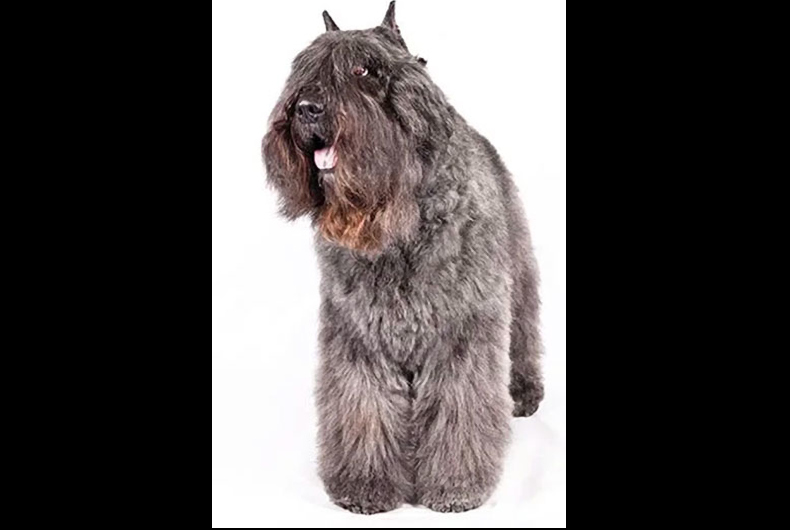
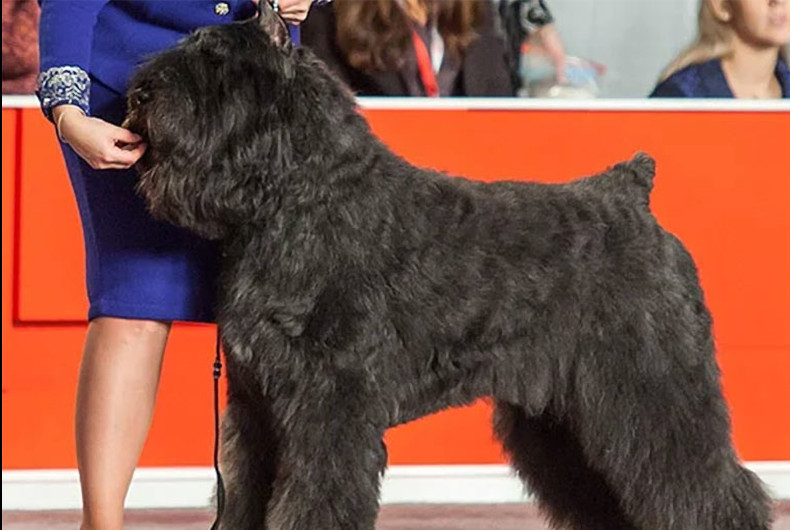
The breed standard for the bouvier des Flandres describes the ideal dog and characteristics by which dogs are judged at shows. For example, the general appearance of the dog includes having a powerful build, rugged appearance, harsh double coat, and excellent tracking and guiding ability.
Here is an overview of the breed standard information for bouvier des Flandres:
Head:
- Impressive in scale
- Beard and mustache
- Bold and alert expression
- Dark brown eyes
- Ears are high and alert
- Skull is flat and slightly less wide than long
- Muzzle is broad and strong
- Incisor teeth meet in a scissors bite
Neck, Topline, Body:
- Strong and muscular neck
- Back is short, broad, and well-muscled
- Chest is broad
- Ribs are deep and well-sprung
- Tail should be docked, leaving two or three vertebrae
Forequarters:
- Strong-boned, straight, and muscular
- Shoulders are long and muscular
- Elbows are close to the body and parallel
- Pasterns are short and slightly sloped
- Feet are rounded and compact with strong, black nails and thick, tough pads
Hindquarters:
- Firm and well-muscled
- Legs are moderately long
- Thighs are wide and muscular
- Dewclaws should be removed
- Feet are the same as in the front
Coat:
- Tousled double coat that can withstand inclement weather
- Outer hairs are rough and harsh
- Inner hairs are fine, soft, and dense
- Coat may be trimmed slightly to accent the body
- Mustache and beard are very thick
- Eyebrows have erect hairs that accentuate the eye shape
Color:
- Fawn to black, from salt and pepper to gray and brindle
- Small white star on the chest is allowable
Gait:
- Free, bold, and proud movement
- Tend to single-track at a fast trot
- The back remains flat and firm in a trot
Caring for Bouviers des Flandres
Bouvier des Flandres dogs are energetic and do best with active pet parents and families who love being outdoors. They are gentle giants with strong personalities and want a job to do.
Here are some general tips for taking the best care of a bouvier des Flandres:
Best Living Environments:
- Homes with large backyards
- Active families that enjoy being outside
- Families with older kids
- Families without small pets, due to high prey drive
Type of Exercise:
- 60 to 90 minutes of exercise daily
- Hikes with family members
- Time running around outside in a fenced backyard
- Swimming in a lake
Mental Enrichment:
- Agility courses
- Tug of war
- Frisbee games
Training Strategies:
- Socialize at an early age to minimize overprotective tendencies
- Practice leash training to curb strong herding instincts
- Potty training and basic commands come easily
- Use a mix of positive reinforcement and firm corrections
- Mix up training activities to prevent boredom
Grooming Tips:
- Can be time-consuming to groom regularly
- Brush at least once weekly to prevent mats and tangles
- Slicker brushes and metal de-matting combs do well
- Bathe at least once a month
- Trim nails after baths
- Clean ears weekly
- Brush teeth daily
Common Health Problems of Bouviers des Flandres
The average life expectancy of a bouviers des Flandres is 10 to 12 years. But you can help your dog live a long, happy, and healthy life by keeping up with regular vet visits and making the important investment of pet insurance to help pay costly vet bills.
These are some of the most common health issues that arise with bouvier des Flandres:
- Hip dysplasia
- Elbow dysplasia
- Cancer
- Cataracts
- Glaucoma
- Ectropion (eyelid rolling out or sagging)
- Entropion (eyelid rolling inward)
- Hypothyroidism
- Epilepsy
- Gastric torsion (bloat)
- Megaesophagus
- Liver shunt
- Subvalvular aortic stenosis (heart abnormality)
- Addison’s disease (adrenal gland condition)
Diet and Nutrition for Bouviers des Flandres
It’s important to pay close attention to your bouviers des Flanders’ diet because these dogs are prone to bloat and obesity. They need sufficient physical activity to maintain a healthy weight and require three to five cups of dog food daily when fully grown. Feed a high-quality, veterinarian-recommended, large breed dog food, and you’re your dog according to the manufacturer’s recommendations (using a measuring cup). Your dog’s daily diet should be divided into morning and evening meals. Also, limit the number of treats you give your bouviers des Flanders to prevent overeating and obesity-related health conditions.
Where to Adopt or Purchase Bouviers des Flandres
The American Bouvier des Flanders Club is the national breed club for these dogs and a resource for finding a reputable breeder. The American Bouvier Rescue League offers adoption opportunities for the breed to find bouviers loving homes. You might also consider asking your local pet shelters if any bouviers or mixed bouvier breed dogs are available for fostering or adoption near you.
Related Breeds
If you are drawn to the bouviers des Flandres because of its size, characteristics, and temperament, then you might also be interested in similar and related dog breeds, such as these:
- Belgian Tervuren
- Black Russian terrier
- Briard
- Giant schnauzer
- Beauceron
- Hovawart
Pet Insurance for Bouviers des Flandres
To help take the best care of your bouviers des Flanders, Healthy Paws offers dog insurance with no maximum annual or lifetime payouts. Our straightforward and affordable pet insurance plan covers new accidents, injuries, cancer, emergency care, breed-specific conditions, genetic and hereditary conditions, and alternative care. With flexible premium and deductible options, plus no enrollment or administrative fees, we take the guesswork out of paying for expensive veterinary bills when your bouviers des Flanders is having a bad day.
Please contact us at 855-898-8991 if you have any questions about how pet insurance works, or request your bouviers des Flanders pet insurance quote on our website today!
Authors
Stacy Painter
Stacy has always been an animal lover and has worked in the pet industry and pet insurance specifically for over a decade. As a writer since early childhood, content writing for Healthy Paws pet insurance was a natural career path to combine her two passions. She currently lives in Florida with her boyfriend and Taiwanese rescue dog, Kaya.
Cathy Barnette, DVM
Cathy Barnette is a veterinarian and freelance writer based in Punta Gorda, FL. Cathy creates educational content for pet owners and veterinary team members. She is passionate about making complex medical information accessible to pet owners, allowing them to partner with their veterinarians to make informed decisions about their pets’ health. In addition to her human family members, she shares her home with one dog, two cats, and a dove. Cathy Barnette on LinkedIn