

Learn how and why veterinary bills are increasing, and how a Healthy Paws plan can help.

Healthy Paws protects pets like family and makes peace of mind and more happy, healthy moments possible. Pet parents and industry reviews tell the story.

Rescue organizations across the U.S. received support for adoption efforts and ongoing care for vulnerable pets.

Make their food irresistible with the freshest nutritionally-balanced ingredients.

The Healthy Paws Community is a vibrant, social-first space for all pet lovers—whether you’re a Healthy Paws policyholder or simply passionate about pets. As a Pack Member, you can share your favorite pet photos and videos, connect with fellow pet parents, and stay informed with the latest Healthy Paws news and tips. It’s a welcoming place focused on connection, positivity, and celebrating the joy pets bring to our lives!

Introduction to Saint Bernards
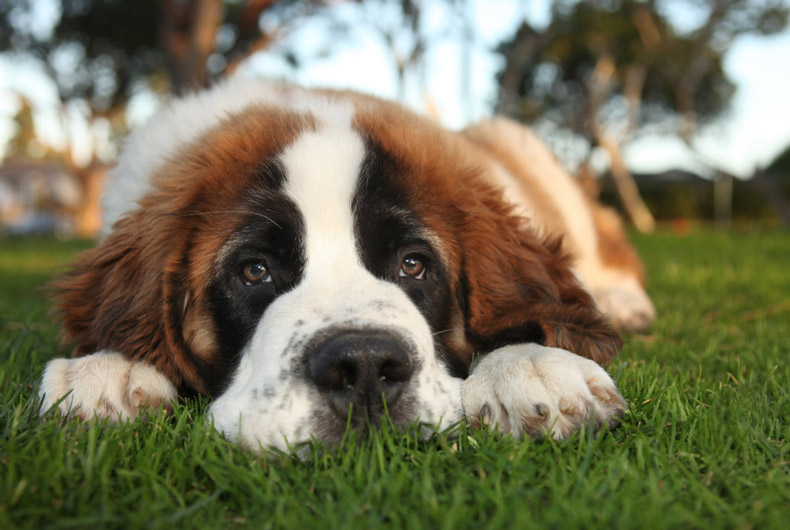
Known for its enormous size and family-friendly demeanor, the Saint Bernard is a beloved dog breed in the Working Group of dogs. Saint Bernards are charming, curious, and playful. They are gentle giants with origins in the Swiss Alps and are sometimes called “nanny dogs” because of their calm and patient personalities perfect for being around children.
Read on to learn more about this dog breed and whether a Saint Bernard is a good fit for your household and lifestyle.
Size of Saint Bernards
The most defining characteristic of the Saint Bernard is the dog’s size, as adult males weigh 140 to 180 pounds, and adult females weigh 120 to 140 pounds. Adult males stand 28 to 30 inches tall, while adult females are 26 to 28 inches in height. Most Saint Bernards are done growing by age two; however, others may continue maturing until four years of age.
Here’s a chart describing how big you can expect your Saint Bernard to get as the dog grows from puppyhood to adulthood. Female weights are at the low end of the range, and male weights are at the upper end of the range.
| Weight Chart | 3 months | 6 months | 12 months | 18 months | 24 months |
| Female and Male Saint Bernards | 48-55 lbs. | 88-100 lbs. | 136-165 lbs. | 152-181 lbs. | 161-189 lbs. |
Characteristics of Saint Bernards
Saint Bernards are among the gentlest dog breeds in the world. They do great in cold weather because of how the dogs were originally bred, but they don’t tolerate hot weather well at all. Saint Bernards are friendly to everyone they meet, tend to drool a lot, and have a high potential for weight gain. Their exercise needs are moderate, but they are quite playful and love spending time with family members.
As you get to know a Saint Bernard’s personality, here’s what you can expect based on his or her breed characteristics:
| Breed Characteristic | Level (High, Medium, Low) |
| Affectionate with People | High |
| Good with Kids | High |
| Good with Pets | High |
| Need for Exercise | Medium |
| Energy Level | Medium |
| Intelligence Level | Medium |
| Able to Be Trained | Medium |
| Amount of Barking | Low |
| Amount of Shedding | Medium |
History of Saint Bernards
The history of the Saint Bernard dog dates back many centuries ago when Bernard of Menthon, a monk, created a hospice to help pilgrims on their journey from the Alps to Rome. The pilgrimage was treacherous, with snow drifts 40 feet tall and elevations greater than 8,000 feet above sea level. The monks bred powerful working dogs that could help find and rescue people making this journey who had succumbed to devastating snow drifts and avalanches. The dogs excelled at search and rescue work in bitterly cold and snowy conditions.
The Saint Bernard breed began looking taller and thinner due to crossbreeding as they made their way to other countries outside of Switzerland. The American Kennel Club recognized this breed in 1885, and the Saint Bernard Club of America formed in 1888.

Saint Bernard Standard Information
The general appearance of a Saint Bernard is muscular, strong, and powerful in every part of the body. These dogs have intelligent expressions and a mellow demeanor. More information about the Saint Bernard’s physical characteristics can be found in the established breed standard information for Saint Bernards.
Here are some highlights:
Head:
- Massive skull that is wide and slightly arched
- Supra-orbital ridge strongly developed
- Short muzzle that does not taper
- Medium size ears high set and with a strongly developed burr
- Eyes set more to the front than sides, medium size and dark brown
- Black roof of the mouth
Neck, Topline, Body:
- High and strong neck when alert
- Indentation between head and neck
- Well-pronounced dewlap of the throat and neck
Forequarters:
- Well-arched chest that is moderately deep
- Very broad back
- Belly set off from the powerful loin section
Hindquarters:
- Well-developed with muscular legs
- Tail long, heavy, and ending in powerful tip
Coat:
- Dense, short hair that lies smooth and tough
- Slightly busy coat at thighs
- Tail appears bushy
Color:
- White with red, red with white, various shades of white, or brindle patches with white marking
- Red or brown-yellow coloration acceptable
- White chest, feet, tip of tail, noseband, collar
- Never a single color or without white areas
Caring for Saint Bernards
It may surprise some people to learn that Saint Bernards can live healthy and happy lives inside apartments, despite their size. This is only true, however, if they are properly exercised. They don’t need as much exercise as other Working Group dog breeds. These dogs remain pretty inactive while indoors but need outside time to get their exercise in. They are known to wheeze and snore. Otherwise, they’re easy-going and mature but have substantial grooming needs to keep them healthy. There are shorthaired and longhaired types of Saint Bernards, which makes a difference in how they are groomed.
Here are some general tips for taking the best care of a Saint Bernard:
Best Living Environments:
- Apartments okay if properly exercised
- Houses with fenced yards are an ideal option
- Good for retirees and families with kids
- Do not leave outside during hot weather (especially unattended)
Type of Exercise:
- Daily walks around the neighborhood
- Not too much exercise at one time
- Short walks and play sessions are best for puppies
- Not ideal for running or long-distance hiking
- Limit exercise during warm weather to prevent heat exhaustion and heatstroke
Mental Enrichment:
- Indoor time spent with loving family members
- Walks to see and smell new things
Training Strategies:
- Do crate training and housetraining early
- At least 15 minutes per day practicing skills at home to reinforce obedience class training
Grooming Tips:
- Brush about three times per week with a rubber brush or hound glove (for shorthaired dogs) or a pin brush (for longhaired dogs)
- Use a shedding blade to remove loose hair during shedding season
- Spray detangler behind the ears if fur becomes matted here, then work the solution through with a comb or fingers
- Don’t need frequent baths, and easiest to bathe indoors during warm weather
- Brush teeth daily
- Trim nails twice per month

Common Health Problems of Saint Bernards
As a general rule, very large breeds tend to have lower life expectancies compared to smaller breeds. The average life expectancy of a Saint Bernard is eight to 10 years.
These are some of the most common health issues that arise with Saint Bernards:
- Hip dysplasia
- Elbow dysplasia
- Eyelid conditions, like entropion and ectropion
- Cataracts
- Hypothyroidism
- Epilepsy
- Dilated cardiomyopathy (heart condition)
- Gastric dilatation-volvulus (bloat)
- Allergies
- Addison’s disease (hormonal condition)
Diet and Nutrition for Saint Bernards
Even though Saint Bernards are among the largest dogs that exist, they do not need more food than every other dog breed. In fact, an adult Saint Bernard only needs five to six cups of high-quality dry dog food daily, split into morning and evening meals. Each food differs in caloric density, so follow the feeding guide on your dog food label. This breed is prone to obesity, so always measure out your Saint Bernard’s food rather than leaving food out all the time for the dog to graze upon.
Where to Adopt or Purchase Saint Bernards
The Saint Bernard Club of America is the parent club of this breed. It offers resources for breed-related education, breeder referrals, and advice about showing dogs and participating in events. There’s also the Saint Bernard Rescue Foundation that can help you with adopting a Saint Bernard in need of a loving home. Saints of the West Rescue, Colorado Saint Bernard Rescue, and Saint Bernard Rescue Washington are examples of regionally focused rescue groups that focus on this specific dog breed.
Related Breeds
The Saint Bernard is just one of several breeds of dogs that originated in Switzerland. You might be interested to learn more about other Swiss dogs, too, before deciding to adopt or purchase a new pet. If you are a fan of large dogs in general, there are other massive molosser-type breeds that may appeal to you.
Here are some breeds to consider:
- Bernese mountain dog
- Greater Swiss mountain dog
- Appenzell cattle dog
- Entlebuch cattle dog
- Great Dane
- English Mastiff
- Tibetan Mastiff
- Caucasian shepherd dog
- Newfoundland
Pet Insurance for Saint Bernards
To make the very most of the years you have with your beloved Saint Bernard, it is important to have pet insurance so that you can get your dog the necessary medical care without finances being a determining factor. Healthy Paws offers Saint Bernard pet insurance with a fast and easy claims process and one easy-to-understand policy with no costly add-ons. This coverage comes in handy whenever your Saint Bernard gets injured in an accident, becomes sick, or begins showing signs of a genetic or breed-specific condition.
Request your Saint Bernard insurance quote on our website today for peace of mind about your gentle giant’s health and longevity.