

Learn how and why veterinary bills are increasing, and how a Healthy Paws plan can help.

Healthy Paws protects pets like family and makes peace of mind and more happy, healthy moments possible. Pet parents and industry reviews tell the story.

Rescue organizations across the U.S. received support for adoption efforts and ongoing care for vulnerable pets.

Make their food irresistible with the freshest nutritionally-balanced ingredients.
The Healthy Paws Community is a vibrant, social-first space for all pet lovers—whether you’re a Healthy Paws policyholder or simply passionate about pets. As a Pack Member, you can share your favorite pet photos and videos, connect with fellow pet parents, and stay informed with the latest Healthy Paws news and tips. It’s a welcoming place focused on connection, positivity, and celebrating the joy pets bring to our lives!

Introduction to Newfoundlands
One of the most beloved breeds of dogs in the world is the Newfoundland, a dog that got its name from its origins in Newfoundland, Canada. This is a massive dog that can weight more than a human adult, with a powerful work ethic to match. Yet these are well-tempered dogs that make excellent family companions and have even been called “nanny dogs” because of how good they are with children.
Newfoundlands are among the largest dog breeds that exist, which can pose unique challenges for people who bring them into their homes. But if you’re ready for a large dog with lots of love to give, then read on to learn more about the Newfoundland breed and how to take the best care of your dog’s health.
Size of Newfoundlands
The Newfoundland’s size is one of its most defining characteristics since this dog reaches an adult weight between 130 to 150 pounds for males and 100 to 120 pounds for females. The average adult male Newfoundland stands 28 inches tall, while the average adult female is 26 inches tall.
Unlike many dog breeds, Newfoundlands don’t typically stop growing until about the age of two years. This is well after most dog breeds have reached their adult weight and height. Becoming overweight is a significant risk for large dog breeds, such as the Newfoundland. Therefore, pet parents must keep a close check on Newfoundlands’ weight and discuss diet and exercise strategies with a veterinarian.
Here’s how big you can expect your Newfoundland to get as the dog grows from puppyhood to adulthood:
| Weight Chart | 3 months | 6 months | 9 months | 12 months | 24 months |
| Male Newfoundlands | 41-54 lbs. | 74-87 lbs. | 102-114 lbs. | 114-130 lbs. | 130-150 lbs. |
| Female Newfoundlands | 38-46 lbs. | 59-71 lbs. | 75-84 lbs. | 92-106 lbs. | 100-120 lbs. |
Characteristics of Newfoundlands
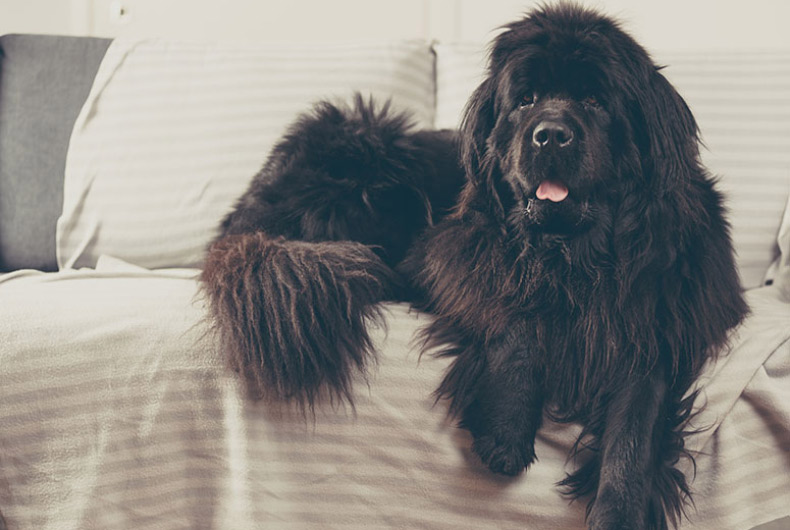
Newfoundlands are hardworking dogs that are strong and responsive to people. They are mild mannered and gentle giants that are loyal and devoted to the people they love. These dogs enjoy both land and water, and they require exercise to maintain a healthy weight and cardiovascular system. Newfoundlands do well in cold weather but not hot weather, and they do not like being left alone for long periods of time. These affectionate dogs are known to be big shedders and heavy droolers, but they’re also easy to train and very willing to please their family members.
As you get to know a Newfoundland’s personality, here’s what you can expect based on his or her breed characteristics:
| Breed Characteristic | Level (High, Medium, Low) |
| Affectionate with People | High |
| Good with Kids | High |
| Good with Pets | Medium |
| Need for Exercise | Medium |
| Energy Level | Medium |
| Intelligence Level | Medium |
| Able to Be Trained | High |
| Amount of Barking | Medium |
| Amount of Shedding | High |

History of Newfoundlands
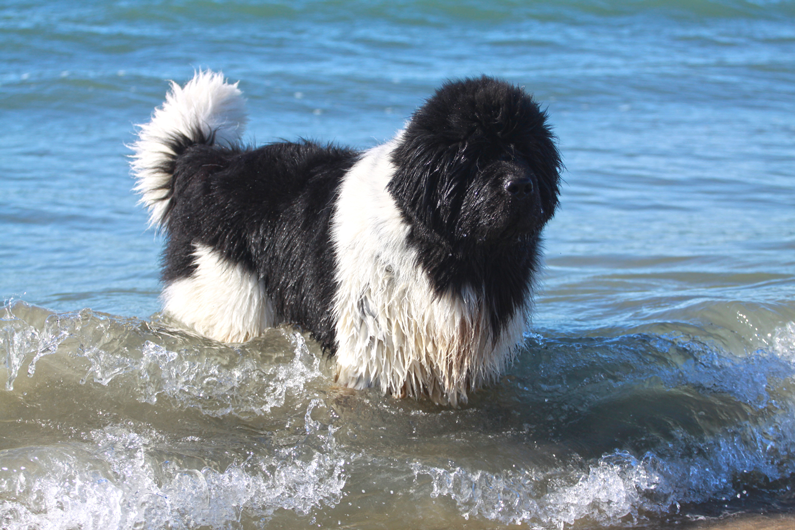
As their name suggests, Newfoundlands originated in Newfoundland, Canada and were shipboard working dogs for Canadian fishermen. These dogs became prized sea dogs because they are great swimmers with partially webbed feet. They are also strong enough to actually save a man from drowning after falling overboard a boat! There have been many legends passed down through the generations about Newfoundland dogs who served as rescuers in the cold waters of the northern Atlantic Ocean.
Newfoundlands have worked to haul fishing nets off boats and carts of fish to the market. They are wonderfully devoted to their human companions and have been used for hunting and guarding tasks as well. In addition to their presence in North America, Newfoundlands are popular in Europe and were extensively bred in England once exported overseas.
Over the years, the Newfoundland has been featured in books and television shows. For example, there was a fictional Newfoundland dog in Peter Pan who served as a nanny for the Darling family. This representation is pretty accurate too since Newfoundland are gentle and loving to children as natural protectors.
Newfoundland Standard Information
The American Kennel Club has established breed standard information for the Newfoundland so that these dogs can be judged at shows and competitions. Overall, this sweet-dispositioned dog is devoted, can serve many purposes, and is capable of hard work and even saving lives. Newfoundlands have a thick coat, a strong muscular build, and a dignified appearance. Any deviation from these characteristics is considered to be a fault for the breed.
Here is an overview of the breed standard information for Newfoundlands:
Head:
- Massive, broad skull, slightly arched crown
- Soft expression with intelligence and dignity
- Clean cut muzzle, broad throughout its length
- Ears relatively small and triangular
- Eyes are dark brown
- Teeth have a scissors or level bite
Neck, Topline, Body:
- Strong and well set neck on the shoulders
- Back is strong, broad, and muscular
- Tail set follows natural line of the croup
Forequarters:
- Shoulders muscular and well laid back
- Elbows directly below highest point of withers
- Feet proportionate to body
- Dewclaws may be removed
Hindquarters:
- Powerful, muscular, and heavily boned
- Hocks well let down
- Feet similar to front feet
- Dewclaws should be removed
Coat:
- Flat, water-resistant, double coat
- Outer coat is coarse and moderately long
- Undercoat is soft and dense
- Hair on face and muzzle is short and fine
Color:
- Color secondary to type, soundness, and structure
- Can be black, brown, gray, and white and black mixed
Gait:
- Good reach, strong drive, effortless power
- Smooth and rhythmic
- Balance of front and rear
- Slight roll of the skin is characteristic of this breed during movement
Caring for Newfoundlands
The Newfoundland is not an apartment dog and needs ample space to move around a home. This dog needs a moderate amount of exercise, and Newfoundlands thrive in areas where they can both walk on land and swim in the water. A Newfoundland loves a good adventure, so pet parents should stimulate the dog’s body and mind with plenty of time exploring the great outdoors.
Here are some general tips for taking the best care of a Newfoundland:
Best Living Environments:
- Larger homes with yards
- Not ideal for small apartments
- Great with children and retirees
Type of Exercise:
- Moderate amount of exercise daily
- Walks are generally better than runs for this breed
- Swimming in safe bodies of water
- Trail hiking with family members
Mental Enrichment:
- Hikes with interesting things to sniff and see
- Cuddles and affection from family members at home
- Dog sports and agility training
Training Strategies:
- Easy to train and eager to please
- Quick learners with training exercises
- Start training early to prevent laziness later in the dog’s life
Grooming Tips:
- These are heavy shedding dogs
- Dogs will blow their coats in the spring and fall
- Needs to be brushed daily
- Wash fur regularly whenever debris collects in the fur or it develops an odor
- Newfoundlands are prone to drooling

Common Health Problems of Newfoundlands
As a general rule, very large dog breeds tend to have lower life expectancies than smaller breeds. The average life expectancy for a Newfoundland is nine to 10 years. The national breed club for the Newfoundland recommends that these dogs get tested with a hip evaluation, elbow evaluation, cystinuria DNA test, and cardiac exam, and that breeders consider testing for patellar luxation, ocular (eye) disease, and hypothyroidism.
These are some of the most common health issues that arise with Newfoundlands:
- Addison’s disease (adrenal gland hormonal condition)
- Cataracts
- Subvalvular aortic stenosis
- Epilepsy
- Cherry eye
- Hip dysplasia
- Elbow dysplasia
- Patellar luxation
- Hypothyroidism
- Cancer
- Gastric torsion
- Cystinuria
- Ruptured anterior cruciate ligament
As you can see from this list of examples, the Newfoundland is prone to quite a few medical issues conditions. At Healthy Paws, we are pleased to offer pet health insurance that covers genetic and hereditary conditions, as well as breed-specific conditions, emergency care, accidents, illnesses, and alternative care.
Diet and Nutrition for Newfoundlands
The Newfoundland is a big dog, so you can expect to feed this breed big meals. The recommended daily amount of food for an adult Newfoundland is four to five total cups of dry dog food per day, though the exact quantity will vary based on the caloric density of your dog’s diet. This total amount should be divided into two meals per day, and dogs should not be fed right before or after exercise to prevent gastric torsion, also known as bloat.
Where to Adopt or Purchase Newfoundlands
Are you interested in adopting or purchasing a Newfoundland of your very own? Here are some resources to consider in your search for a new dog:
Related Breeds
If you love huge dog breeds like the Newfoundland, then you might also be interested to learn about other similar and related breeds of dogs. Here are some breeds to read more about before deciding on a type of dog to bring into your life and welcome to your home.
- Bernese mountain dog
- Saint Bernard
- Estrela mountain dog
- Leonberger
- Labrador retriever
Pet Insurance for Newfoundlands
In addition to ample exercise, plenty of quality time with family members, and close attention to diet, one of the best things you can do to take care of your Newfoundland’s health is to get a Healthy Paws pet insurance plan. We offer Newfoundland health insurance that allows you to see any licensed vet and submit vet bill claims through our convenient app.
Get your Newfoundland insurance quote today to take great care of your furry friend’s health.