

Learn how and why veterinary bills are increasing, and how a Healthy Paws plan can help.

Healthy Paws protects pets like family and makes peace of mind and more happy, healthy moments possible. Pet parents and industry reviews tell the story.

Rescue organizations across the U.S. received support for adoption efforts and ongoing care for vulnerable pets.

Make their food irresistible with the freshest nutritionally-balanced ingredients.
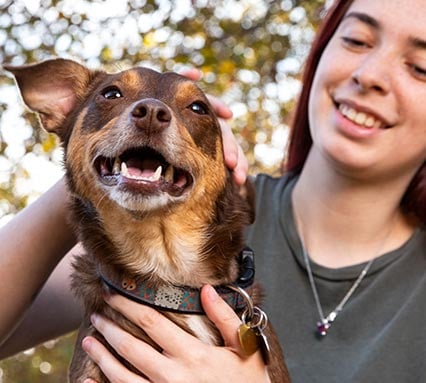
The Healthy Paws Community is a vibrant, social-first space for all pet lovers—whether you’re a Healthy Paws policyholder or simply passionate about pets. As a Pack Member, you can share your favorite pet photos and videos, connect with fellow pet parents, and stay informed with the latest Healthy Paws news and tips. It’s a welcoming place focused on connection, positivity, and celebrating the joy pets bring to our lives!

Key Takeaways:
- Payouts for Healthy Paws pet parents increased 32% for accidents, illnesses, surgeries, and chronic conditions over the last five years
- Insured pet parents are 47% more likely to pursue all recommended treatments regardless of cost
- 54% of insured pet owners said their pet insurance reimbursement covered at least half the cost of a significant veterinary expense
As you rush your precious Bella or Oliver through the emergency vet doors, the last thing on your mind should be turning down essential, life-saving care due to financial strain. Knowing the reimbursement rate for pet insurance including payouts and how it stacks up against ever-increasing veterinary costs, can help save stress and bring a sigh of relief when your fuzzy family needs vital treatment.
What is The Average Reimbursement Rate for Pet Insurance Owners in 2025?
Ahead of filing a claim and before you’re looking to a vet for support with an accident, injury, or illness, it’s beneficial to get familiar with your pet insurance policy’s reimbursement, or , percentages, which are commonly in the range of 70%, 80%, and 90%.
That means your pet insurance reimbursement helps with 70% to 90% of covered conditions on your vet bill depending on your plan. As an example, Healthy Paws’ most common plan selection is 80% reimbursement with a $500 deductible.
Let’s say your five-year-old husky, Coco, eats part of an electrical cord causing an intestinal blockage that needs $2,500 emergency surgery. Depending on your pet insurance benefits and if you already paid/met your annual deductible, here are sample payouts of what you and Coco may receive as your pet insurance reimbursement and total out-of-pocket paid on a fully covered $2,500 vet bill:
Total Covered | Reimbursement Percentage | Plan Pays You Back (Reimbursement) | Annual Deductible (Must Be Paid/Met First) | Plan Pays You Back (Reimbursement) | Your Total Out-of-Pocket (Vet Bill + Deductible) | |
$2,500 | 70% | $1,750 | $500 | $1,250 | $1,250 | |
$2,500 | 80% | $2,000 | $500 | $1,500 | $1,000 | |
$2,500 | 90% | $2,250 | $500 | $1,750 | $750 |
How Do Insurers Determine a Pre-Existing Condition in Pets?
Using 90% reimbursement as an example, after you pay your vet bill and submit a claim, the total covered amount of the vet bill is multiplied by your reimbursement percentage: $2,500 vet bill multiplied by 0.9 (90% reimbursement) is $2,250.
If you haven’t met/paid your annual $500 deductible, it’s subtracted from $2,250 leaving $1,750 as your claims reimbursement payout. This means you’d have a total out-of-pocket expense of $750. However, if you already met/paid your $500 annual deductible, your pet insurance reimbursement would be $2,250, with a total out-of-pocket expense of $250.
If you chose a plan with a lower deductible, like $250, with the same 90% reimbursement rate, your would be $2,000 ($2,500 vet bill multiplied by 0.9 reimbursement percentage minus $250 deductible) and you’d pay $500 out-of-pocket.
The lower your annual deductible, the less you pay out-of-pocket for emergencies, illnesses, injuries, and accidents. higher your pet insurance reimbursement percentage, the larger portion of the vet bill your
Your pet insurance claims payout may also be affected by annual limits: the highest amount of money per year your pet insurance benefits company will pay toward covered vet bills.
insurers offer policies with limits of $5,000 and $7,000. And once your pet insurance claims reimbursements reach your plan’s annual limit, no matter the time of year, that’s the maximum amount your insurance will reimburse you for covered vet expenses. Your limit only resets when your pet insurance renews for another year of coverage.
Your reimbursement percentage affects how high your pet insurance payout will be, and your annual limit puts a maximum on the amount of reimbursement, or total claim payouts, that you’ll receive during the year of your policy coverage.
That’s why more pet parents are reviewing reimbursement rates for pet insurance alongside deductibles and annual limits to pick the right combination to safeguard their pet’s lifelong health and their family’s financial exposure.
Average Pet Insurance Claim Payouts by Treatment Type
Relieving the pressure of your next unexpected vet visit also comes with understanding common treatment types for dogs and cats, and what may be reimbursed if you’re making tough decisions about their care.
Most Common Health Conditions Dogs, Cats, and Their Pet Parents Face | |
Dog | Cat |
Gastrointestinal | Gastrointestinal |
Otitis / Ear Infection | Dental Disease |
Skin Conditions (Infections, Mass, Dermatitis) | Urinary Tract Infection |
Anxiety / Behavioral / Neurological | Anxiety / Behavioral / Neurological
|
Allergies | Respiratory |
Growth / Mass | Kidney |
Eye and Vision Disorders | Otitis / Ear Infection |
Diarrhea | Endocrinology (Hyperthyroidism) |
Urinary Tract Infection | Vomiting |
Musculoskeletal | Arthritis / Osteoarthritis |
Exam / Wellness | Diabetes |
Vomiting | Eye and Vision Disorders |
Source: North American Pet Health Insurance Association (NAPHIA) 2026 State of The Industry Report
For Healthy Paws-insured pets, the below table shows the most common treatments dogs and cats are covered for and Healthy Paws has paid on average for them, subject to policy terms (e.g., limits, reimbursement percentage, and deductibles).
For instance, with ligament tears, common in German Shepherds and Maine Coons, the average reimbursement for 2025 was $1,056. And for skin and allergy conditions, frequently found in Siamese and Pit Bulls, the average reimbursement was $143.
Healthy Paws’ Pet Insurance For Most Common Treatments | ||
Health Condition | Treatment Reimbursement Paid on Average to Pet Parents in 2025 | Percent Increase in Reimbursement Payouts 2020 to 2025 |
Gastritis | $354 | 1.1% |
Growth/Mass | $795 | 41.1% |
Cruciate Ligament | $1,056 | 15.7% |
Cancer | $819 | 49.4% |
Abdominal | $2,037 | 89.4% |
Pain | $167 | 7.8% |
Skin | $143 | 20.2% |
Heart | $344 | 30.5% |
Foreign Body | $1,541 | 45.1% |
Liver Disease | $313 | 23.1% |
Over the last five years, Healthy Paws Pet Insurance payouts increased by 32% and continued to cover pet accidents, illnesses, surgeries, and chronic conditions despite continually rising vet fees.
Healthy Paws’ Pet Insurance Average Paid Per Claim | |||
Year | Total Claim Reimbursement | Average Reimbursement Paid Per Claim to Pet Parents | Percent Increase in Reimbursement 2020 to 2025 |
2020 | $196,834,249 | $296.49 | - |
2021 | $233,062,402 | $306.90 | 3.5% |
2022 | $263,371,473 | $327.72 | 10.5% |
2023 | $308,498,425 | $347.96 | 17.4% |
2024 | $349,494,041 | $363.96 | 22.8% |
2025 | $344,295,848 | $392.04 | 32.2% |
Over time, you can see that Healthy Paws has continually boosted pet insurance payouts with an average reimbursement in 2025 of $392.04. This reflects increased costs of care. For example, the cost for abdominal surgery for cats increased by 89%, one of the highest increases we’ve seen, with an average claims payout in the amount of $2,037. Or consider the cost of treatment of liver disease in dogs, which saw an average claims payout in the amount of $313, a 23% increase in reimbursement.
The peace of mind gained by knowing average claim payouts, like for gastritis, the number one health condition, and critical diseases like heart and liver disease, means you spend energy comforting your pet instead of fretting over which life-saving services you can afford.
Dogs vs. Cats: Comparing The Average Pet Insurance Payout
No matter if you love cats or dogs (or both) in your family, pet insurance reimbursements aren’t affected by size, breed, or age. They’re based on your specific policy’s deductible, reimbursement rate, and annual limits.
As more pet parents choose to insure their adored furry family, the table below shows growth in pets who have policies, average premium differences between dogs and cats, and the top pet insurance claims paid to each pet type.
Dog and Cat Annual Pet Insurance Claims and Benefits | |||
Dog | Cat | ||
Total Insured Dogs 2025 | 5.23M | Total Insured Cats 2025 | 1.75M |
Increase in Insured Dogs 2021 to 2025 | 61% | Increase in Insured Cats 2021 to 2025 | 140% |
Average Annual Dog Premium | $190-$1,414 | Average Annual Cat Premium | $112-$859 |
Top Dog Claim Paid 2025 | Bernese Mountain Dog, Age 3, $66,600; Condition: Chronic Illness | Top Cat Claim Paid 2025 | American Shorthair, Age 4, $51,600; Condition: Cancer |
Source: North American Pet Health Insurance Association (NAPHIA) 2026 State of The Industry Report
Both dogs’ and cats’ number one health condition is gastrointestinal (GI), which would fall into the number one covered condition, Gastritis. Healthy Paws paid out at $354 on average for these claims. While Healthy Paws reimbursed pet parents for their dogs’ skin conditions $143 on average, cat parents were reimbursed an average of $1,541 for claims for vomiting or ingesting a foreign body.
How 2026 Rising Veterinary Costs Are Impacting Pet Insurance Reimbursements
Some conditions and their pet claims reimbursements might sound high. But that falls right in line with the 31% of pet parents who spent more on their pets than last year, found a 2026 study from Healthy Paws and Money.com, with 28% expecting the years to come to increase costs further.
The financial pinch, states the study, is likely from vet care services rising 43% over the last five years where 29% of pet owners spent at least $100 per month on doctor visits, and another 16% said they spent at least $100 every month on medications and supplements.
In large part because vet bills continue to surge, almost double the amount of pet insurance policies were written from 2021 to 2025; a 20% increase popped from 2024 to 2025 with 7 million pets now insured. Veterinary prices climbed faster than inflation in 2025, and vet price increases have continued to outpace inflation since 2019, shows data from AVMA (American Veterinary Medical Association).
But Healthy Paws enrollees have a benefit bonus: pet insurance reimbursements for these pet parents have kept pace with vet bill growth. The higher the vet costs, the larger the payout from their pet policy.
And starting the financial and health protection as early as possible before vet bills balloon further is what pet parents find after they adopt a [ME14] Access to lower monthly premiums, higher pet insurance reimbursement payments, and knowing that as their dog, Milo, or cat, Millie, ages, they’ll continue to be safely covered when emergencies or accidents happen.
Conclusion/CTA: Substantial Pet Insurance Payouts Accompany Rising Vet Costs in 2026
Reaching $392 paid per claim in 2025, Healthy Paws Pet Insurance reimbursement payouts continue to meet pet parents where they urgent help: Staring at an ever-rising vet bill they’re not sure they can afford for an unexpected accident, illness, surgery, or chronic condition.
The 32% increase in payouts over the last five years from Healthy Paws allowed 47% more pet parents to feel comfortable pursuing all recommended treatments regardless of cost and 54% to say their pet insurance reimbursement covered at least half the cost of a significant veterinary expense.
If you enrolled today with Healthy Paws’ most commonly selected policy, a $5,000 emergency bill with 80% reimbursement and a $500 deductible, would leave you with only $900 out-of-pocket.
Consider evaluating how Healthy Paws Pet Insurance claims and reimbursement options can help you handle the most common health conditions plus sudden emergencies without squeezing your wallet during you and your pet’s most difficult moment.
Healthy Paws, a Chubb Company, is the marketing name used to refer to the pet insurance products underwritten and provided by ACE American Insurance Company, Westchester Fire Insurance Company, Indemnity Insurance Company of North America, ACE Property and Casualty Insurance Company and Atlantic Employers Insurance Company and one or more of their U.S. based Chubb underwriting company affiliates.
Chubb is the marketing name used to refer to subsidiaries of Chubb Limited providing insurance and related services. For a list of these subsidiaries, please visit our website at www.chubb.com. This communication contains product summaries only. Coverage is subject to the language of the policies as actually issued.
These pet insurance products are offered through Chubb Insurance Solutions Agency Inc. (CISA) (California license no. 0D12120). Surplus lines insurance sold only through licensed surplus lines producers. Chubb, 202 Hall's Mill Road, Whitehouse Station, NJ 08889-1600.

Meet Our Writer
Mandy Ellis
Mandy Ellis is an Austin-based freelance pet and insurance content marketing writer, content strategist, messaging and positioning strategist, and fractional CMO working for startups and Fortune 500 companies. In addition to writing for dozens of clients over the last 13+ years, she’s had and loved dogs all her life, including her current Great Dane-mix, Clementine.