

Learn how and why veterinary bills are increasing, and how a Healthy Paws plan can help.


Three rescues across North Carolina and Georgia received donations that made a big impact.

Make their food irresistible with the freshest nutritionally-balanced ingredients.
Introduction to Afghan Hounds
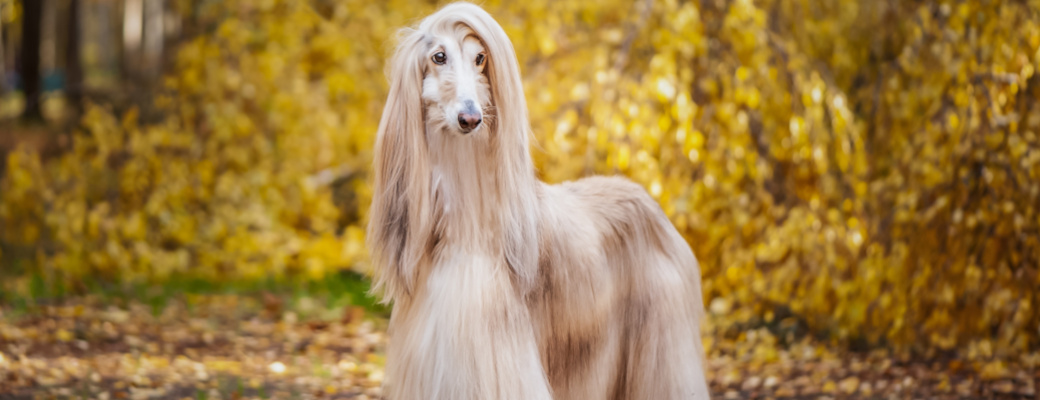
Known for being sweet and independent, Afghan hounds are hound group dogs with iconic and impressive long coats. This attractive dog has a regal appearance and is profoundly loyal. They are among the oldest and most well-established breeds in history and have a glamorous look that will catch the eye of everyone you meet.
Are you considering bringing an Afghan hound into your life through a breeder or rescue program? This Healthy Paws guide covers everything you need to know about Afghan hounds and how to best care for their health.
Get a pet insurance quote for your Afghan Hounds today
Size of Afghan Hounds
Afghan hounds are medium/large-sized dogs that often weigh between 50 and 60 pounds when fully grown. However, some dogs of this breed can get heavier. They stand 25 to 27 inches tall as adults. The breed is known for its slim physique, which is covered in a long, flowing coat for a sense of grace and elegance.
Here’s how big you can expect your Afghan hound to get as the dog grows from puppyhood to adulthood:
| Weight Chart | 3 months | 6 months | 12 months | 24 months |
| Male Afghan hounds | 17-24 lbs. | 33-40 lbs. | 50-60 lbs. | 50-70 lbs. |
| Female Afghan hounds | 16-22 lbs. | 30-37 lbs. | 45-55 lbs. | 50-60 lbs. |
Characteristics of Afghan hounds
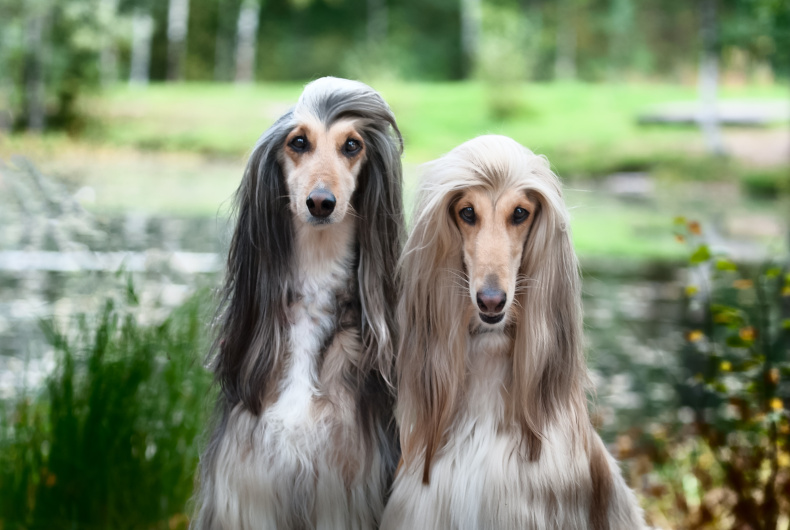
Afghan hounds tend to be one-person or one-family dogs. They are pleased to greet guests and do not make the best watchdogs because they are not very territorial.
The Afghan hound is not as eager to please as other dogs and may not be as motivated by food. However, these are stunning show dogs and can coexist well with children and other pets when socialized from an early age. Overall, the temperament of an Afghan hound is a little aloof but gentle and good-natured, and it thrives on regular exercise, such as running and playing daily.
As you get to know an Afghan hound’s personality, here’s what you can expect based on the breed characteristics:
| Breed Characteristic | Level (High, Medium, Low) |
| Affectionate with People | Medium |
| Good with Kids | Medium |
| Good with Pets | Medium |
| Need for Exercise | High |
| Energy Level | Medium |
| Intelligence Level | Medium |
| Able to Be Trained | Low |
| Amount of Barking | Low |
| Amount of Shedding | Medium |
History of Afghan Hounds
Afghan hounds have existed since ancient times and have always been loved for their elegance and beauty. As the name suggests, the dogs came from Afghanistan and nearby areas, where they were initially called Tazi. Their history dates back thousands of years.
An English officer stationed near Kabul, Afghanistan, is credited as the first Western breeder of the dogs. He transported them from his Ghazni kennel to England in 1925. Shortly after that, the dogs made their way to America. The American Kennel Club recognized the breed in 1926, and the Afghan Hound Club of America formed in 1940.
The breed gained popularity in the 1970s when Mattel’s Barbie doll had an Afghan hound as her pet. The breed became famous as a successful show dog in the 1980s.
Afghan Hound Standard Information
In the AKC official standard of the Afghan hound, the dog is described as dignified, aloof, and with an exotic or “Eastern” expression. It has a long, silky topknot, prominent hipbones, large feet, and a peculiar coat pattern.
Here is an overview of the breed standard information for Afghan hounds:
Head:
- Good length and excellent refinement in the head
- Skull is evenly balanced with the foreface
- Long ears set on level with the outer corners of the eyes
- Almond-shaped, dark eyes
- Black nose of good size
Neck:
- Good length, strong, and arched neck
- Runs in a curve to the shoulders
Body:
- Back line level from shoulders to loin
- Powerful loin that is slightly arched
- Tail is not set too high and has a ring or curve at the end
Legs:
- Forelegs are straight and strong
- Elbows well held in
- Forefeet are large in length and width
- All four feet are in line with the body
- Toes arched and covered with thick hair
Coat:
- Flanks, ribs, hindquarters, and legs are covered with thick, silky hair
- Four feet are well-feathered
- Should be shown in its natural state with the coat not trimmed
Color:
- All colors are permissible
- White markings on the head are undesirable
Gait:
- Gallop with great elasticity in a powerful stride
- Trots at a fast pace
- Movement with great style and beauty
Caring for Afghan Hounds
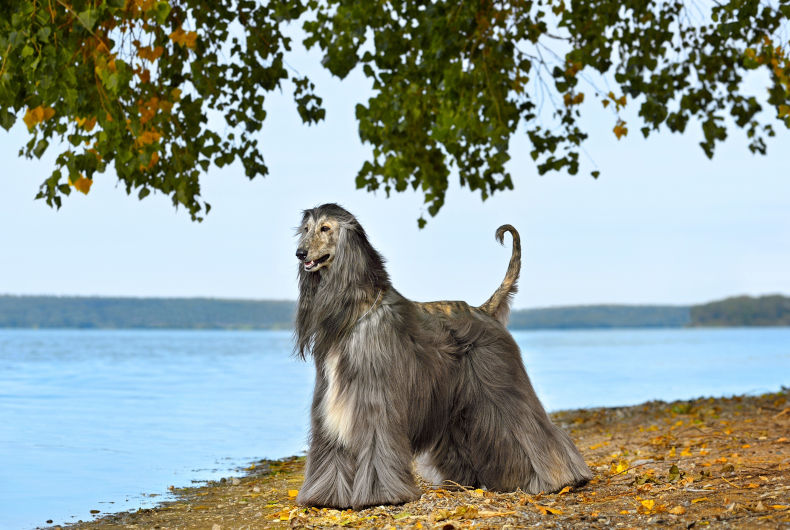
Afghan hounds like to spend most of their time indoors with their families. They are calm and laid-back dogs but still need ample daily exercise, ideally with the ability to really stretch their legs and run all-out in a safely fenced area. However, they enjoy time inside with the people they love, too. These speedy dogs are known to be escape artists without proper leashing or fencing, so be mindful of this while outside. They also have a strong prey-drive so walking them off-leash is not a good idea.
Here are some general tips for taking the best care of an Afghan hound:
Best Living Environments:
- Homes with plenty of space to move and run
- Not ideal apartment dogs
- Households with kids are okay, but they prefer the company of adults
Type of Exercise:
- Substantial exercise time to expend energy
- Strong prey drive and athletic abilities
- Keep the dog on a leash or in a high-fenced area during exercise
Mental Enrichment:
- Toys for mental stimulation
- Rotate toys to prevent boredom
- Teach tricks to practice obedience commands
Training Strategies:
- Moderately trainable but can be stubborn
- Independent dogs, yet loyal and likes to please family members
- Start training early to curb the strong prey drive
Grooming Tips:
- Frequent grooming is essential for this dog
- Brush daily
- Bathe frequently
- Consider hiring a professional groomer
- Can be touchy about their ears and feet
- Check ears weekly for wax and debris
- Trim nails as needed
- Brush teeth daily
Common Health Problems of Afghan Hounds
The typical life expectancy of an Afghan hound is 12 to 18 years. Afghan hounds and other sighthounds have low body fat stores, which means they can be sensitive to anesthesia if they require surgery.
Because of their deep chests, they frequently experience bloat, a dangerous swelling and rotation of the stomach. The national breed club recommends that Afghan hounds undergo hip, thyroid, and ophthalmologist evaluations before breeding.
These are some of the most common health issues that arise with Afghan hounds:
- Hip and elbow dysplasia
- Cancer
- Allergies
- Bloat
- Cataracts
- Hypothyroidism
Diet and Nutrition for Afghan Hounds
Most adults Afghan hounds will thrive when eating a high-quality, nutritionally complete and balanced commercial dog food. Puppies should generally eat a large breed puppy food until they are around 18 months old. If you feed homemade dog food, make sure you are working from a recipe that is designed by a veterinary nutritionist and is appropriate for your dog’s age and health status.
Feed the amount of dog food needed to keep your pet slim. You should be able to see your dog’s waist and feel (but not see) their ribs without having to press too hard. In general, puppies need more calories per day than adults, but a dog’s needs will vary with his or her activity level and other factors. Don’t leave food out all day for an Afghan hound to graze on. Divide the total amount of food for the day into two to three meals for adults and three to four meals for puppies. Place the food out in a bowl at approximately the same time each day.
Your veterinarian can help you pick out a good dog food for your Afghan hound and determine how much food to offer each day
Where to Adopt or Purchase Afghan Hounds
The Afghan Hound Club of America provides information about competitions on its website and how to get involved with regional clubs. You can also adopt an Afghan hound from the Afghan Hound Club of America’s rescue program.
Other rescue resources include the Afghan Hound Rescue of So. California, Rescue Me, Petfinder, and Adopt a Pet.
Related Breeds
Are you drawn in by the fabulous coat of the Aghan hound or its calm temperament paired with a love for activity? Although the Afghan hound is undeniably unique, you may also be interested in other similar and related breeds of dogs. It’s essential to research breed types so that you are as prepared as possible for introducing a new pet in your home.
Here are some additional breeds to consider:
- Borzoi
- Azawakh
- Greyhound
- Ibizan hound
- American foxhound
- Basenji
Pet Insurance for Afghan Hounds
If you have decided to adopt or purchase an Afghan hound, one of the next important steps in responsible pet parenthood is dog insurance. Healthy Paws offers insurance policies for Afghan hounds to protect you and your pet in case of illnesses, accidents, cancer, hip dysplasia, emergency care, breed-specific conditions, or alternative care needs.
Pet insurance can save you thousands of dollars on costly veterinary bills if your Afghan hound becomes seriously injured or sick. Pet insurance for Afghan hounds is worth the cost because it gives you peace of mind that you can give your dog the treatment needed without draining your savings.
Get your Afghan hound pet insurance quote on our website today to see your rate. If you have further questions about how pet insurance works, please visit our FAQ page or call us at 855-898-8991.
We look forward to helping you and your Afghan hound live a long, healthy, and happy life together!
Authors
Stacy Painter
Stacy has always been an animal lover and has worked in the pet industry and pet insurance specifically for over a decade. As a writer since early childhood, content writing for Healthy Paws pet insurance was a natural career path to combine her two passions. She currently lives in Florida with her boyfriend and Taiwanese rescue dog, Kaya.
Jennifer Coates, DVM
Dr. Jennifer Coates received her Bachelor of Science degree in biology from McGill University in Montreal, Quebec, Canada. After graduation, she worked for several years in the fields of conservation and animal welfare before pursuing her childhood dream—becoming a veterinarian. She graduated with honors from the Virginia-Maryland Regional College of Veterinary Medicine and has worked as an Associate Veterinarian and Chief of Staff in Virginia, Wyoming, and Colorado. Jennifer is also a prolific writer about all things related to veterinary medicine and the well-being of our animal friends. She has published several short stories and books, including the Dictionary of Veterinary Terms, Vet-Speak Deciphered for the Non-Veterinarian. She currently contributes to the Healthy Paws pet insurance blog as a freelance writer. In her free time, Jennifer enjoys life in Colorado with her family and friends… many of whom walk on four legs.