
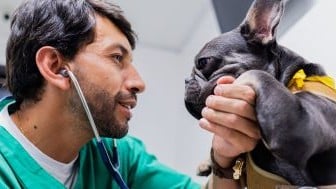
Learn how and why veterinary bills are increasing, and how a Healthy Paws plan can help.

Healthy Paws protects pets like family and makes peace of mind and more happy, healthy moments possible. Pet parents and industry reviews tell the story.

Rescue organizations across the U.S. received support for adoption efforts and ongoing care for vulnerable pets.

Make their food irresistible with the freshest nutritionally-balanced ingredients.
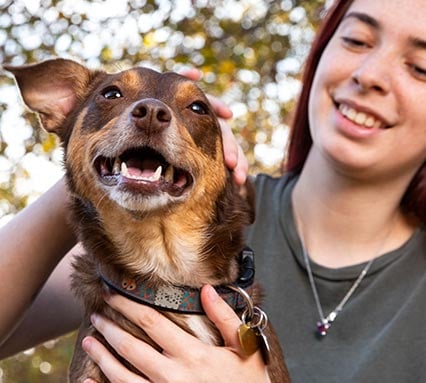
The Healthy Paws Community is a vibrant, social-first space for all pet lovers—whether you’re a Healthy Paws policyholder or simply passionate about pets. As a Pack Member, you can share your favorite pet photos and videos, connect with fellow pet parents, and stay informed with the latest Healthy Paws news and tips. It’s a welcoming place focused on connection, positivity, and celebrating the joy pets bring to our lives!

For many pet parents, determining the value of pet insurance comes down to a single question: Can I comfortably absorb a large or ongoing vet bill on my own?
Modern veterinary care includes things like advanced diagnostics, specialty surgery, oncology, and other treatments that can vastly improve a dog’s or cat’s quality of life. But these options can also be expensive, especially when care must stretch over weeks or months. Unexpected injuries or protracted illnesses can lead to vet bills totaling in the thousands. A swallowed object, for example, may require an expensive sequence of exams, imaging, surgery, hospitalization, and follow-up care. Chronic conditions such as diabetes, cancer, or even just severe allergies can create recurring and long-term costs for medication, specialist visits, and monitoring.
Healthy Paws policies offer pet parents a wide range of options to meet their unique needs – including policies that feature no annual limits that help make sure that your dog or cat is covered year-round.
What is pet insurance coverage?
Pet insurance, generally speaking, is designed to shift a portion of pet parents’ financial burden for veterinary care so that decisions about care are less strictly tied to their immediate cash flow. Most plans are built around three variables:
- The deductible: The amount you pay out of pocket before reimbursement is available. Some plans apply an annual deductible. Others apply a per-incident deductible, meaning you pay a new deductible every time your pet is treated for a new condition. (For example, if your dog gets an ear infection and then later breaks a leg, you pay the deductible for both events under a per-incident model.)
- The reimbursement percentage: The share of eligible vet bills that the insurer pays after the deductible. They typically range from 70% to 90%.
- The annual policy or payout limit: The maximum amount that the insurer may pay toward covered claims during a policy year. Annual limits vary by plan: Some policies may offer lower caps, such as $2,500 or $5,000, while others provide higher limits such as $10,000 or $15,000. If covered expenses exceed that annual limit, the pet owner is responsible for any and all remaining eligible costs during the policy term.
Some plans offer an annual unlimited payout option, which refers to coverage marked by no maximum annual payout limit for eligible covered claims. Once the policy is active and any waiting periods have passed, the insurer reimburses the applicable percentage of covered costs after the deductible has been met. Because they can help cover eligible veterinary expenses during the entirety of a 12-month policy term, plans offering an unlimited annual payout may be especially relevant in those cases where eligible veterinary care is extensive, ongoing, specialized, or unexpected.
To put it in simple terms: Choosing a policy without policy or payout limits removes the yearly reimbursement ceiling for covered treatment. Assuming the care is deemed eligible under the policy, the deductible has been met, and your reimbursement terms apply, claims can continue to be processed – even if costs keep growing substantially during the policy year.
It’s important to be precise about what “unlimited” means in this context. The term doesn’t automatically apply to every pet, policy, state, or expense. Instead, it applies to the annual payout limit for eligible claims. It doesn’t mean that every expense is covered, and it doesn’t override exclusions, waiting periods, or other policy terms.
Five benefits of pet insurance with no annual policy limit
A pet insurance unlimited annual payout option can offer more flexibility when vet care becomes expensive or prolonged. Here are five reasons that many pet parents consider it.
1. No annual payout ceiling for eligible claims
The clearest benefit of pet insurance without a policy limit is better protection from large covered vet bills within a single policy year. Costs add up quickly if and when a pet needs surgery, hospitalization, specialist treatment, or repeat diagnostics. If a pet uses up most of a fixed annual limit on one issue but then faces another covered problem later that year, out-of-pocket costs can rise – sometimes sharply.
2. Emergency coverage without surprises
Emergencies, by definition, are unpredictable. A dog might be hit by a car. A cat might ingest something toxic. Emergency clinics often charge more for after-hours exams, urgent diagnostics, and surgery. In moments such as these, many pet parents understandably want to focus on making the best treatment decisions possible – not on how much of their annual insurance payout limit is left.
3. More flexibility when care extends beyond a single visit
Some conditions take time to diagnose and manage. A pet may need a primary care exam, a specialist referral, imaging, lab work, and multiple follow-up visits before the advisable care plan is clear. A policy without an annual payout limit can provide greater flexibility when treatment unfolds over weeks or months. Instead of worrying about an ever-shrinking yearly cap, owners can focus on moving through the recommended diagnostic and treatment process.
4. Support for future eligible chronic or complex conditions
Chronic and complex conditions can generate ongoing veterinary costs. Diabetes, severe allergies, hyperthyroidism, and cancer may require regular appointments, medication, and long-term monitoring. Pet parents may find the absence of an annual payout limit especially valuable when eligible care continues throughout the year: It can help reduce the chance that a fixed cap will affect decisions about specialist care, advanced treatment, or continued management.
5. Less need to monitor a yearly payout balance
When a pet is seriously ill, pet parents already have a lot to manage: appointments, medications, recovery, and daily routines. Having to track a declining annual insurance balance simply adds another layer of stress. With an unlimited annual payout option, there is less need to calculate how much coverage remains for future eligible claims; this can make policy administration simpler during a difficult time.
Comparative scenarios: Fixed limits vs. unlimited coverage
Here’s a simple example of how a fixed annual limit can affect out-of-pocket costs. Assume a pet has $10,000 in covered veterinary expenses over multiple visits during one policy year, with a policy marked by a $250 annual deductible and a 90% reimbursement rate.
Scenario 1: Policy with a $7,000 annual payout limit
- Total covered vet bills during the policy year: $10,000
- Deductible paid by policyholder: $250
- Remaining bill amounts: $9,750
- Insurer’s share at 90% reimbursement rate: $8,775
- Impact of the annual limit: Because the calculated reimbursement for costs incurred during the policy year exceeds the $7,000 annual limit, the insurer pays $7,000
- Total out-of-pocket expense for policyholder: $1,775
Scenario 2: Policy with no annual limit
- Total covered vet bills during the policy year: $10,000
- Deductible paid by policyholder: $250
- Remaining bill amounts: $9,750
- Insurer’s share at 90% reimbursement rate: $8,775
- Impact of the annual limit: There is no annual payout cap for eligible claims, so the insurer pays the full $8,775.
- Total out-of-pocket expense for policyholder: $975
In the second scenario, the plan with no policy limit reduces the policyholder’s out-of-pocket costs by $800.
When might an unlimited payout plan be worth considering?
An unlimited payout plan isn’t automatically the right choice for every household. It depends on your pet, your budget, and how much financial risk you want to retain.
With that said, it may well be worth considering if:
- You prefer not to have a fixed annual payout cap for eligible claims.
- Your dog or cat has an active lifestyle or greater exposure to accidents.
- Your pet’s breed is associated with ongoing or high-cost health issues.
- You want flexibility for future emergency, specialty, diagnostic, or chronic care.
- You are enrolling a puppy or kitten before new conditions become pre-existing.
- You are evaluating coverage needs across a multi-pet household.
The right plan also depends on the deductible, reimbursement level, premium, exclusions, and policy terms. It can help to review key questions to ask before choosing a pet insurance plan.
Does pet insurance without a policy limit cover everything?
No – the absence of an annual limit doesn’t mean that every veterinary expense or condition is covered. Coverage is still subject to the policy language, including exclusions, waiting periods, deductibles, reimbursement percentages, and other limitations.
Pre-existing conditions
Pre-existing conditions are a common limitation in pet insurance. The term generally refers to any illness or injury that first occurred or showed clinical signs either before coverage began or during the applicable waiting period. Under many polices, these conditions will not be covered. Understanding how pre-existing conditions may affect coverage is an important part of comparing plans.
Routine and wellness care
Standard accident and illness pet insurance policies are designed for unexpected veterinary needs. They typically don’t cover routine wellness exams, vaccinations, spay or neuter procedures, or preventive medications, unless these are offered through a separate wellness option.
Specific exclusions
Other exclusions may vary by insurer and policy. That’s why it’s so important to review sample policy documents carefully and to understand precisely how coverage applies in different situations.
Choosing the right coverage for your pet
When comparing pet insurance options, make sure you consider more than the cost of the monthly premium. Annual limits, deductibles, reimbursement levels, and exclusions all affect how a policy will respond when your pet needs care. For example, a lower-premium plan with a strict annual cap can easily leave you with higher veterinary expenses during a major claim year. An unlimited annual payout, on the other hand, may provide you with broader financial protection for eligible claims – especially if you’re facing large or recurring vet bills.
Looking for pet insurance with no annual payout limit for eligible covered claims? Explore Healthy Paws coverage options, review the policy details carefully, and get a quote for your dog or cat.
This material is intended as general information only. Please consult with a licensed insurance agent for any insurance-related questions you may have regarding your individual circumstances.
Healthy Paws, a Chubb Company, is the marketing name used to refer to the pet insurance products underwritten and provided by ACE American Insurance Company, Westchester Fire Insurance Company, Indemnity Insurance Company of North America, ACE Property and Casualty Insurance Company and Atlantic Employers Insurance Company and one or more of their U.S. based Chubb underwriting company affiliates.
Chubb is the marketing name used to refer to subsidiaries of Chubb Limited providing insurance and related services. For a list of these subsidiaries, please visit our website at www.chubb.com. This communication contains product summaries only. Coverage is subject to the language of the policies as actually issued.
These pet insurance products are offered through Chubb Insurance Solutions Agency Inc. (CISA) (California license no. 0D12120). Surplus lines insurance sold only through licensed surplus lines producers. Chubb, 202 Hall's Mill Road, Whitehouse Station, NJ 08889-1600.

Meet Our Writer
James Staines
James Staines is AVP of Marketing & Media at Healthy Paws, a Chubb Company. With two decades of marketing experience, he drives brand awareness, content strategy, and media — leading cross-functional teams of marketers, designers, and copywriters dedicated to growing the Healthy Paws brand.