

Learn how and why veterinary bills are increasing, and how a Healthy Paws plan can help.

Healthy Paws protects pets like family and makes peace of mind and more happy, healthy moments possible. Pet parents and industry reviews tell the story.

Rescue organizations across the U.S. received support for adoption efforts and ongoing care for vulnerable pets.

Make their food irresistible with the freshest nutritionally-balanced ingredients.
The Healthy Paws Community is a vibrant, social-first space for all pet lovers—whether you’re a Healthy Paws policyholder or simply passionate about pets. As a Pack Member, you can share your favorite pet photos and videos, connect with fellow pet parents, and stay informed with the latest Healthy Paws news and tips. It’s a welcoming place focused on connection, positivity, and celebrating the joy pets bring to our lives!

At a glance
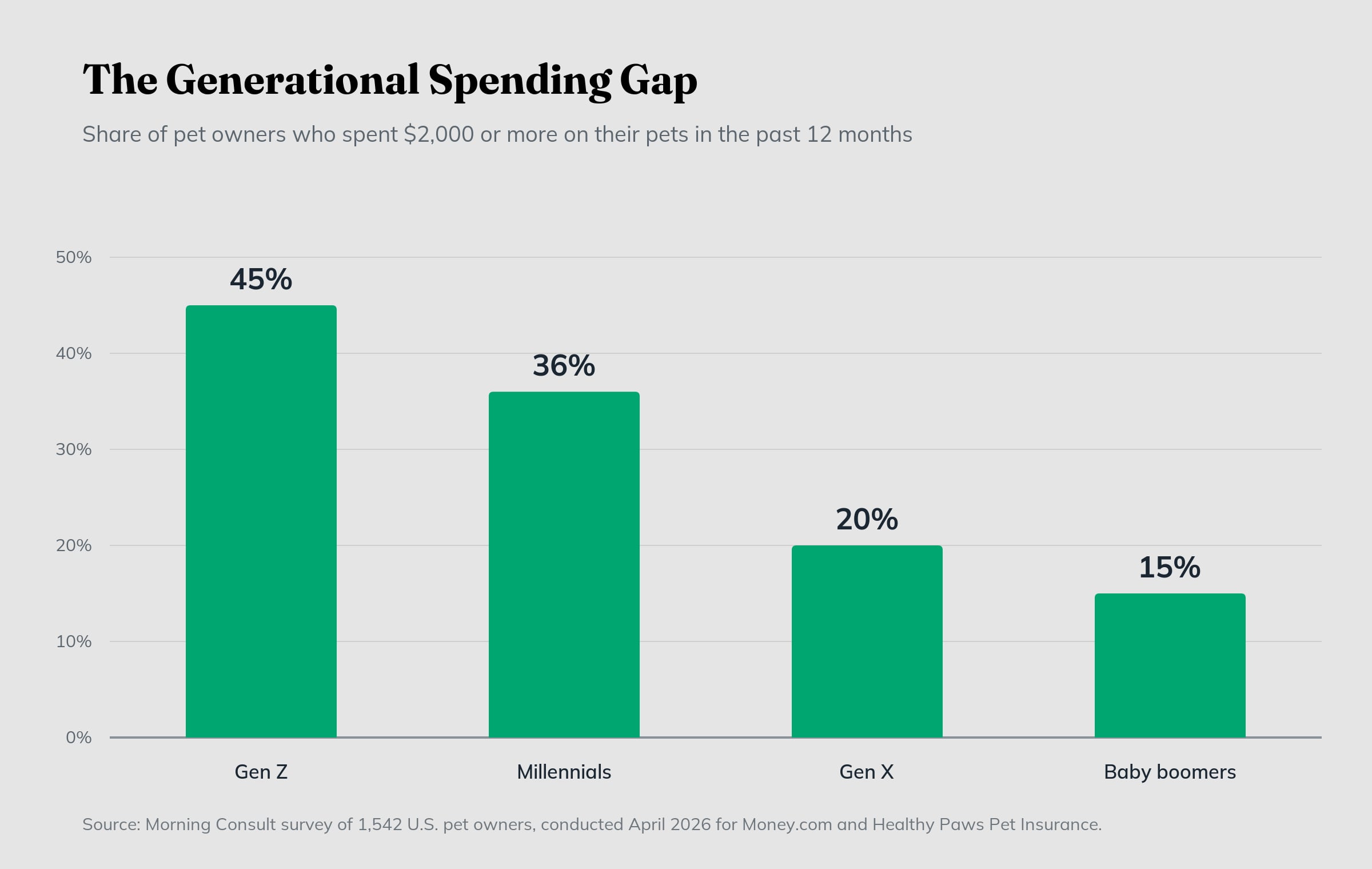
- 45% of Gen Z pet owners spent $2,000 or more on their pets last year, compared with just 15% of baby boomers.
- More than half of pet owners (55%) say rising costs have made them less likely to get another pet or led them to decide against it altogether.
- Nearly 3 in 4 insured pet owners (72%) say they feel financially prepared for serious pet-health expenses.
Table of Contents
- How does Gen Z budget for pets?
- Does pet insurance make vet bills easier to manage?
- Is pet ownership becoming a luxury?
If there’s one thing Gen Z loves more than social media and early-aughts fashion, it’s their pets.For many young adults, animals are members of the family, and they’re willing to care for them accordingly.
A 2026 study from Healthy Paws Pet Insurance and Money.com found that 45% of Gen Z owners spent $2,000 or more on their pets last year, compared with just 15% of baby boomers.
But higher spending doesn’t necessarily mean impulsive spending. The survey also found that young pet owners are more likely than older generations to treat those costs as a long-term financial commitment — something to plan and budget for, not just deal with as expenses come up.
And as rising costs force Americans of all ages to question whether they can afford another pet, the findings point to a broader shift in not just how people pay for pet ownership, but how they think about it in the first place.
How does Gen Z budget for pets?
Years ago, owners didn’t think about what a new puppy or kitten would cost down the road. Many only factored food, vaccines and toys into their budgets. That's changing for Gen Z (ages 18–29), according to the study.
Among Gen Z pet owners, 28% say pet ownership has influenced their financial planning or savings goals. Only 10% of boomers (ages 62–80) say the same.
That shift in mindset is also changing how young adults prepare for the costs that come with having a pet. Rather than waiting for an emergency to happen, many are factoring those expenses into their budgets ahead of time.
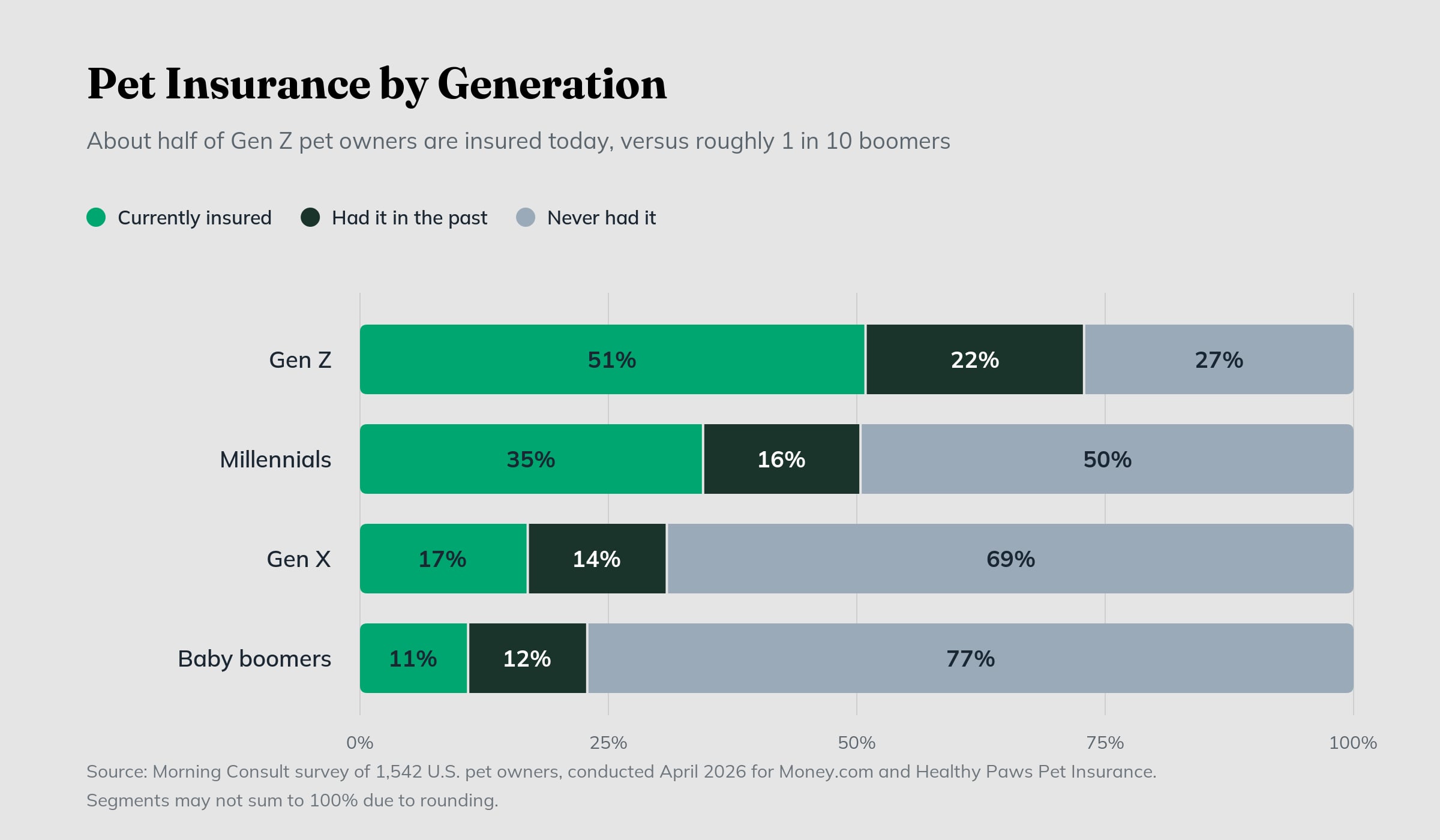
For some, that includes insurance. About half of Gen Z owners currently have pet insurance, compared with roughly 1 in 10 baby boomers.
“Pets aren't lifestyle accessories or secondary expenses,” explains Gen Z pet owner Mahendra Balal. “They are essentially our firstborn children.”
For Balal, that commitment shapes where his money goes. “We sacrifice our own discretionary spending to protect our pet budget,” he says.
Does pet insurance make vet bills easier to manage?
Nobody knows when their “fur kid” might get sick or injured. A routine visit can turn into extensive testing, while a diagnosis might mean months or years of treatment. Insurance doesn’t eliminate these costs, but it does give pet owners greater confidence they’ll be able to manage them, the survey suggests.
Almost 3 in 4 (72%) currently insured owners say they're financially prepared for serious pet-health expenses. And 70% of current and former policyholders say insurance paid for at least part of their most recent significant veterinary bill.
That sense of security may also shape what owners are willing to do when their pet needs treatment. Among currently insured owners, 47% say they would pursue every recommended treatment for their pet regardless of cost. That's nearly double the 24% of never-insured owners who say they would exhaust all treatment options.
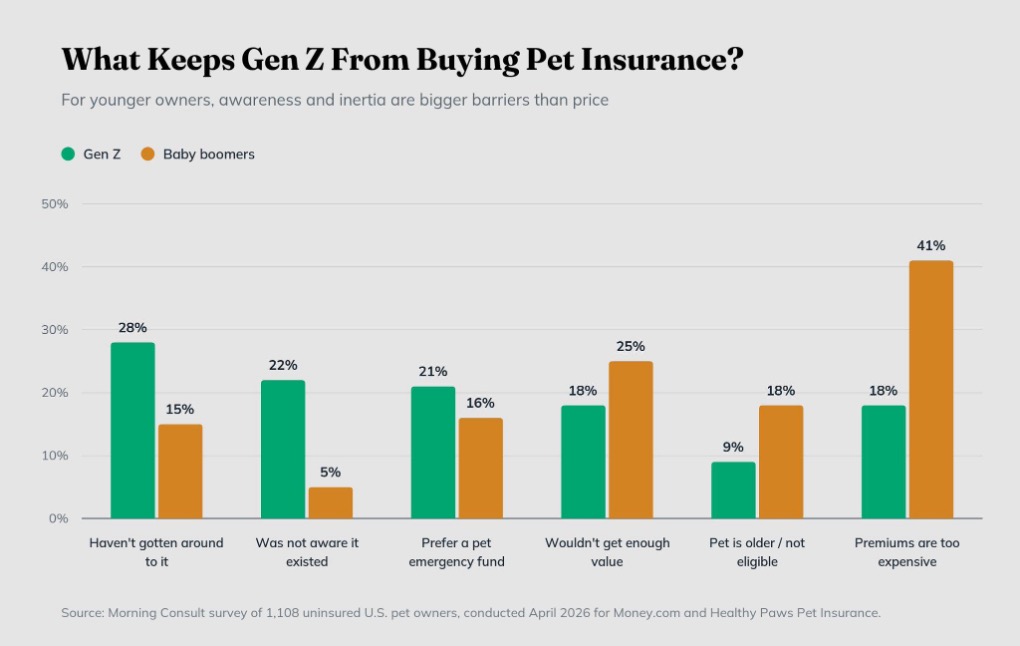
But despite those benefits, pet insurance still hasn’t reached many young owners. And for Gen Z, price isn’t what’s holding them back.
Of uninsured Gen Z owners surveyed, 22% didn’t know pet insurance existed, and 28% said they simply hadn’t gotten around to considering it.
Only 18% of uninsured Gen Z pet owners say they don’t have pet insurance because the premiums are too expensive. By comparison, 41% of baby boomers say the cost of pet insurance is a deterrent.
The generational gap carries over to purchase intent, too.
Among uninsured Gen Z owners, 39% say they’re likely to buy a policy within the next year. Just 16% of boomers say the same.
Is pet ownership becoming a luxury?
Pet insurance alleviates the burden of unexpected vet bills, but it doesn’t make care costs disappear.
As veterinary expenses rise, more households are forced to make hard decisions about the financial feasibility of pet ownership. Of those surveyed, 60% of pet parents say ownership is becoming a luxury lower-income households can’t afford. Roughly 6 in 10 (61%) believe rising costs create real inequalities between owners.
For many, those concerns are already affecting decisions about whether to add another pet. Among current owners, 55% say rising costs have made them less likely to get another pet or led them to decide against it altogether. That percentage rises to 62% among millennials and 60% for Gen Z.
Still, many young pet owners are undeterred.
“There will always be rescues in need,” says Michaelah Pangburn, a Gen Z dog owner. She adds that she would rather evaluate her spending and find ways to mitigate high vet bills than close the door on adding a new furry family member. “Depriving pets of homes isn’t the answer,” she says.
Methodology
This survey was conducted by Morning Consult on behalf of Money.com and Healthy Paws Pet Insurance from April 20–23, 2026, among a national sample of 1,542 pet owners. Of those, 1,108 did not have pet insurance at the time of the survey. Respondents were required to own at least one dog or cat to qualify for participation.
The data were weighted to reflect the composition of U.S. dog and cat owners based on key characteristics. The margin of error is plus or minus 2 percentage points. Generations are defined as Gen Z (18–29), millennials (30–45), Gen X (46–61) and baby boomers (62–80).

Meet Our Writer
Steph Weaver
Steph Weaver is a Philadelphia-based journalist and copywriter who writes frequently about pet health and the economics of pet care. Her work has appeared in Inc., Money and This Dog's Life, where she's reported on everything from fear-free veterinary care to pet insurance. She specializes in turning research into clear, actionable guidance for readers.