

Learn how and why veterinary bills are increasing, and how a Healthy Paws plan can help.

Healthy Paws protects pets like family and makes peace of mind and more happy, healthy moments possible. Pet parents and industry reviews tell the story.

Rescue organizations across the U.S. received support for adoption efforts and ongoing care for vulnerable pets.

Make their food irresistible with the freshest nutritionally-balanced ingredients.
The Healthy Paws Community is a vibrant, social-first space for all pet lovers—whether you’re a Healthy Paws policyholder or simply passionate about pets. As a Pack Member, you can share your favorite pet photos and videos, connect with fellow pet parents, and stay informed with the latest Healthy Paws news and tips. It’s a welcoming place focused on connection, positivity, and celebrating the joy pets bring to our lives!

Introduction to Bullmastiffs
Bullmastiffs are massive dogs that are known for being brave, loyal, and affectionate. They are large and muscular, but they’re also calm dogs that make wonderful family pets. Many people use bullmastiffs as guard dogs because of their protective nature, heightened alertness, and great intelligence.
To learn more about this dog breed and what it takes to keep these dogs healthy and happy, read this Healthy Paws breed guide about bullmastiffs.
Size of Bullmastiffs
One of the most distinguishing characteristics of the bullmastiff is the dog’s size. When fully grown, a male bullmastiff weighs 110 to 130 pounds and is 25 to 27 inches tall. Female bullmastiffs are 100 to 120 pounds and 24 to 26 inches tall when fully grown. Bullmastiffs are usually done growing by the age of 18 to 20 months, but they may put on a little extra weight until their second birthday.
Here’s how big you can expect your bullmastiff to get as the dog grows from puppyhood to adulthood:
| Weight Chart | 3 months | 6 months | 9 months | 12 months | 2 years |
| Male bullmastiffs | 37.5 – 43 lbs. | 69.5 – 77.3 lbs. | 38 – 98.5 lbs. | 102 – 118 lbs. | 110 – 130 lbs. |
| Female bullmastiffs | 34.5 – 40 lbs. | 64 – 74 lbs. | 80.5 – 92 lbs. | 93 – 110 lbs. | 100 – 120 lbs. |
Characteristics of Bullmastiffs
There are many desirable characteristics of the bullmastiff since these are intelligent and reliable dogs that are eager to please the people they care about. They are excellent family companions and protectors that are gentler than you might expect at first glance.
Bullmastiffs are moderately adaptable dogs that do better in cold weather than in hot weather. They are a good fit for households with older, well-behaved children and are easy to groom. However, pet parents should know that bullmastiffs also are big droolers and need a significant amount of time devoted to play. Yet they shed only minimally and typically do better left alone some during the day than other dog breeds.
As you get to know a bullmastiff’s personality, here’s what you can expect based on his or her breed characteristics:
| Breed Characteristic | Level (High, Medium, Low) |
| Affectionate with People | High |
| Good with Kids | Medium |
| Good with Pets | Medium |
| Need for Exercise | Medium |
| Energy Level | Medium |
| Intelligence Level | Medium |
| Able to Be Trained | Medium |
| Amount of Barking | Medium |
| Amount of Shedding | Low |

History of Bullmastiffs
The early history of the bullmastiff gave this dog its nickname of the “gamekeeper’s night dog.” Bullmastiffs were trusted to guard the game preserves and country estates of aristocrats in England in the 19th century. The history of the bullmastiff dates back to around 1860 in England. Bullmastiffs protected animals from poaching and were a combination of bulldogs and mastiff dogs. These dogs were bred to be smart, work on command, and be just intimidating enough to scare away poachers without seriously harming them.
From that role, bullmastiffs evolved into competition and show dogs because their owners were interested in having the dogs compete to see who had the best bullmastiffs. The American Kennel Club recognized the bullmastiff as a breed in the early 1930s. The breed is part of the AKC’s Working Group of dog breeds.
Bullmastiff Standard Information
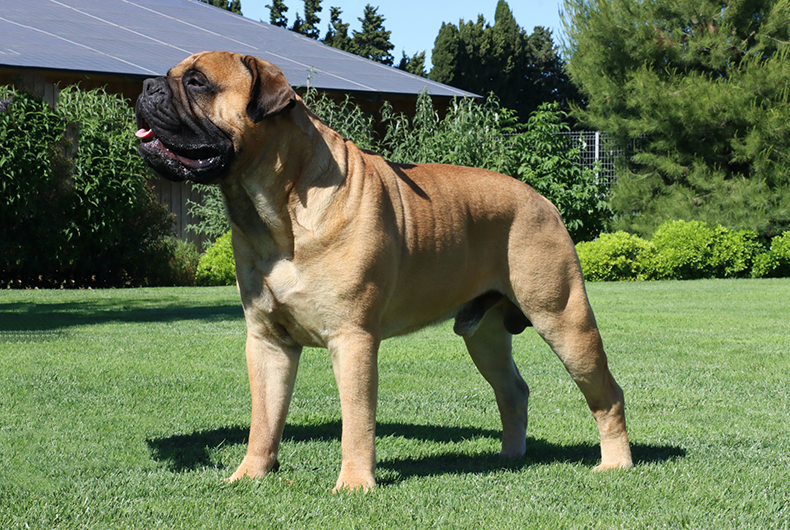
The general appearance of a bullmastiff is strong, alert, active, and powerfully built. These animals were bred to be great protectors, with a formidable size and confident and fearless demeanor.
Here is an overview of the breed standard information for bullmastiffs:
Head:
- Alert and intelligent expression
- Dark and medium-sized eyes
- V-shaped ears set on wide and high
- Large skull with a wrinkle in the face when alert
- Broad and deep muzzle
- Level or slightly undershot bite
Neck, Topline, Body:
- Slightly arched and moderate neck that is very muscular
- Compact body with wide and deep chest
- Straight and level topline
- Short back with wide and muscular loin
- Tail set on high and that tapers to hocks (straight or curved)
Forequarters:
- Muscular but not loaded shoulders
- Medium-size feet
- Round, well-arched toes
- Thick and tough pads with black nails
Hindquarters:
- Broad and muscular hindquarters
- Moderate angulation at hocks
Coat:
- Short and dense coat
- Good weather protection from coat
Color:
- Brindle, red, or fawn coloration
- No white marking except for small spot on chest
Gait:
- Powerful and smooth gait
- Back level and firm during movement
- Feet converge under body without crossing over
Caring for Bullmastiffs
Bullmastiffs don't require a ton of exercise, but they do benefit from a couple of short walks each day. They need minimal grooming and are so mellow that they do fine even in small spaces, such as apartments and condos. Despite their size and breeding history, these dogs should live indoors with their family members and not be kept outside all of the time. It's important to train your bullmastiff early so that the dog is properly socialized to get along well with kids and other pets.
Here are some general tips for taking the best care of a bullmastiff
Best Living Environments:
- Apartments and condos fine is properly exercised
- Houses with fenced yards are ideal
- Should live most of their time indoors
- Keep out of hot and humid weather to prevent heatstroke and heat exhaustion
- Can accidentally knock over toddlers due to large size
Type of Exercise:
- Two to three short walks per day
- Teach the dog to “heel” and not lead the way on walks
- Limit outdoor exercise on hot days
Mental Enrichment:
- Plenty of quality time with family members
- Games and puzzles in a yard or house
Training Strategies:
- Housetraining is relatively easy
- Start crate training early in puppyhood to prevent unwanted chewing
- Determine early on if you will allow your bullmastiff to sit on furniture or not
- Socialize as a puppy to reduce aggression risks
Grooming Tips:
- Not heavy shedders
- Easy to keep clean and shiny
- Brush daily with a rubber brush
- Check ears weekly for odor and wax
- Trim nails one to two times per month
- Brush teeth daily
- Check eyes for redness or discharge
Common Health Problems of Bullmastiffs
Like many large dog breeds, the bullmastiff has a shorter life expectancy than smaller dogs. The average life span of a bullmastiff is just seven to nine years. There are certain health conditions that bullmastiffs are prone to, which you can plan in advance for by signing your dog up for pet health insurance.
These are some of the most common health issues that arise with bullmastiffs:
- Cancer
- Mast cell tumors
- Hip dysplasia
- Elbow dysplasia
- Eyelid conditions, like entropion
- Gastric dilatation-volvulus (bloat)
- Ruptured anterior cruciate ligament
- Cystinuria that can lead to kidney and bladder stones
- Subaortic stenosis, a common heart defect
- Hypothyroidism

Diet and Nutrition for Bullmastiffs
Bullmastiffs are prone to overeating and weight gain, so it is important to feed your dog the amount of food recommended by your veterinarian and limit treats. Since these dogs are prone to bloat, split daily food into multiple meals, and avoid exercising your dog right before or after eating. The recommended total amount of food for an adult bullmastiff is 3 1/8 to 4 1/8 cups of dry dog food per day.
Where to Adopt or Purchase Bullmastiffs
The parent club for this breed is the American Bullmastiff Association, which is a useful resource for learning more about the breed and finding a reputable breeder. The group also offers the American Bullmastiff Association Rescue Service, where prospective pet parents can complete an adoption application, donate money to help rescue bullmastiffs, and volunteer to help bullmastiffs in need of care and support.
There are also many rescue organizations dedicated to this breed, including the Bullmastiff Rescue of Canada, Pacific Northwest Bullmastiff Fanciers, and Bullmastiff Rescue Resource Centre. You’ll often find bullmastiffs and bullmastiff mix dogs in animal shelters because their former families weren’t able to take care of them and tend to their health and exercise needs.

Related Breeds
If you are looking for a gentle giant of a dog to introduce into your family, there are other breeds that you might be interested to learn about as well, in addition to the bullmastiff. Here are some similar and related breeds to consider:
- English mastiff
- Tibetan mastiff
- Neapolitan mastiff
- Anatolian mastiff
- Cane Corso
- Dogue de Bordeaux
- Dogo Argentino
Pet Insurance for Bullmastiffs
To make the most of the wonderful years that you have with your bullmastiff, you will want to have a reliable and affordable pet health insurance plan so that you never have to worry about getting your dog the necessary treatment when something goes wrong. Vet costs for bullmastiffs can really add up if your dog suffers from an accident or injury, which is why Healthy Paws is pleased to be the top-rated pet insurance plan with no maximum annual or lifetime payouts.
Get your bullmastiff health insurance quote today to make the best decision for your family and your favorite gentle giant companion.