

Learn how and why veterinary bills are increasing, and how a Healthy Paws plan can help.

Healthy Paws protects pets like family and makes peace of mind and more happy, healthy moments possible. Pet parents and industry reviews tell the story.

Rescue organizations across the U.S. received support for adoption efforts and ongoing care for vulnerable pets.

Make their food irresistible with the freshest nutritionally-balanced ingredients.
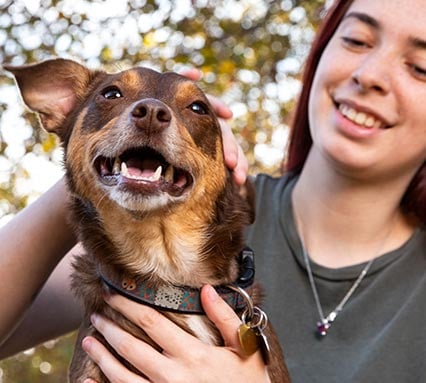
The Healthy Paws Community is a vibrant, social-first space for all pet lovers—whether you’re a Healthy Paws policyholder or simply passionate about pets. As a Pack Member, you can share your favorite pet photos and videos, connect with fellow pet parents, and stay informed with the latest Healthy Paws news and tips. It’s a welcoming place focused on connection, positivity, and celebrating the joy pets bring to our lives!

Introduction to Samoyeds
Samoyeds are gentle and friendly dogs that have a medium-to-large size and graceful demeanor. These beautiful dogs were bred to do hard work in very cold conditions, but today, they are beloved household members for many families. They are part of the Working Group of dogs and are known for being very soft, affectionate, and strong-willed. You’ll love petting the fluffy, white fur of a Samoyed and staying active together out in nature.
Read on to learn more about the Samoyed breed of dog and whether a Samoyed is the right fit for your home and lifestyle.
Size of Samoyeds
A fully grown male Samoyed is about 21 to 23.5 inches tall and weighs 45 to 65 pounds. Female Samoyeds are smaller and stand at about 19 to 21 inches tall and weigh in at 35 to 50 pounds. Dogs of this breed may be done growing anywhere between the ages of nine months and 18 months. However, the dogs do not reach full mental maturity until age two or three.
Here’s how big you can expect your Samoyed to get when fully grown.
| Weight Chart | 3 months | 6 months | 9 months | 12 months |
| Male Samoyeds | 16-25 pounds | 32-47 pounds | 40-59 pounds | 43-64 pounds |
| Female Samoyeds | 14-18 pounds | 26-33 pounds | 32-40 pounds | 34-43 pounds |
Samoyed Personality and Breed Characteristics
Samoyeds are hardworking and powerful dogs that are social and love attention. If these dogs become bored or are neglected by their human companions, they can be mischievous and destructive. These are hardy and resilient dogs that are among the best breeds for working outside in the cold. They have thick, white coats that can protect them from harsh conditions and keep them safe from cold temperatures.
As you get to know a Samoyed’s personality, here’s what you can expect based on his or her breed characteristics:
| Breed Characteristic | Level (High, Medium, Low) |
| Affectionate with People | High |
| Good with Kids | High |
| Good with Pets | High |
| Need for Exercise | High |
| Energy Level | High |
| Intelligence Level | Medium |
| Able to Be Trained | Medium |
| Amount of Barking | Medium |
| Amount of Shedding | High |

History of Samoyeds
Samoyeds are named after the Samoyedic people, which were semi-nomadic people who migrated in Siberia over a thousand years ago. These dogs originated in Asia and were bred to withstand one of the coldest places on the planet. They excelled at pulling loads across Siberia and also aiding humans as hunters, watchdogs, and herding reindeer.
The Samoyeds were introduced in England in the late 18th century and were quickly admired by British royalty. The dogs made their way to the U.S. in the early 1900s and were initially used to carry heavy supplies. The American Kennel Club recognized the Samoyed as a breed in 1906.
Samoyed Appearance
Samoyeds are often part of dog shows and competitions, and there is an official standard for the breed by which all dogs are judged. In general, these dogs have a muscular, but not long, body and are capable of great endurance. There are also some distinct differences in appearance between male and female Samoyeds. With regard to physical characteristics, something else unique about Samoyeds is that they appear to smile because the corners of their mouths are upturned.
Here is an overview of the breed standard information for Samoyeds:
Head:
- Wedge-shaped skull that is broad and slightly crowned
- Medium length muzzle
- Strong, erect, and triangular ears that are slightly rounded at tips
- Dark eyes that are set well-apart and deep set
- Black nose preferred but brown, liver or Dudley noses also allowed
- Strong teeth that snugly overlap with scissors bite
Neck, Topline, Body:
- Strong and well-muscled neck
- Deep chest with well-spring ribs
- Strong and slightly arched loins
- Females can be slightly longer than males
- Moderately long tail that is profusely covered with long hair
Forequarters:
- Good reach in the forequarters for movement
Hindquarters:
- Stifles well-bent and hindquarters well-developed
- Cowhocks severely penalized
Coat:
- Double coat with undercoat that is soft, thick, short, and close wool
- Outer coat free from curls
- Coat forms a ruff around the neck and shoulders
- Weather resistant
- Glistens with a silver sheen
Color:
- Pure white, all biscuit, cream, or white and biscuit
Gait:
- Trot but not pace
- Agile stride that is well-timed
- Balanced, free, and vigorous

Caring for Samoyeds
One of the main things to think about before bringing a Samoyed into your home is grooming because these dogs shed significantly throughout the year and require daily brushing. Shedding is more common at certain times of the year than others. Also, Samoyeds need exercise each day and to participate regularly in activities with family members. But overall, Samoyeds are easy to care for compared to other dog breeds and a pure joy to have in your life.
Here are some general tips for taking the best care of a Samoyed:
Best Living Environments:
- Best for homes with a yard rather than apartments
- Yards should be fenced since Samoyeds have urges to roam and run away
- Don’t leave a Samoyed alone for long periods of time
Type of Exercise:
- Playing in a fenced yard
- Long walks and hikes with family members
- At least 30 minutes of exercise per day
Mental Enrichment:
- Keep mentally stimulated with games and play time
- Engage the dog in playtime with children
Training Strategies:
- Be firm but patient during training sessions
- Train to walk on a leash except when in a fenced yard or house
- Socialize the dog early to do well around other dogs and kids
- Give Samoyeds a job to do because this is what makes them happiest
Grooming Tips:
- Sheds throughout the year and even more during shedding season
- Brush daily to remove loose hair and dirt
- Comb through matting and tangles
- Trim nails about every month
- Brush teeth daily
- Check ears for redness and odor weekly
Common Samoyed Health Issues
The average life expectancy for a Samoyed is 12 to 14 years. These are generally healthy dogs; however annual vet checkups are still recommended for parasite control and to catch any emerging health issues early. The national breed club for Samoyeds recommends that these dogs get the following health tests: hip evaluation, Ophthalmologist evaluation, retinal dysplasia/dwarfism (RD/OSD) DNA test, progressive retinal atrophy (PRA) DNA test, and cardiac exam.
These are some of the most common health issues that arise with Samoyeds:
- Hip dysplasia(inherited condition)
- Glaucoma (increased eye pressure)
- Patellar luxation (slipped stifles)
- Samoyed hereditary glomerulopathy (genetic kidney disease)
- Progressive retinal atrophy (eye disease)
- Retinal dysplasia (eye disease)
- Dwarfism (musculoskeletal disease)
- Hypothyroidism (may cause various other health problems)
- Diabetes mellitus
- Cancer
- Subvalvular aortic stenosis (heart condition)
You can be prepared for whatever health conditions affect your Samoyed by signing him or her up for pet insurance through Healthy Paws.

Diet and Nutrition for Samoyeds
When fully grown, a Samoyed needs about 1.5to 2.5 cups of high-quality dog food per day. This amount should be divided into morning and evening meals. It is important that Samoyeds have slow and steady growth as puppies. The most rapid growth happens between four and seven months, and a dog’s growth can be controlled during this time by feeding your pup a low-calorie diet. As a general rule, a Samoyed needs a diet consisting of approximately 23 percent protein and 14 percent fat.
Where to Adopt or Purchase Samoyeds
The national breed club for this type of dog is the Samoyed Club of America, which has been the official AKC Parent Club for the breed since 1923. If you are looking for a pure Samoyed, a good place to start your search is the AKC Marketplace, which lists 100% AKC puppies from AKC-registered litters.
The National Samoyed Rescue is a rescue organization that helps connect people with Samoyeds in need of loving homes. There are other nonprofit agencies and adoption-focused organizations available to help you find a Samoyed as well, such as the San Francisco Samoyed Rescue, Denver Samoyed Rescue, Samoyed Rescue of Texas, and Mid-Atlantic Samoyed Rescue.
Related Breeds
Have you fallen in love with the Samoyed breed of dog? If so, you might be interested to also learn about these similar and related breeds before making the big decision to adopt or purchase a new pet:
- Siberian husky
- Lapponian herder
- Norwegian elkhound
- American Eskimo dog
- Chow chow
- Tibetan mastiff
- Alaskan malamute
Pet Insurance for Samoyeds
Due to the various health issues that Samoyeds are prone to, many pet parents turn to Healthy Paws for their pet insurance needs. Our top-rated plan for Samoyeds covers new accidents and illnesses, as well as emergency care, hereditary conditions, breed-specific conditions, and alternative care. When something is wrong with your pup, you can take your Samoyed to any licensed veterinarian that you trust and feel confident that you can always provide your dog with the medical care he or she needs.
See insurance rates on our website to take the important step of protecting your Samoyed and being prepared with pet health insurance.